Skip to content

Steel spec

14-gauge or 16-gauge: how to read a corral panel spec

Read the numbers the SKU actually prints. Gauge, post, rail, and openings. Not the ones a listing invents.

Blacktail Corrals Updated August 23, 2026

Close detail of a powder-coated steel rail

We manufacture these panels. This page is our shop map of the spec line printed on those SKUs, not an independent ranking of other brands.

A listing can advertise the same length, the same rail count, and the same tube size and still not be the same panel. Gauge runs backwards. Outside diameter is the number that survives a thinner wall. Weight is often not printed at all, including here.

Who this is for

You are reading a spec sheet. Two ads look the same. You want to know which numbers matter and which ones a listing can fake.

Our live horse panels write 14-gauge. That is the steel we weld. A 16-gauge utility panel is not on this catalog. If you came here for a lighter, cheaper panel, it is not a SKU we list.

If you already know you want 14-gauge and need the run, the openings, or the height, that is the horse corral panels guide (/guides/horse-corral-panels). This page is the spec line. That page is the job.

The spec that works is the one printed on the SKU. It is not a heavier-sounding word in a title.

How we read a spec

On the shop floor we read in this order:

1. Gauge. 14-gauge is what these SKUs write. 16-gauge is not listed.

2. Post. 1-5/8 on the horse line. That is the clamp size.

3. Rail. 1-1/4 on the 10 ft and 12 ft line.

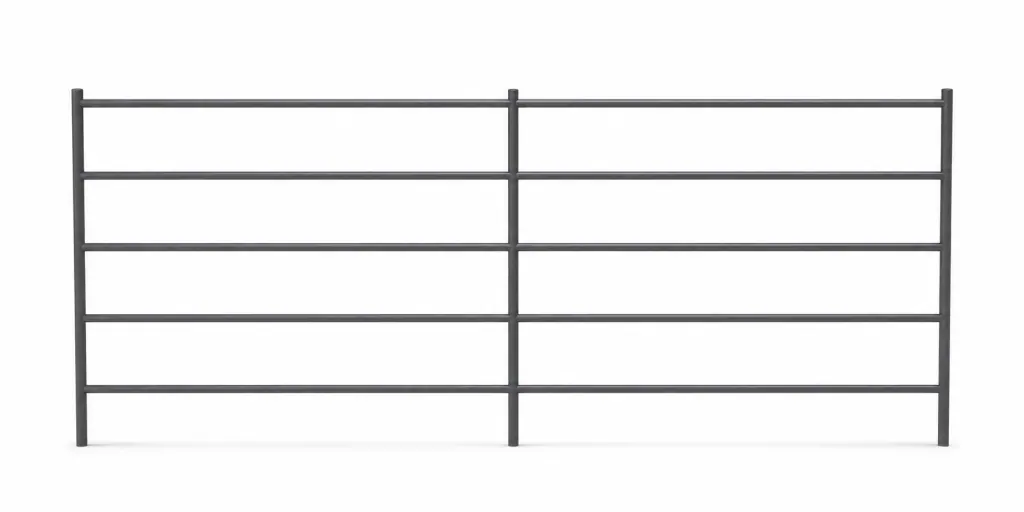
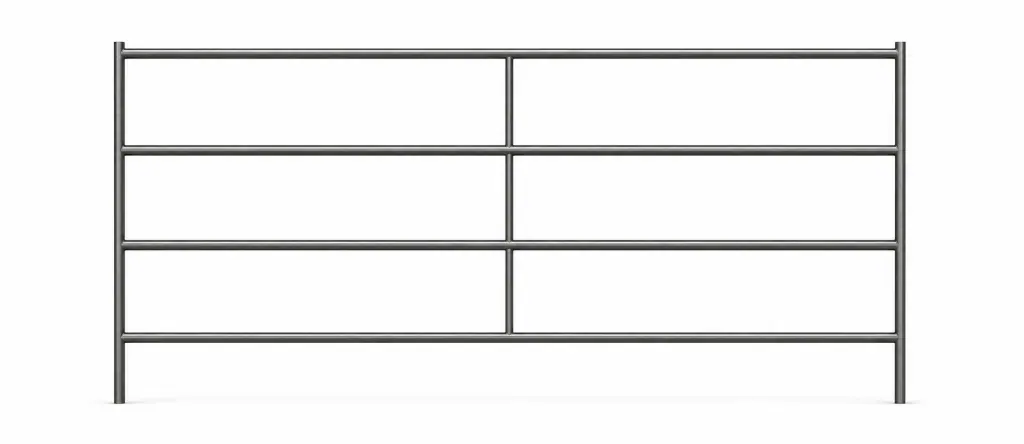
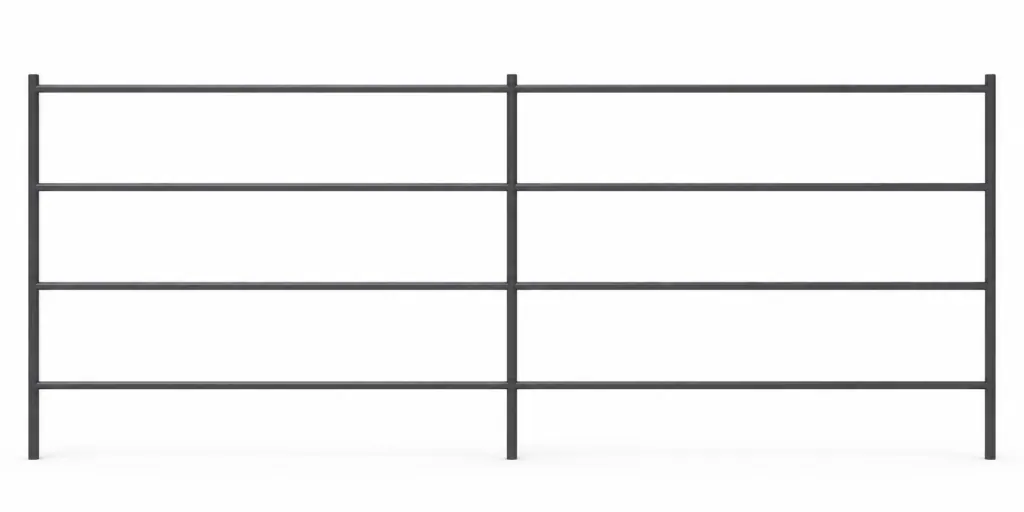
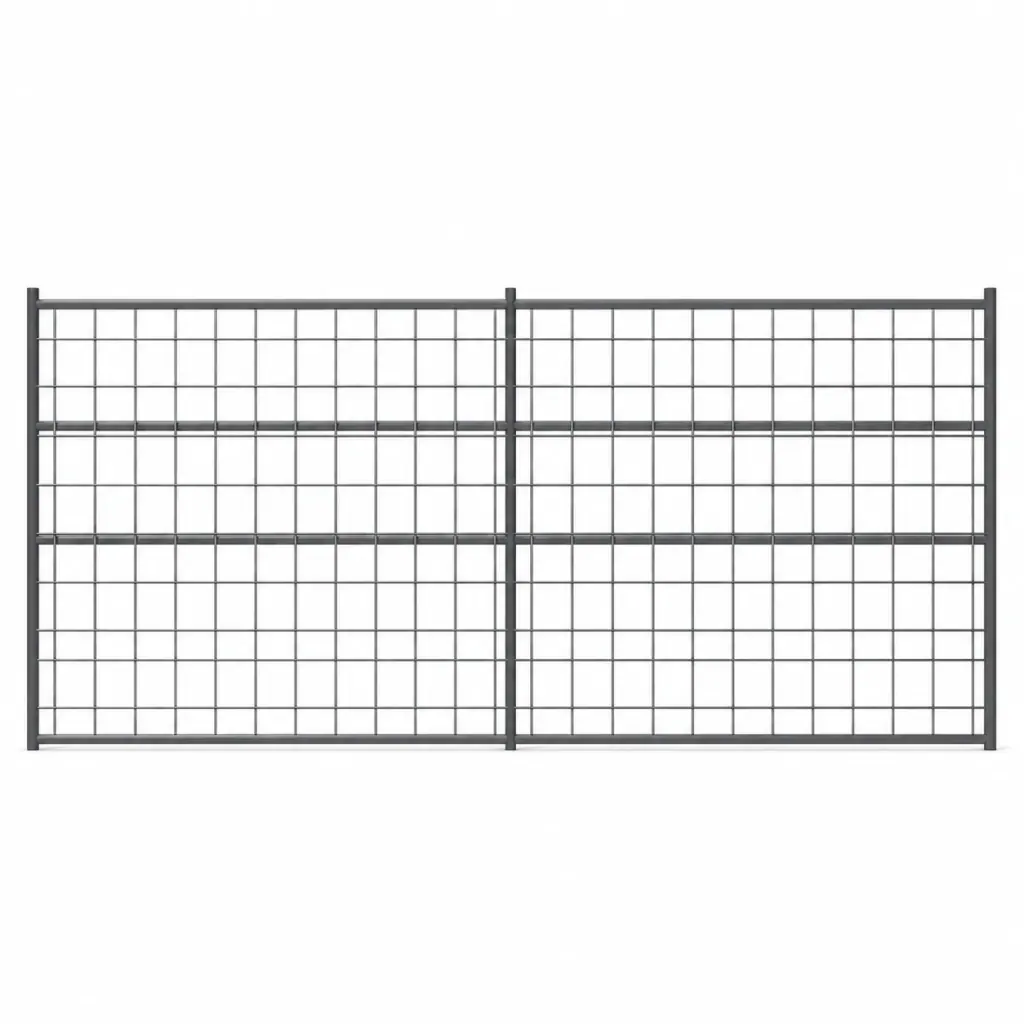
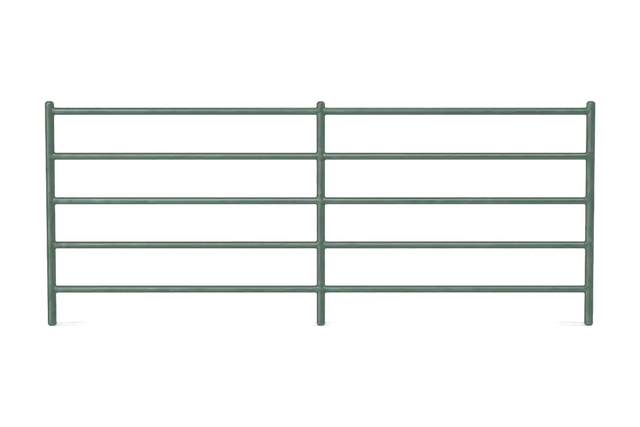
4. Openings. Four rail at 14-1/4, five rail at 10-1/4, or wire-mesh at 2 x 3 in.

5. Length and height. 10 ft or 12 ft by 5 ft. The Mustang is 24 ft by 6 ft.

Do not start with a title that says heavy duty and a tube OD. Those two can survive a thinner wall. Do not start with a weight. We do not print one.

Finish radios on the live SKUs: Bare metal, Dapple grey, Black, Custom color. Powder coat uses primer beneath a 2.5 mil powder layer. No powder adder is written. Estimated delivery is 1-2 weeks. Lifetime warranty covers welds and frame. Panel clamps are sold separately on these loose panels.

14-gauge or 16-gauge

Two horses standing behind ranch fencing
Photo by Castorly Stock on Pexels

Best fit for: Comparing two panels that look the same in a photo. The gauge number is the first real difference.

Gauge runs backwards. A smaller number is a thicker wall. 14-gauge is thicker than 16-gauge. 12-gauge is thicker than 14. That is how the scale works. It is not a ranking of brands.

Choose 14-gauge when the pen stays. Shop FAQ: 14-gauge welded steel on the 10-ft and 12-ft line. Every permanent horse product we list writes that number.

Not the first choice when: you want a 16-gauge utility panel. It is not on this catalog. Do not wait for one. Not the first choice when the real problem is openings or height. Gauge does not change the 14-1/4 four-rail gap. That is five rail or wire-mesh. Gauge does not add a foot of height. That is the Mustang.

Confirm before ordering: the steel line says 14 gauge. If a listing only says heavy duty, schedule 40, or a tube OD, you do not have a gauge. Our live pages do not write wall thickness in inches. We do not convert 14-gauge to a thousandths figure and call that a published spec.

Published on those SKUs: 14 gauge. Horse panels, round pens, stalls, shelters, and gates write it. A 16-gauge panel does not.

Post, rail, and outside diameter

Best fit for: Matching a clamp, mixing lengths, or reading two ads that shout the same tube size.

Choose it when: you need the number that goes on the hardware page. Shop FAQ: posts are 1-5/8, rails are 1-1/4, on the 10-ft and 12-ft line. Center support is 1-5/8 on 12 ft and 1-1/4 on 10 ft. The Mustang writes 1-5/8 tubing. Cattle and hitching write 2-3/8.

Outside diameter is what you measure for a clamp. It is also the measurement a thinner wall can still advertise. Two panels can share a 1-5/8 post and not share a gauge.

Not the first choice when: you are using OD as proof the steel is the same. It is not. Not the first choice when you measure the rail and order a clamp for that. The clamp wraps the post.

Confirm before ordering: measure the upright. Buy the 1-5/8 clamp for these horse panels. If you are joining cattle or hitching steel, that post is 2-3/8 and the horse clamp will not wrap it. We do not write 1.66 or 1.90 on these SKUs. Those decimals are not a published spec here.

Published on those SKUs: post 1-5/8, rail 1-1/4, center 1-5/8 or 1-1/4 as above. Mustang 1-5/8 tubing. Cattle 2-3/8.

Rails and openings

Black horse standing inside a fenced corral
Photo by Amar Preciado on Pexels

Best fit for: Deciding whether the opening is the problem, not the wall.

Choose it when: four-rail spacing is too open, or you need more separation from what sits outside the fence. Shop FAQ: 4-rail for settled adult horses. 5-rail for young horses, ponies, minis, and other smaller animals. Wire-mesh when you need a smaller opening than a rail count gives you.

Published spacing: 14-1/4 on 4-rail, 10-1/4 on 5-rail. Wire-mesh is 12 ft by 5 ft with a 2 x 3 in grid on four structural rails. The Mustang is six rail and 6 ft. Rail spacing on the Mustang is not written. We do not invent it.

Not the first choice when: you came here for a 6-rail, 5-ft horse panel. We do not list one. Not the first choice when you want seven rails. We do not list that either. Not the first choice when you want a published bottom-gap number. These SKUs write rail spacing, not a hoof-hook spec.

Confirm before ordering: pick the opening from the animals and the site. Gauge stays 14 either way. Five-rail is on 10 ft and 12 ft. Wire-mesh is 12 ft only. There is no 10-ft wire-mesh listed.

Published on those SKUs: 4-rail or 5-rail at 5 ft; wire-mesh 2 x 3 in; Mustang 6-rail at 6 ft. Same 14-gauge.

Weight and other blanks

Best fit for: Comparing another brand to a panel on this catalog and wanting one number that is hard to dress up.

Weight is a useful question. Length, rail count, and outside diameter can all match while the wall is thinner. A lighter crate is often a thinner wall.

We do not print shipping weight on these SKUs. We do not invent 108 pounds, 85 pounds, or any other figure to fill that blank. If another seller will give you a weight, use theirs against theirs. Do not use a number we did not write.

Not the first choice when: you want us to convert 14-gauge into wall inches and call that a spec. The live pages write 14 gauge. They do not write 0.083. We do not add it.

Confirm before ordering: read the printed line. Gauge, post, rail, rails, spacing. If a blank is not on the page, it is not a fact we will invent on this one either.

Unknown on the live pages: panel weight; wall thickness in inches; a 16-gauge utility panel; a 10-ft wire-mesh; Mustang rail spacing; a 6-rail 5-ft horse panel.

Adjacent SKUs and what we do not list

Not a ranking. Cattle corrals on this catalog are also 14-gauge. The difference is the pipe: 2-3/8 against the 1-5/8 the horse line uses. That is a different post and a different clamp, not a different gauge story.

Continuous fence clips are 10-gauge and sized for 1-1/4 inch pipe. That is a clip, not a corral panel. Posts for that line sit on the hardware page.

We do not list a 16-gauge horse panel. We do not list a 12-gauge horse panel. We do not list a 7-rail. We do not list panel weight.

Layout, length, and rail count live on the horse corral panels guide. Circle math lives on the round-pen guide. Clamps live on the hardware guide.

Before you order

Confirm the steel line says 14 gauge. A 16-gauge utility panel is not on this catalog.

Confirm the post is 1-5/8 if you are buying horse-line clamps. Cattle and hitching are 2-3/8.

Confirm rail 1-1/4 on the 10 ft and 12 ft line.

Pick 4-rail, 5-rail, or wire-mesh from the openings, not from a score. Spacing is 14-1/4, 10-1/4, or a 2 x 3 in grid.

If you need 6 ft, that is the Mustang. Rail spacing there is not written.

Do not use a weight we did not print. Do not use a wall-inch conversion we did not print.

Count clamps as a separate line. They are not in the loose-panel crate.

Pick a finish radio: Bare metal, Dapple grey, Black, or Custom color. No powder adder is printed.

Delivery is estimated 1-2 weeks. Shipping charge is confirmed with the order.

Shop-floor evidence

Published on the panel SKUs: 10 ft and 12 ft by 5 ft; 24 ft by 6 ft Mustang; 4-rail, 5-rail, or 6-rail; 14-gauge; post 1-5/8 and rail 1-1/4 on the 10 ft and 12 ft line; center 1-5/8 on 12 ft, 1-1/4 on 10 ft; spacing 10-1/4 (5-rail) and 14-1/4 (4-rail); wire grid 2 x 3 in; Mustang 1-5/8 tubing; finish radios Bare metal, Dapple grey, Black, Custom color; powder as primer beneath a 2.5 mil layer; lifetime warranty on welds and frame; estimated delivery 1-2 weeks; panel clamps sold separately.

Published on the catalog and this guide: gauge runs backwards; 14-gauge is the steel we weld; a 16-gauge utility panel is not on this catalog; size the clamp to the post; 4-rail for settled adult horses; 5-rail for young horses, ponies, minis, and smaller animals; wire-mesh for smaller openings.

Unknown on the live pages: panel weight; wall thickness in inches; 1.66 or 1.90 tube figures; a 16-gauge utility panel; a 12-gauge horse panel; a 10-ft wire-mesh; Mustang rail spacing; a 6-rail 5-ft horse panel; a 7-rail; a published bottom-gap or hoof-hook spec.

We do not invent those blanks. We do not score this catalog against other brands.

Ready to compare products? The catalog shows the available sizes, styles, specifications, and current pricing.

Shop horse corral panels

Questions before you buy

Is 14-gauge or 16-gauge better for corral panels? 14-gauge is the steel we weld on every horse panel, round pen, stall, and gate SKU on this catalog. Gauge runs backwards: 14 is thicker than 16. A 16-gauge utility panel is not listed here. Do not wait for one.

Does a lower gauge number mean thicker steel? Yes. The gauge scale runs backwards. 12-gauge is thicker than 14, which is thicker than 16. Our live horse-panel SKUs write 14 gauge. They do not write wall thickness in inches. We do not invent one.

What size tube do horse corral panels use? On the 10 ft and 12 ft line: post 1-5/8, rail 1-1/4. Center support is 1-5/8 on 12 ft and 1-1/4 on 10 ft. Cattle and hitching use 2-3/8. Size the clamp to the post, not the rail.

How much does a 12 foot corral panel weigh? We do not print shipping weight on these SKUs. Length, rail count, and outside diameter can match while the wall is thinner, which is why people ask. We do not invent a pound figure to fill that blank.

How many rails should a horse panel have? Four rail or five rail on the 5 ft line. Four-rail spacing is 14-1/4. Five-rail spacing is 10-1/4. The Mustang is six rail and 6 ft; that spacing is not written. We do not list a 7-rail horse panel.

Will a 16-gauge panel take the same clamp as yours? The clamp follows the post, not the gauge. Horse-line clamps wrap 1-5/8. If another manufacturer's post is a different OD, the clamp will not fit. Measure the upright.