

Horse stall layout kits for Texas
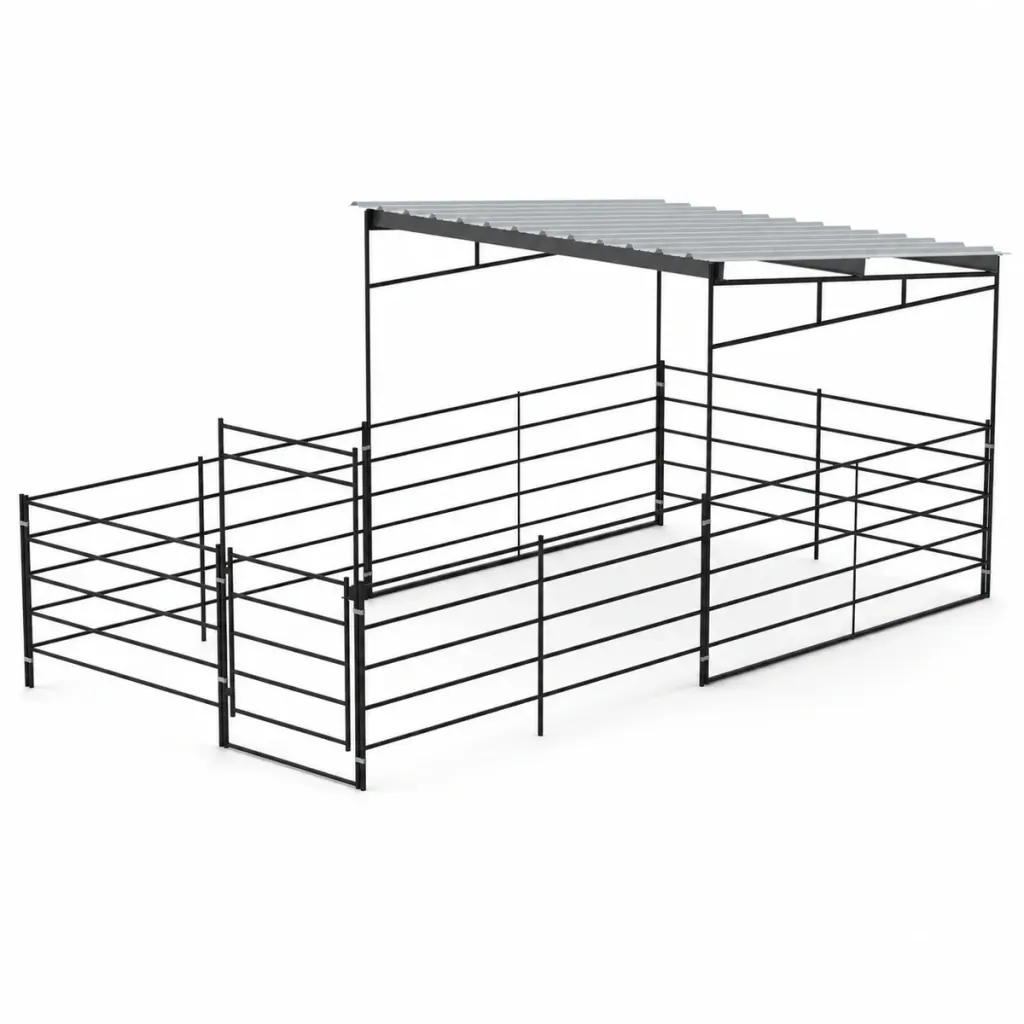
Covered standalone stall
A 12×24 stall under a 12×12 sloped cover, so half is roofed and half is open. It suits a few acres outside Austin, San Antonio or Dallas–Fort Worth, where room is tight and a horse needs shade through a long summer afternoon but can use winter sun on the open half.
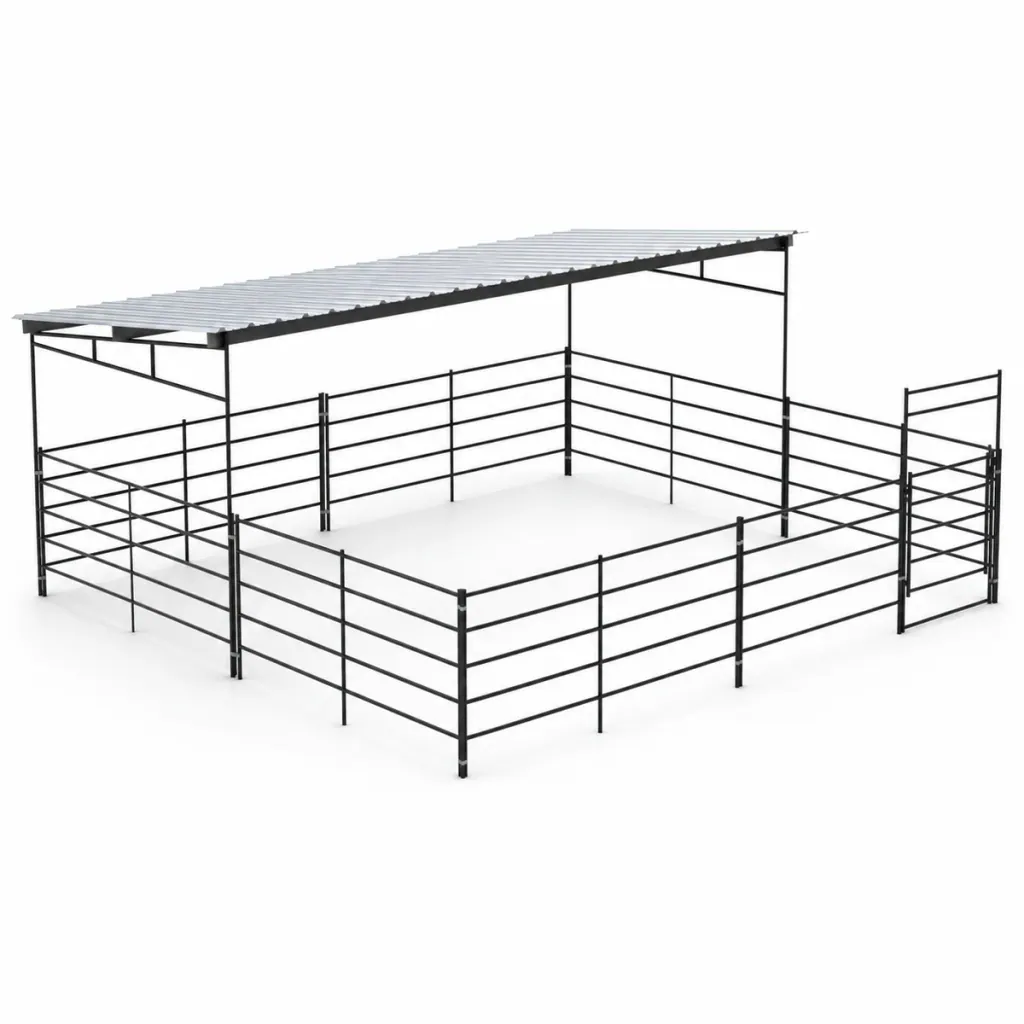
Larger covered stall
A 24×24 stall with a 12×24 sloped cover. The extra ground suits a horse that stays penned through a Central Texas summer, and the cover runs the full 24 ft side for a wide strip of shade. Its four ground posts go in concrete, so price a rock bit for Hill Country limestone.
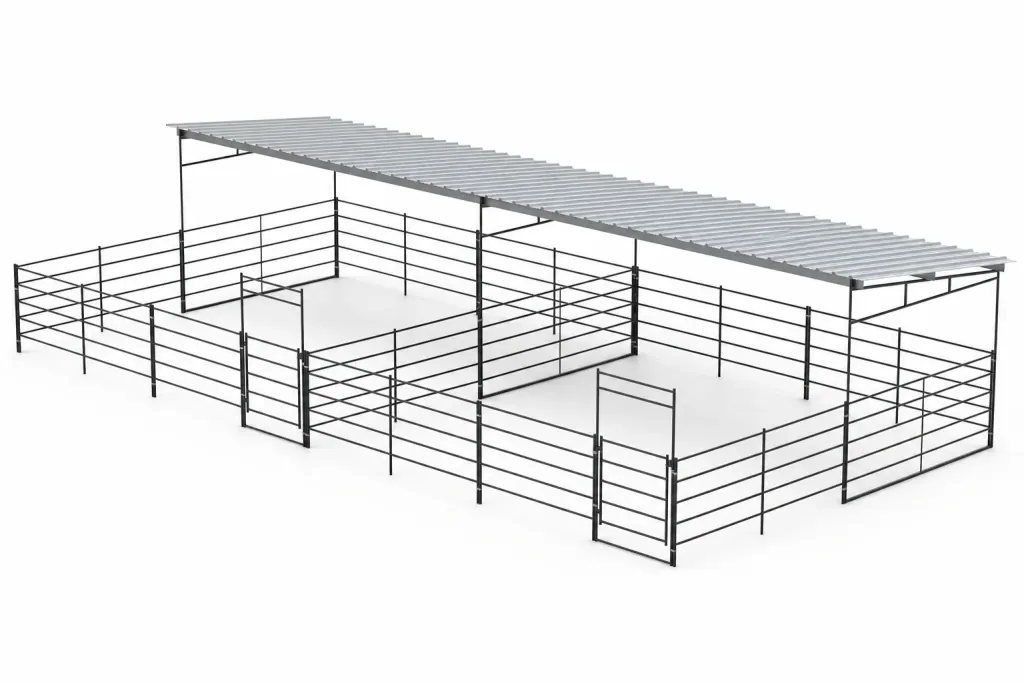
Two stalls with covers
Two 24×24 stalls side by side, each with its own 12×24 cover, plus two gates and six ground posts. They suit a two-horse place in the Cross Timbers around Weatherford or Stephenville, where one level pad, one set of footings and one water line serve both stalls.
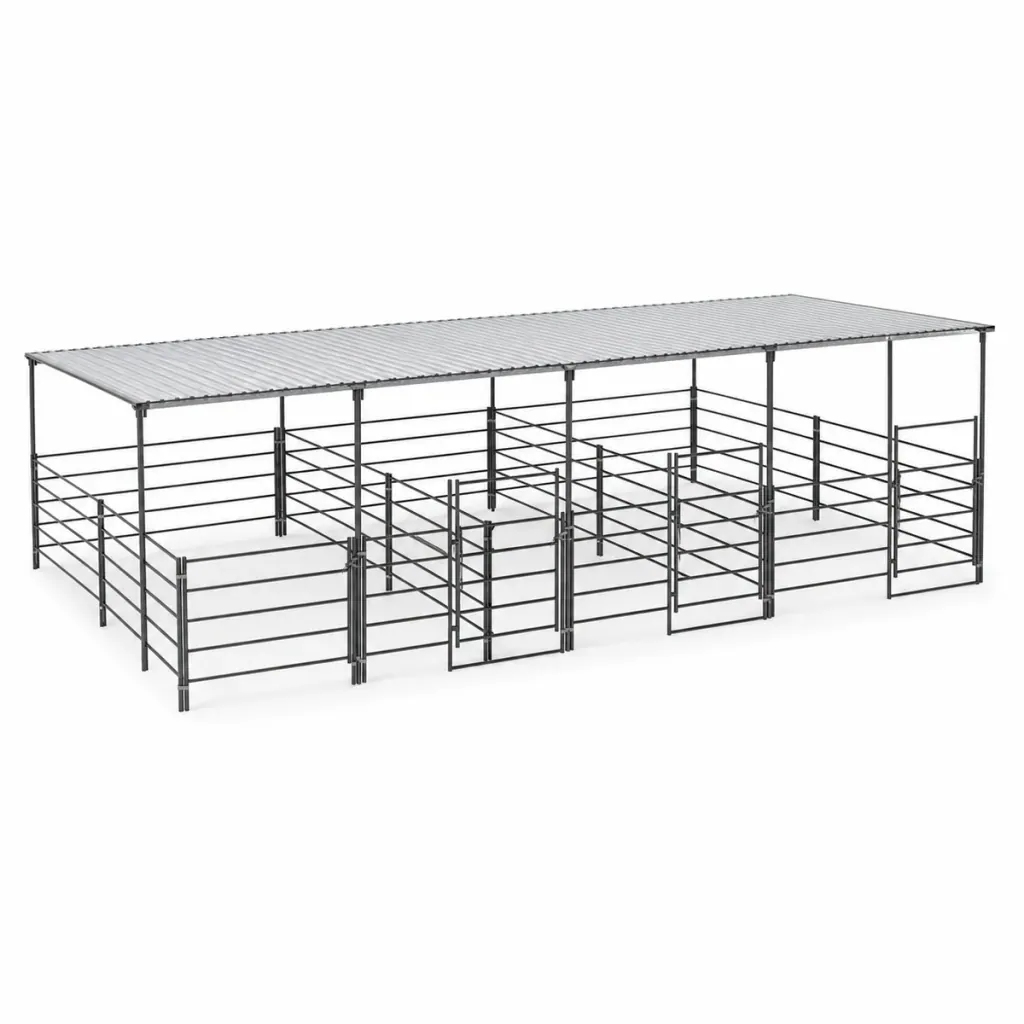
Open side-by-side rows
Open rows of two or three stalls, each 10×20, 12×24 or 24×24, with no roof. They suit a Hill Country or Brazos Valley place where live oaks or pecans already shade the pen, or a working ranch that holds horses in a row to feed and saddle before a day gathering cattle.
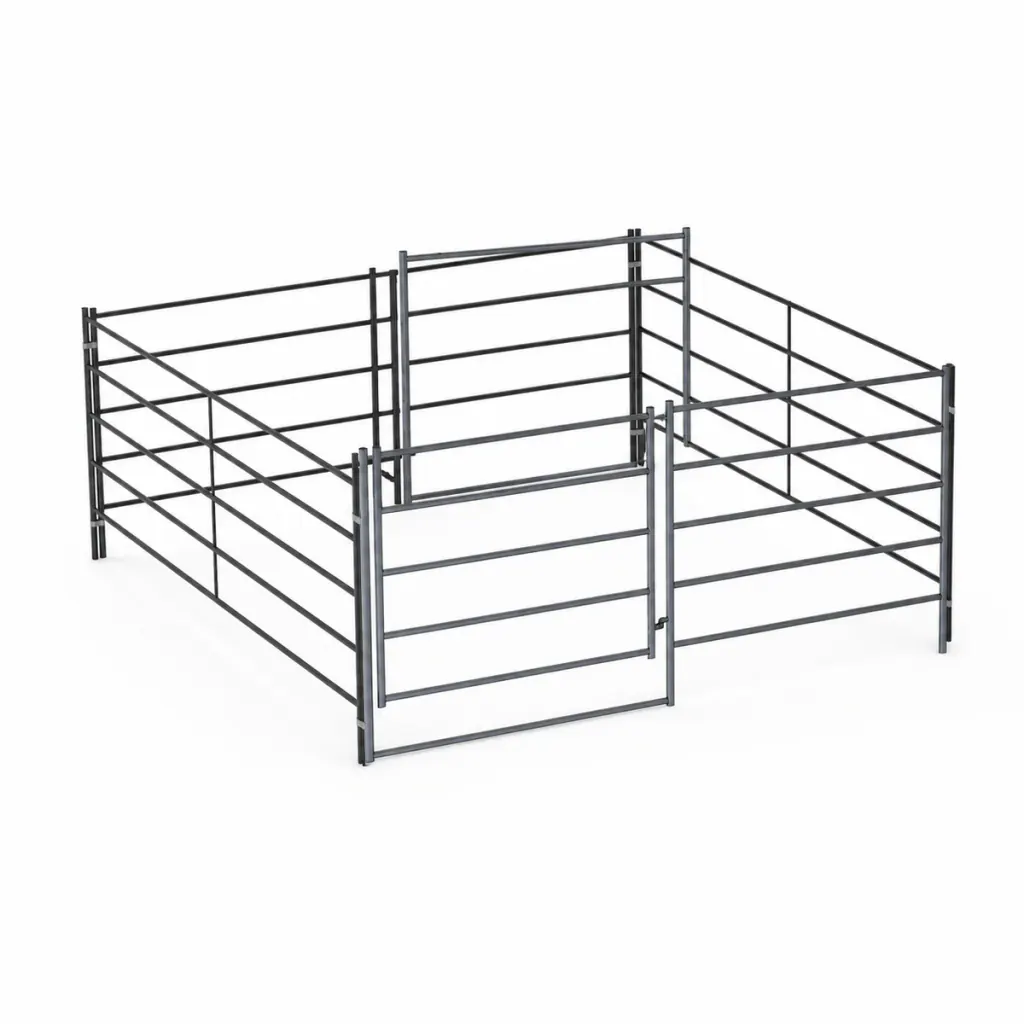
12×12 and 12×24 open stalls
Open 12×12 and 12×24 singles that clamp together and stand on the ground. The 12×12 works as a feeding or doctoring pen next to a barn in East Texas; the 12×24 gives more room on a small Houston-area acreage. Either can be unclamped and moved if a spot holds water.
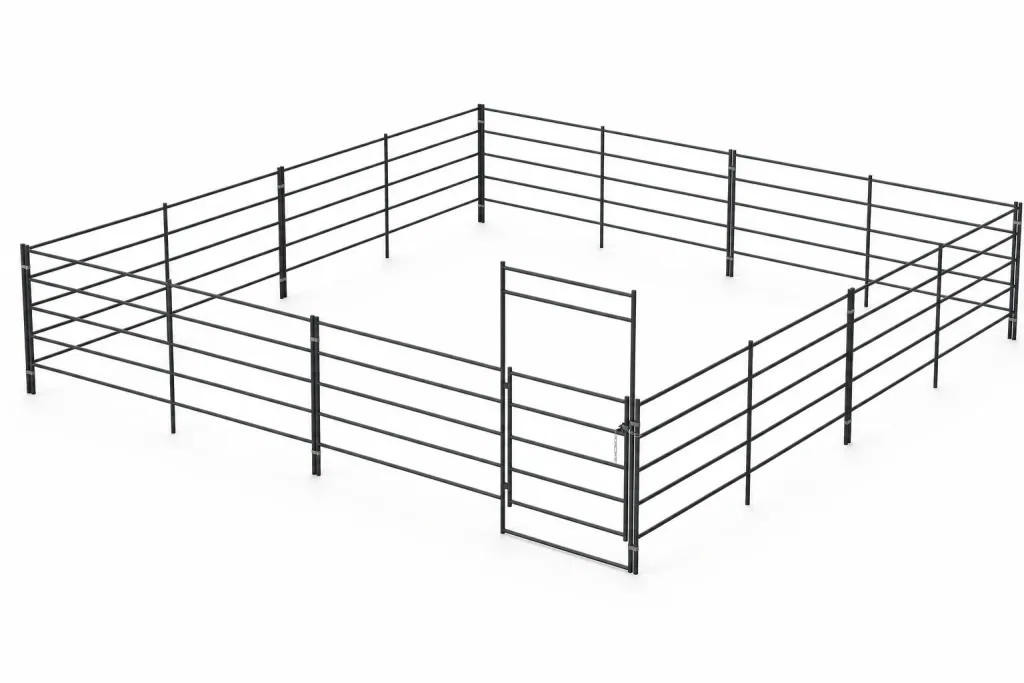
20×20 and 24×24 open stalls
Open 20×20 and 24×24 singles for a horse that lives in a pen rather than on grass. They suit Permian Basin and Trans-Pecos places with little pasture, where the stall is the horse's daily ground. On caliche the panels sit right on top, so there's nothing to dig.
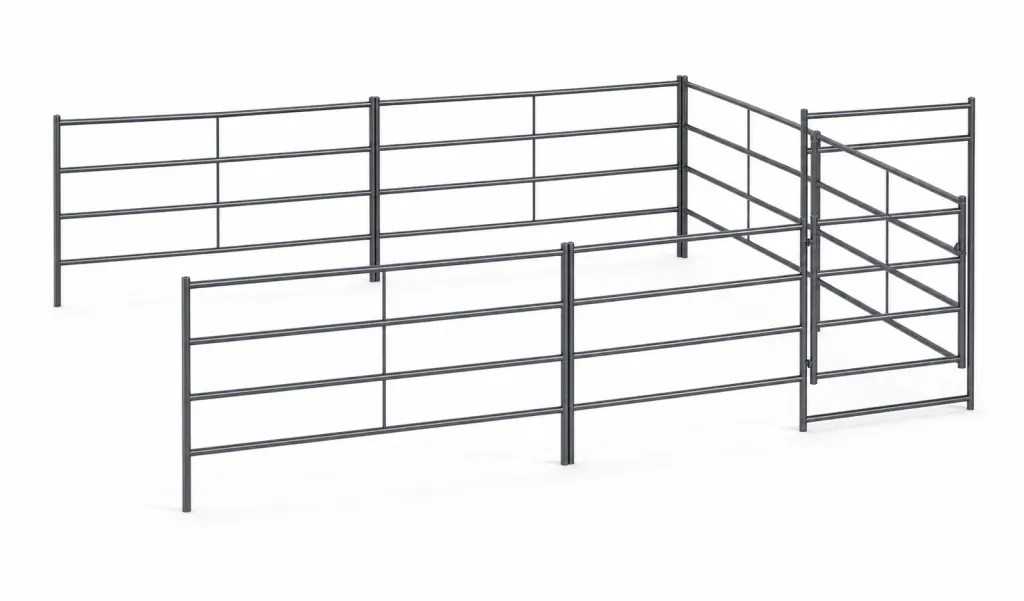
Open 24×24 add-ons
An open 24×24 add-on uses one wall of the Blacktail 24×24 stall you already have, so it needs fewer panels than a second standalone stall. It suits a Texas family adding one horse at a time, such as a youth horse joining a stall that already stands beside the barn.
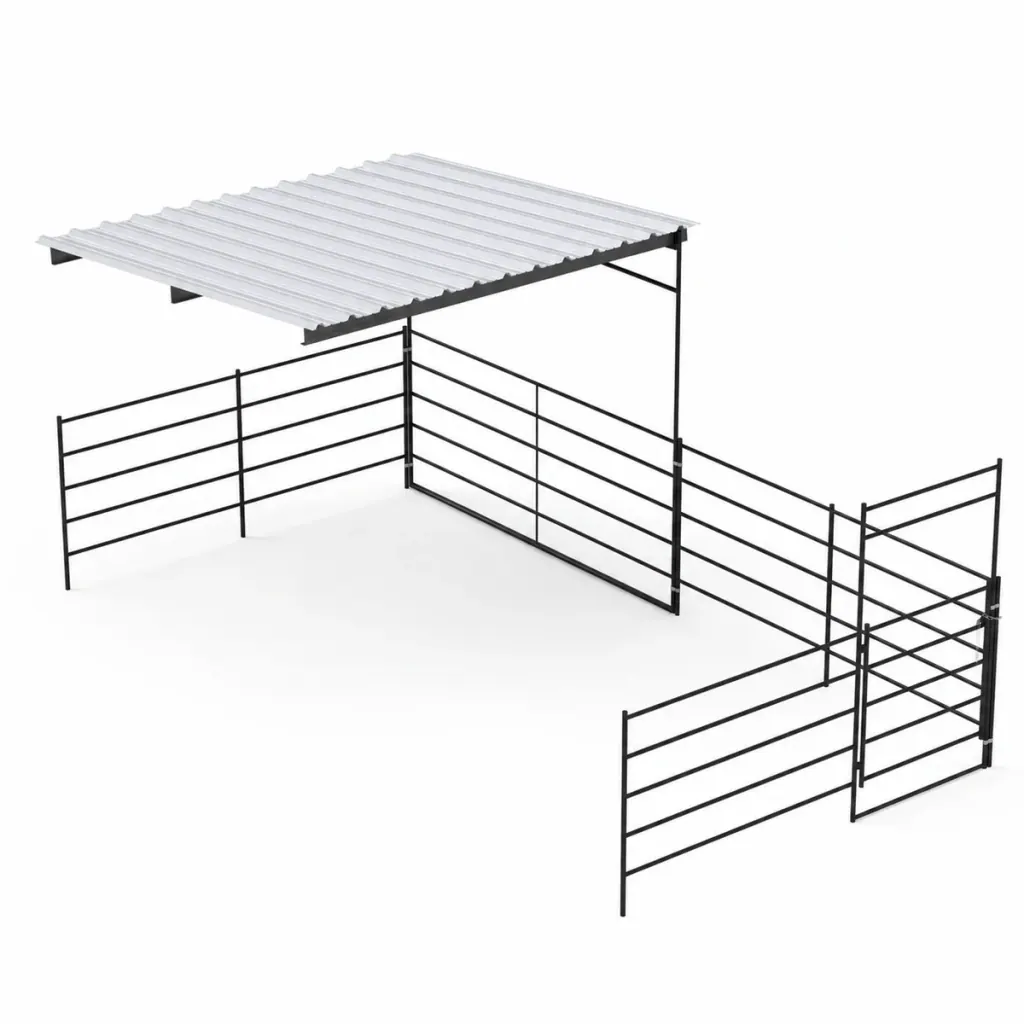
Add-ons with sloped covers
12×24 and 24×24 add-ons with a sloped cover over half the stall and two ground posts each. The new cover overlaps the roof of the covered stall beside it, which means unscrewing one existing roof sheet. Choose one when a second horse needs the same afternoon shade as the first.
Where a horse stall sits: Blackland clay, caliche and coastal prairie
Texas ground changes more from one region to the next than most states. The Blackland Prairie along I-35, from Dallas–Fort Worth through Waco and Austin toward San Antonio, is deep black clay that shrinks and cracks in a dry summer, then swells and turns sticky when it rains. The Gulf Coast prairies around Houston and Victoria are flat, slow-draining clay with a high water table. The Hill Country and much of West Texas have thin soil over limestone or caliche, and the Piney Woods of East Texas are sandy loam over red clay.
A stall floor takes more abuse than a pasture. A horse stands, paws and urinates in the same few square feet every day. Build the pad a few inches above the surrounding ground and slope it gently so rain runs out under the bottom rail. On black clay or coastal ground, a compacted base of crushed rock or limestone screenings under the bedding keeps the floor from turning to mud. On caliche you may only need to scrape and level. Ask a local dirt contractor about your soil and how much base the floor needs.
Placing a stall cover for Texas sun, hail and northers
Heat is the main reason most Texas buyers want a covered stall. The covered kits on this page roof half of the stall: a 12×12 sloped cover on the 12×24, and a 12×24 cover on the 24×24. In the afternoon the sun sits in the west and southwest, so the shade under a roof slides east. Put the covered half at the west or southwest end and the late-day shade falls across the stall instead of outside the panels. Check the spot at four in the afternoon in July, not at noon in April, before you mark the corners.
Rain comes off the low edge of a sloped cover in a sheet. Keep the gate, the trough and the feeder away from that edge, and make sure the pad carries the water off. North Texas and the Panhandle get frequent hail, and the roof is 26-gauge Galvalume PBR steel screwed to Z-purlins, which hail can dent like any steel roof. Winter northers push cold wind across the Plains; a barn or a windbreak to the north helps, and the open half lets a horse find sun on a clear morning. Covered stalls are not engineered structures and are not built to a specific building code.
Which stall kit fits a Texas place, from a few acres to a working ranch
Start with how the horse lives. On a few acres outside Houston, Austin or Dallas–Fort Worth, a horse may spend most of the day in its stall, and a covered 12×24 or 24×24 single gives it shade without a barn. On a ranch with pasture, a stall is more often a place to feed, doctor or hold a horse before hauling, and an open 12×12 or 12×24 does the job. In the Permian Basin and the Trans-Pecos, where grass is thin, an open 20×20 or 24×24 may be the horse's ground most days.
For two or three horses, compare a side-by-side row with separate singles. A row shares its dividing walls, so it takes one pad and fewer panels, and every stall still has its own walk-through gate. Singles spread out let you put each one where the shade and the gate route work best. If you expect to add horses, start with a standalone 24×24 or a covered single, then add a matching Blacktail add-on later. Add-ons share a wall with the stall beside them and don't stand alone, so match the size and rail count of the stall you have.
Stall rails, roof coverage and finish on a Texas horse property
Every stall kit is welded 14-gauge steel in 4-rail or 5-rail panels, joined with clamps, with a gate combo on each stall: a fixed panel and a walk-through gate with a latch. Five rails close the gaps, which matters for foals, minis, ponies and a horse that leans or paws at the fence. Four rails costs less and suits a settled adult horse. Next to a road, or at a boarding barn where kids walk past the stalls, pick five rails.
Roof coverage is the other big choice. Open stalls are the simplest kits and stand on the ground; the covered kits here roof half the stall and add ground posts set in concrete. Half roofed and half open gives a horse a choice between shade and sun, and under live oaks or beside a barn, an open stall may be enough. Bare metal is the standard finish and costs the least. It weathers to a surface-rust patina, faster on the humid Gulf Coast and in East Texas than in dry El Paso or Midland. Dapple grey, black or a custom powder coat costs more and keeps its color; you pick it on the product page.
Getting a stall kit delivered to a Texas ranch gate
Stall kits ship to every part of Texas, from Texline to Brownsville. Freight is priced from the road miles to your address, as one load, with a $200 minimum. You see the amount before you pay. Two Texas offers change that. A large order ships free anywhere in Texas, and a smaller order delivered near I-10, I-40 or US-287 ships at a flat rate; the delivery page gives the order size and the exact areas. Several stalls, a shelter and spare panels on one order travel as one load and count together toward that order size.
The driver brings the load to your property but doesn't unload it. Have a tractor with forks, a skid steer or enough people on hand. A covered stall adds roof sheets and Z-purlins to the panels, and the purlins on the 24×24 covers are 25 ft long, so leave room to swing long pieces. The truck needs a firm surface and room to turn around. After a rain, a black-clay drive or a coastal pasture can stop a loaded trailer, so meet it at a gravel pad or the edge of the county road. Tell us about cattle guards, low gates, overhanging oaks or a steep caliche drive when you order.
Setting up a covered or open stall kit on Texas ground
Open stalls clamp together and stand on the ground with no welding. A 12×12 is three 12 ft panels, a gate combo and 8 clamps; a 24×24 is seven panels, a gate combo and 16 clamps. To make an open stall permanent, set a post in concrete at each corner and clamp the panels to it, but don't concrete the panel legs. Covered stalls come with ground posts and hardware, four on a single and six on the covered pair, and you set them in concrete, which isn't included. Follow the kit instructions for post depth and placement.
On Hill Country limestone or West Texas caliche, a post-hole auger can stop a few inches down. A rock bit, a skid-steer auger or a fencing contractor saves a long day with a digging bar. On Blackland clay, dig when the ground is neither cracked dry nor soaked. Before you pour, check with your city or county and your HOA, and read your deed restrictions: some limit structures or horses, and a covered stall has a roof. Have buried lines marked before the auger goes in. Site work, concrete and assembly are yours unless you ask about installation with your quote.