

Mare motel kits for Texas
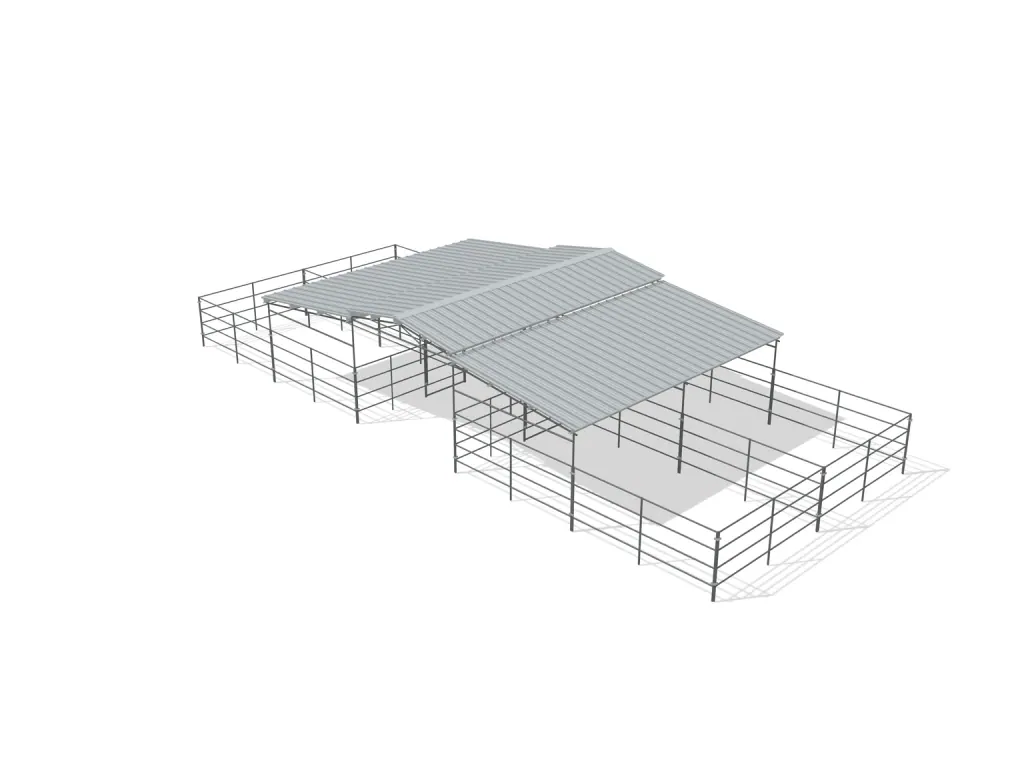
4-stall 12×24, standard cover
Four 12×24 stalls with the fronts roofed and the back half left open as a run. It suits a few mares on dry ground in West Texas, the Permian Basin or the South Plains, where an open run dries fast after a storm and a horse can stand in the winter sun.
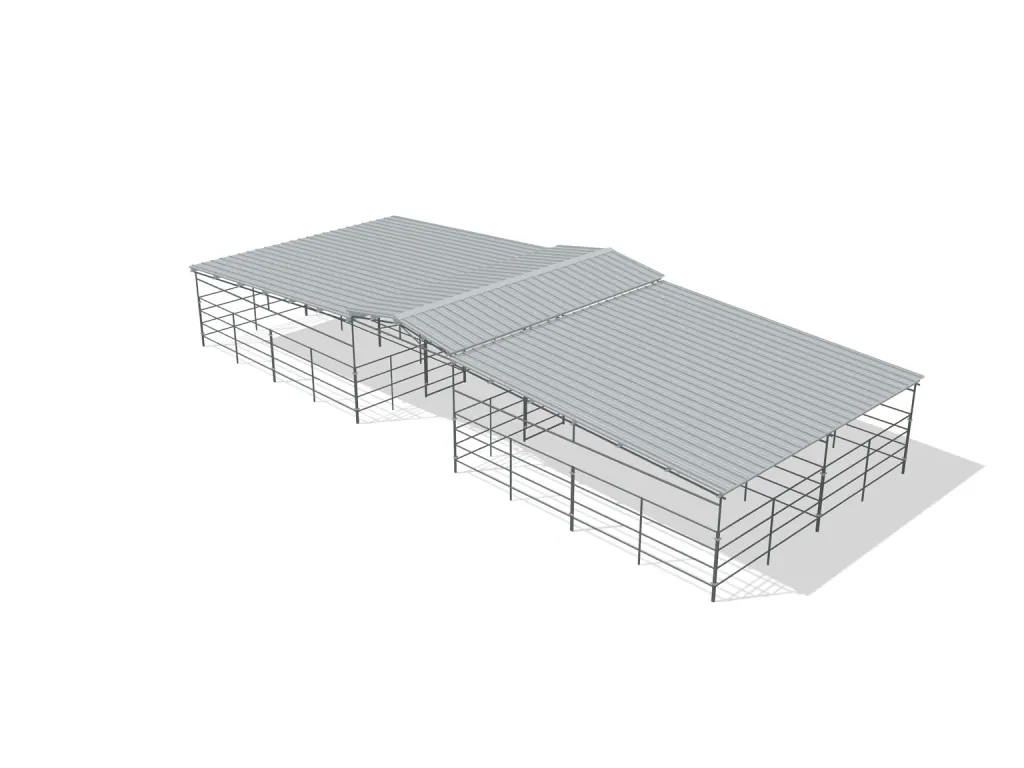
Fully covered 4-stall
The roof runs the full 24 ft depth of every stall, which doubles the roofed floor compared with standard cover. That counts under a Houston or Hill Country July sun, and in the wetter east, where open runs turn to mud. The welded-wire version suits mares with foals.
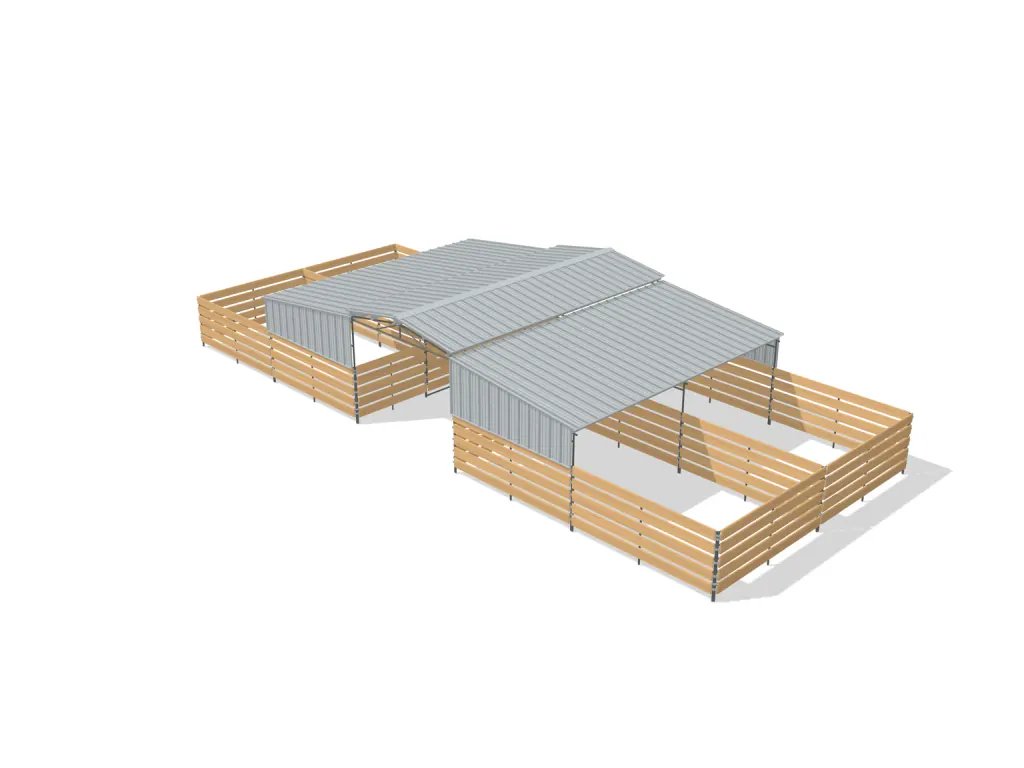
Wood-insert / PBR-sided
Boards you buy locally fill the lower panels, and the PBR-sided kit also closes the upper ends of the covered stalls. Solid walls suit a cutting or show barn around Weatherford, where you'd rather stalled horses didn't reach each other through the rails. Wood is not included.
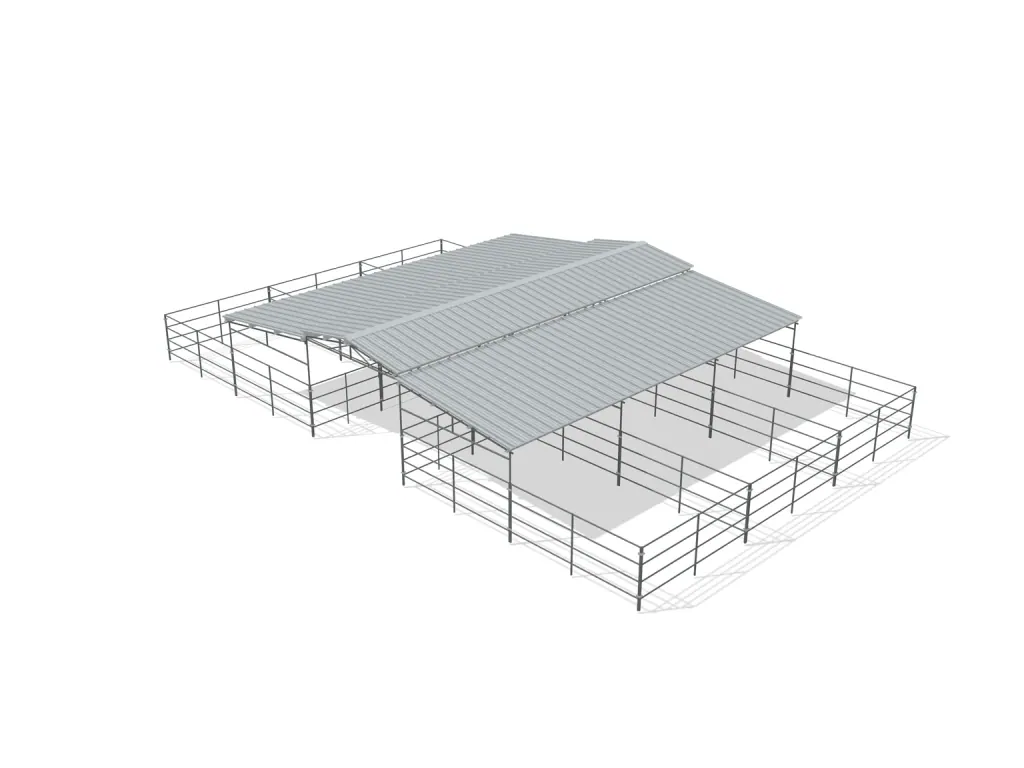
6–12 stall rows
Rows of 6, 8, 10 or 12 stalls for a breeding program foaling out several mares, a boarding barn outside Dallas–Fort Worth, Austin or San Antonio, or a ranch keeping horses for a crew. The 8- and 12-stall kits are fully covered; the 6- and 10-stall kits roof the stall fronts.
Larger 24×24 stalls
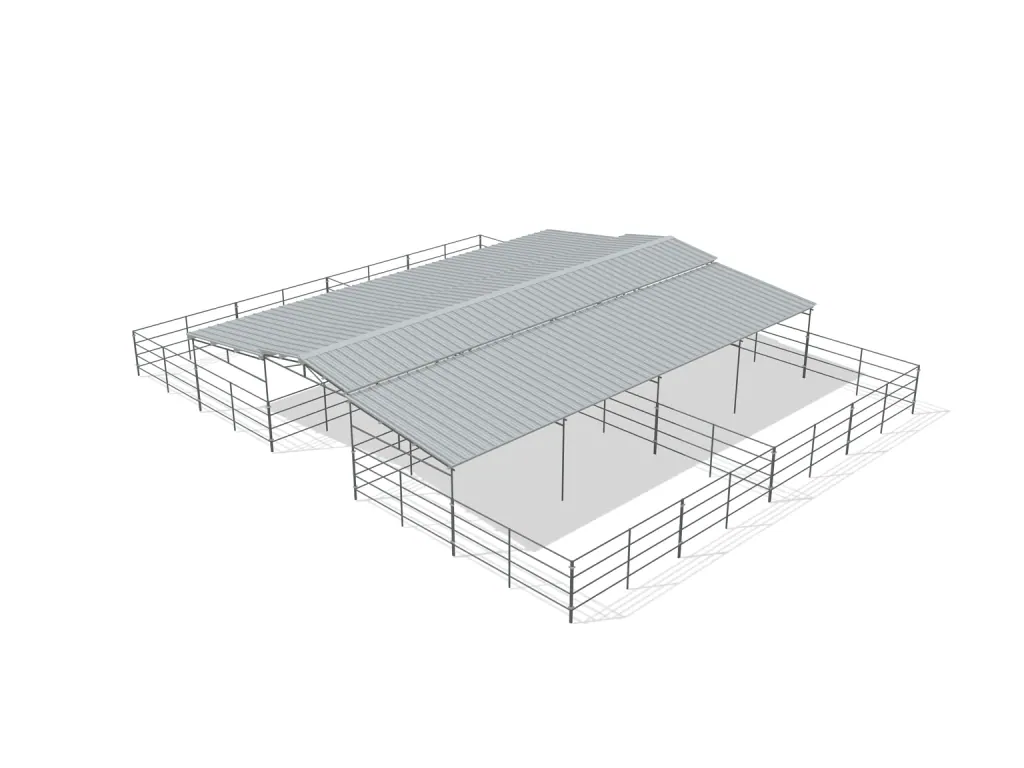
Four 24×24 stalls, each with a 12×24 cover over half its floor. The extra room suits a mare foaling out or a mare and foal together, and the ranch country of the Rolling Plains and South Texas has space for it: the building takes about 60 by 48 ft.
Blackland clay, caliche and coastal gumbo under a Texas mare motel
The Blackland Prairie, running from around San Antonio up through Austin, Waco and Dallas, is dark clay that cracks open in a dry August and swells and turns sticky after rain. The coastal prairie around Houston, Victoria and Beaumont is flat gumbo clay that can hold standing water for days. In the Hill Country, limestone sits a few inches under the grass. On the South Plains and in the Permian Basin, a caliche layer lies under sandy loam, and the Piney Woods have sandy soil over red clay.
A 4-stall kit with 12×24 stalls covers about 60 by 24 ft, and every extra pair of stalls adds 12 ft of length, so a 12-stall row needs a level pad about 60 by 72 ft. The ground posts are set in concrete, so the soil has to hold them. On Blackland clay, a shallow post can move as the ground shrinks and swells, so ask about hole depth before you pour. On limestone or caliche, expect a rock auger or a breaker rather than a tractor post-hole digger.
Watch where the roof sends its water. The stall roofs slope down toward the outside, and on a standard-cover kit the roof stops 12 ft back from the breezeway, so rain off the roof lands across the middle of each stall. On coastal or Blackland clay, build the pad above the ground around it and put a firm base where that water falls. A dirt contractor who works in your county can tell you what your soil needs and how much base to haul.
Afternoon shade, hail and northers on a Texas mare motel
Most of Texas runs past 95 degrees for weeks each summer. A standard-cover kit roofs the breezeway and the front 12 ft of each stall and leaves the back 12 ft open as a run. A fully covered kit roofs the whole stall. Rain runs from about 10 inches a year around El Paso to more than 50 on the upper coast, and that is a fair guide to the choice. Around Houston, Beaumont and Tyler an open run can stay muddy for days, while from Midland to Amarillo it dries fast and a mare can stand in the sun on a cold morning.
In much of the state the summer breeze comes from the south or southeast, and a breezeway that runs roughly north and south lets it pass down the aisle. The same opening will funnel a winter norther; PBR siding closes the upper part of the outer covered stall ends if that bothers you. Low sun late in the day reaches under any roof edge from the west, so stand on the site around 5 p.m. in July and see where the shade actually falls before you mark the posts.
Hail hits North Texas and the Panhandle most springs, and hurricanes reach the coast in late summer and fall. Large hail can dent the sheets, and a mare motel is shade and a dry place to feed, not storm protection. Keep a plan for where horses go when a big storm is forecast, and ask your insurer how they cover a steel horse building.
Which mare motel fits a Texas breeding, boarding or ranch barn
Breeding programs from the Panhandle to the cutting and reining barns around Fort Worth and Weatherford foal out mares every spring. For foaling, the 24×24 kit gives each mare twice the floor of a 12×24 stall, half under the roof and half open. Five-rail or welded-wire panels close the gaps a foal could put a leg or head through.
A boarding barn on the edge of Dallas–Fort Worth, Austin, San Antonio or Houston usually needs more stalls on less land. The 6- to 12-stall rows keep every stall on one breezeway, so feeding and cleaning is one walk. If boarders will want every stall shaded, look at the fully covered 8- and 12-stall kits. For a few horses on acreage, or a ranch crew's using horses in South Texas or the Trans-Pecos, the standard 4-stall kit is the simplest place to start.
Stall count, rails, siding and finish on a Texas mare motel
Kits run from 4 to 12 stalls, added in pairs, with 12×24 or 24×24 stalls and a 12 ft breezeway. The kit page also offers a shed row, with the stalls in a single line, for a site that is long and narrow. Count the stalls you'll need in a few years, not just today. There is no add-on kit for an existing mare motel, so a longer row later usually means a second building.
Four rails suit grown horses. Five rails or welded wire, in 5 ft or 6 ft panels, suit mares with foals and young stock. Wood-insert panels hold boards you buy yourself, and the Heritage Series, fully covered or with open runs, has steel channel for boards and a dapple grey powder coat included. Wood is not included in any of them. Solid walls keep neighbors from touching noses, but they also block the breeze, which counts for a lot in a Gulf Coast summer.
Bare metal is the standard finish and costs the least. It weathers to a rust patina, faster in Houston's humidity and the salt air of the coast than in the dry air around Midland or El Paso. Dapple grey, black or a custom powder coat costs more and keeps its color.
Getting a mare motel load onto a Texas property
A mare motel ships as one large load. A 4-stall kit alone brings 20 panels and gate combinations, breezeway trusses, 25 ft Z-purlins, PBR roof sheets, ridge caps, clamps and ground posts. Large orders ship free anywhere in Texas. Smaller orders delivered near I-10, I-40 or US-287 ship at a flat rate, and the delivery page gives the order size and the exact areas. Smaller orders away from those highways are priced on distance. Freight is priced from the road miles to your address, as one load, with a $200 minimum. You see the amount before you pay.
The driver brings the load to your property but doesn't unload it. Plan for a tractor or skid steer with forks, and enough help to carry 25 ft purlins and long roof sheets by hand. Pick a firm unloading spot close to the pad. After a rain, Blackland or coastal clay can stop a loaded truck in a pasture, so a caliche or gravel drive is the safer place to meet it. Tell us about cattle guards, low lines, tight gates or a long dirt road when you order.
Posts, roof and county rules for a Texas mare motel
The kit includes its ground posts and hardware: 12 on a standard 4-stall kit and 24 on a fully covered one. You set the posts in concrete, which you supply, and clamp the panels to them. Don't concrete the panel legs. A standard 4-stall kit uses 64 clamps, and nothing is welded on site. The breezeway roof stands 9 to 10 ft high, so the trusses, purlins and screwed-down roof sheets need ladders or a lift and two or three people. Installation is available and quoted separately.
Lay the building out with string and stakes, measure both diagonals to check it's square, and let the post concrete cure before the panels go up. Mare motel kits are not engineered and are not built to a specific building code, so check with your county, and the city if you're near a town, before you order. Outside city limits the rules vary, and a city's extraterritorial jurisdiction, an HOA or deed restrictions can still apply. If part of the site is in a mapped floodplain, ask the county whether you need a floodplain permit.