
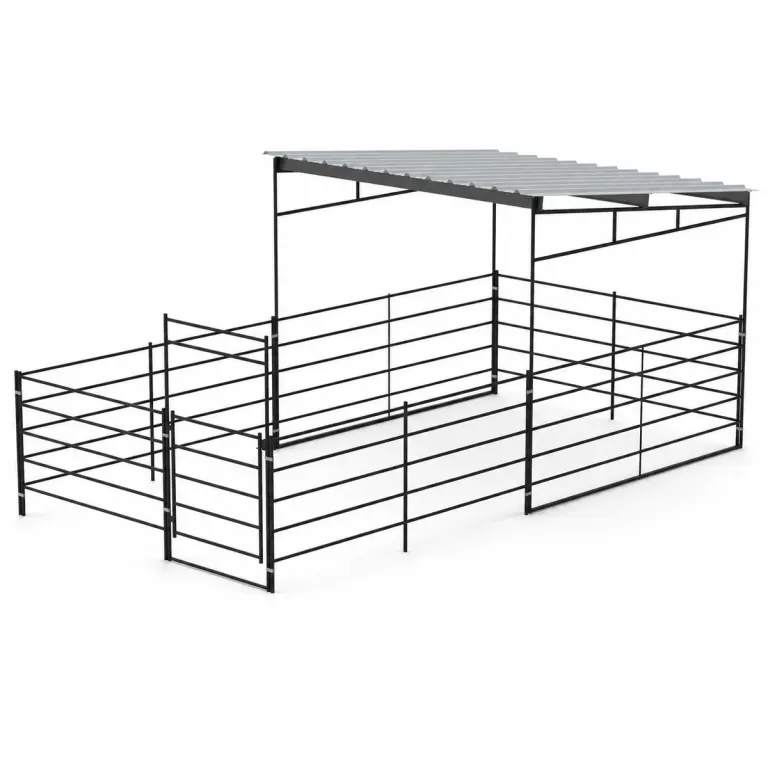
Covered standalone stall
A 12×24 enclosure with a 12×12 sloped cover; compare the 4-rail and 5-rail listings.
View kit details
Covered horse stall kits and side-by-side stall rows for your Louisiana property.
Equipment for daily use on your property.
Review the included components before you order.
Delivery details are confirmed with your quote.
Compare covered standalone stalls and rows of two or three stalls. The enclosure size and the covered area are separate choices; each listing identifies both.
A 12×24 enclosure with a 12×12 sloped cover; compare the 4-rail and 5-rail listings.
View kit details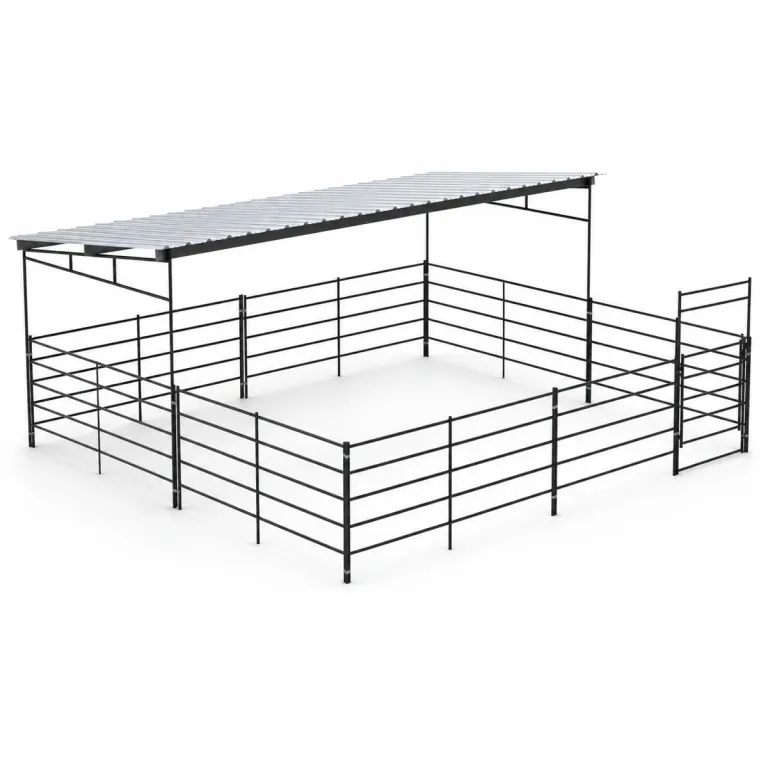
A 24×24 enclosure with a 12×24 sloped cover. Stall area and covered area are different.
View kit details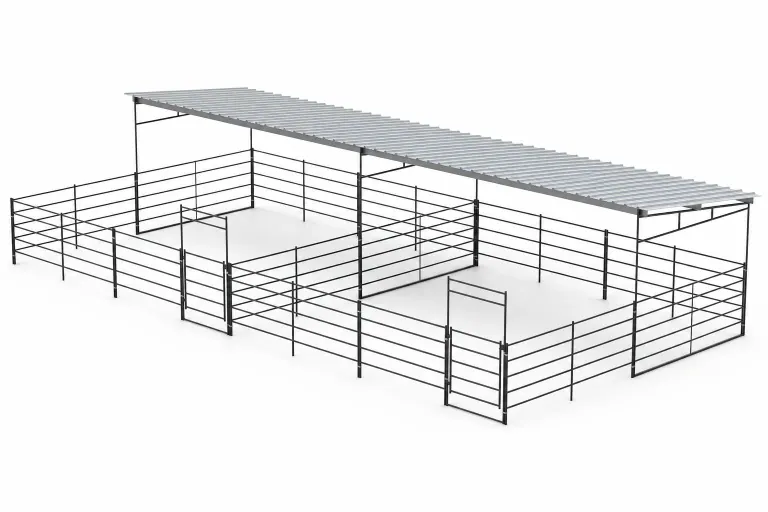
Two side-by-side 24×24 stalls with two 12×24 covers; compare rail counts.
View kit details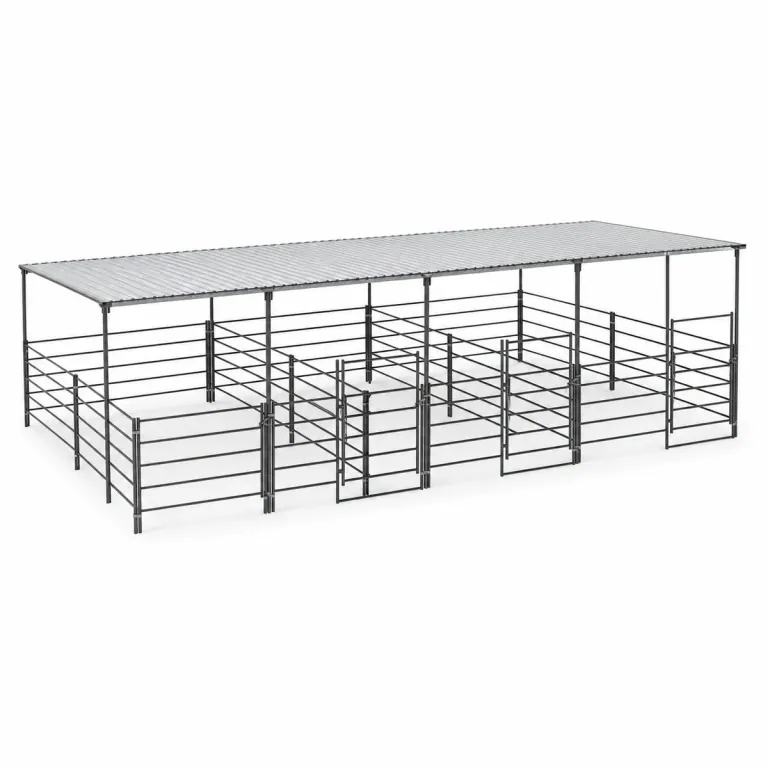
Compare open two- and three-stall rows. These featured configurations do not include a roof.
View kit detailsA 12×24 enclosure with a 12×12 sloped cover; compare the 4-rail and 5-rail listings.
12x24 Stall, 12x12 Sloped Cover 5-Rail$2,120.00 · listed kit price; freight separate.
A 24×24 enclosure with a 12×24 sloped cover. Stall area and covered area are different.
24x24 Stall, 12x24 Sloped Cover 5-Rail$2,860.00 · listed kit price; freight separate.
Two side-by-side 24×24 stalls with two 12×24 covers; compare rail counts.
Two 24x24 Stalls 5-Rail Side by Side, Two 12x24 Covers$5,130.00 · listed kit price; freight separate.
Compare open two- and three-stall rows. These featured configurations do not include a roof.
Three 12x24 Stalls Side by Side 5-Rail$3,260.00 · listed kit price; freight separate.
Stall dimensions, the number of enclosures, roof coverage, rail count, and finish determine the selected kit price.
Compare a single stall with side-by-side rows and larger enclosures.
A 12 × 24 ft stall with a 12 × 12 ft cover is only partially covered.
Review the 4-rail or 5-rail listing and its included gates and connections.
Open stall rows do not include a roof. The selected listing identifies the enclosure and cover separately.

Keep feeding, turnout, and cleaning routes on the same layout.
Mark each gate and the route between the stall and turnout.
Allow room for feed, cleaning and equipment alongside the enclosure.
Plan drainage and installation requirements for the selected cover.
Put the Louisiana stall entrance on ground you can keep using. The practical question is not only how many stalls fit, but whether horses, feed and cleaning equipment can reach each enclosure when the surrounding yard is wet.
Start a Louisiana stall project at the route you already use to lead horses and move supplies. Follow it to the proposed enclosures and note the low spots, narrow corners and places where equipment has to turn. Choosing the stall position first can leave the approach as an awkward leftover. Compare sites by the whole trip, not only by the empty area inside the proposed panels.
Photograph the route under different ground conditions when possible. Those observations are useful for your preparation plan and for showing the shop where the gates need to work. They are not a substitute for site design. Leave enough room outside a standalone stall or side-by-side row to improve access without moving the entire enclosure after it has been assembled and occupied.
A roof describes cover above the enclosure, not the condition of the ground beneath it. On a wet Louisiana site, water can still arrive from adjoining areas or collect near an entrance. Think about the full stall surface and the working edge around it before deciding that more roof coverage resolves the property’s access or drainage problem.
Read the actual coverage in the kit name. The 12×24 covered stall has a 12×12 sloped cover; the 24×24 version has a 12×24 cover. These are partially roofed enclosures. A paired covered configuration lists its own covers and dimensions. Keep those numbers on the order instead of assuming that every square foot inside the stall is under the roof.
One covered stall beside an established path and a pair of stalls sharing a working edge create different chore patterns. Draw where feed enters the yard and how you reach the last gate without crossing another occupied enclosure. For a longer row, include the time and space needed to clean the far end rather than evaluating only the first stall from the entrance.
Blacktail’s collection includes open two- and three-stall rows, along with covered arrangements. More enclosures do not automatically mean more roof. List the required number of stalls and the cover requirement separately when comparing products. Ask for the complete gate layout so the daily feeding route is based on the selected configuration rather than a similar-looking example elsewhere in the catalog.
An extension may fit neatly against an existing stall while closing the only useful path around it. Mark the future enclosure on the Louisiana site plan and trace the cleaning route again before ordering. Take account of existing posts, water points and fixed obstacles. The space outside the added panels remains part of the project, even though it is not part of the product price.
Modular add-ons are listed in portable horse stalls and share an existing wall. Confirm dimensions, rail count and connections before choosing one. Open single enclosures are also in that collection; covered standalone stalls are here. A roofed addition has its own support and installation requirements, so do not interpret the ability to reconnect panels as confirmation that the complete covered structure can simply be moved.
Provide the Louisiana project location, number of enclosures, each stall’s dimensions and the roof configuration you are considering. Include photographs of the entrance and a measured sketch of the working route. Show which panels already exist and whether any proposed addition shares a wall. This gives the shop a defined arrangement to discuss instead of an unspecified request for horse housing.
Keep installation, ground preparation and any unlisted materials outside the featured kit price. Resolve support requirements for the selected cover before beginning site work, and confirm the complete kit contents on the product page or quote. The national product listing remains the commercial record for price, finish and SKU; this page helps you place that product within a workable property plan.
Start with a size or layout. We can help you compare options.
Include truck access, gate openings and unloading details.
Review the selected configuration and delivery quote with our team.
Equipment, delivery details and freight are confirmed with your quote. About delivery
Use the Get a Quote link to prepare your request, or call (619) 914-6657. Send the number of horses, each proposed stall size, the cover you need and a sketch of the gates and cleaning route. Include the project location and any existing panels you need to match.
Freight is separate from the product price. Send the project address or ZIP code with your selected configuration so delivery and access requirements can be confirmed with the quote.
Compare covered standalone stalls and side-by-side rows. Enclosure dimensions and cover dimensions are separate. Open single stalls and modular extensions belong to the portable horse stalls collection.
No. The listed price is for the product, not an installed project. Check the selected listing and installation guide for assembly, support, and site-preparation requirements before ordering.
No. Roof coverage does not address incoming surface water or all ground conditions. Plan the stall floor, gate approach and surrounding drainage separately from the choice of covered area.
Compare the number of enclosures, each stall’s dimensions and the number and size of the covers. Then draw the feeding and cleaning route to every gate. Confirm the complete arrangement rather than multiplying a single-stall photograph.
Yes, the new enclosure occupies space outside the original stall. Put it on a measured site sketch and check maintenance access before ordering. Compatibility of the shared wall does not establish that the surrounding layout still works.
The examples use the existing national product prices. Request a quote for your selected configuration and project location, and treat installation and ground preparation as separate items rather than assuming the displayed price is an installed total.
From Baton Rouge, Lafayette, Shreveport and beyond, send your city or ZIP so we can confirm delivery for your property.
Let’s find the right equipment for your Louisiana property.