
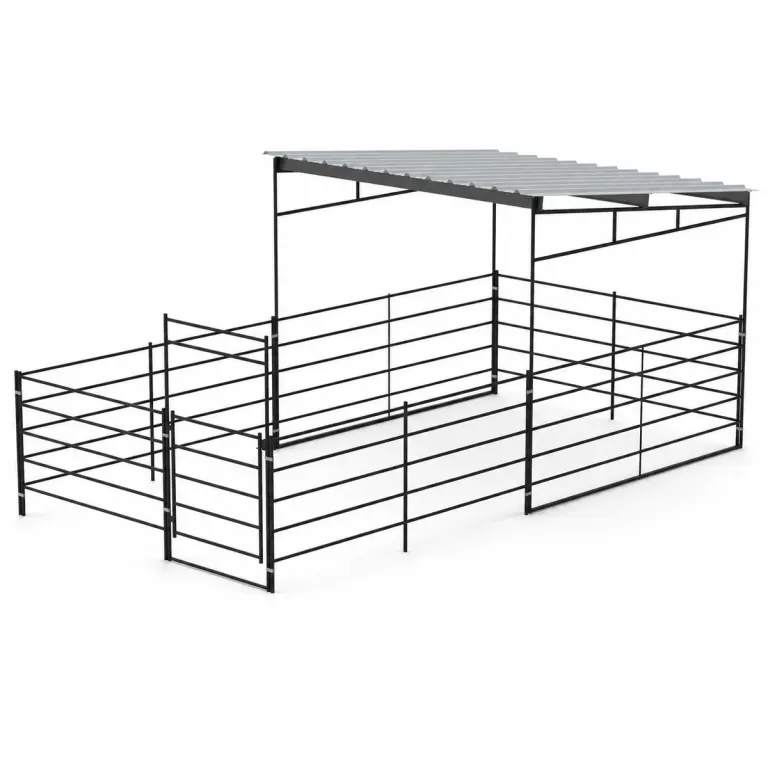
Covered standalone stall
A 12×24 enclosure with a 12×12 sloped cover; compare the 4-rail and 5-rail listings.
View kit details
Covered horse stall kits and side-by-side stall rows for your Arkansas property.
Equipment for daily use on your property.
Review the included components before you order.
Delivery details are confirmed with your quote.
Compare covered standalone stalls and rows of two or three stalls. The enclosure size and the covered area are separate choices; each listing identifies both.
A 12×24 enclosure with a 12×12 sloped cover; compare the 4-rail and 5-rail listings.
View kit details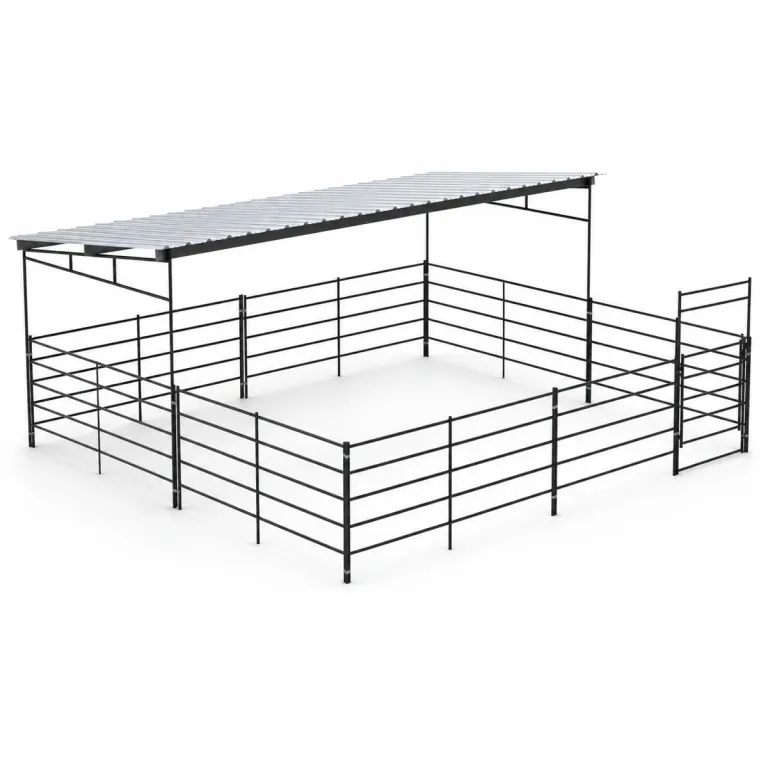
A 24×24 enclosure with a 12×24 sloped cover. Stall area and covered area are different.
View kit details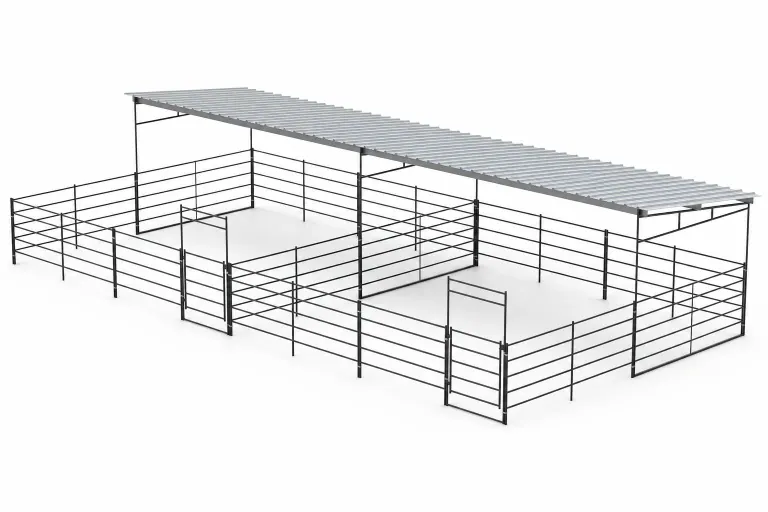
Two side-by-side 24×24 stalls with two 12×24 covers; compare rail counts.
View kit details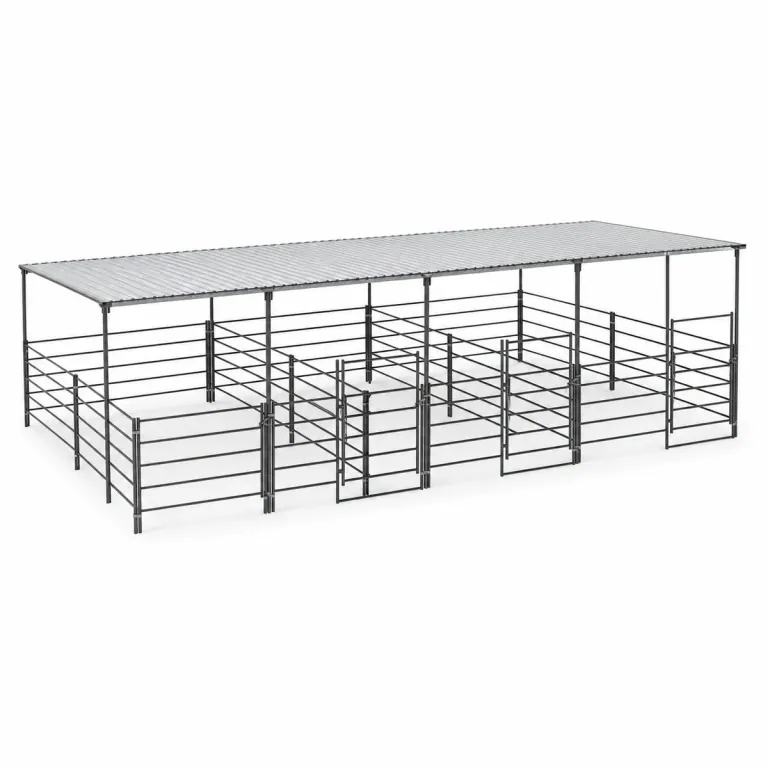
Compare open two- and three-stall rows. These featured configurations do not include a roof.
View kit detailsA 12×24 enclosure with a 12×12 sloped cover; compare the 4-rail and 5-rail listings.
12x24 Stall, 12x12 Sloped Cover 5-Rail$2,120.00 · listed kit price; freight separate.
A 24×24 enclosure with a 12×24 sloped cover. Stall area and covered area are different.
24x24 Stall, 12x24 Sloped Cover 5-Rail$2,860.00 · listed kit price; freight separate.
Two side-by-side 24×24 stalls with two 12×24 covers; compare rail counts.
Two 24x24 Stalls 5-Rail Side by Side, Two 12x24 Covers$5,130.00 · listed kit price; freight separate.
Compare open two- and three-stall rows. These featured configurations do not include a roof.
Three 12x24 Stalls Side by Side 5-Rail$3,260.00 · listed kit price; freight separate.
Stall dimensions, the number of enclosures, roof coverage, rail count, and finish determine the selected kit price.
Compare a single stall with side-by-side rows and larger enclosures.
A 12 × 24 ft stall with a 12 × 12 ft cover is only partially covered.
Review the 4-rail or 5-rail listing and its included gates and connections.
Open stall rows do not include a roof. The selected listing identifies the enclosure and cover separately.

Keep feeding, turnout, and cleaning routes on the same layout.
Mark each gate and the route between the stall and turnout.
Allow room for feed, cleaning and equipment alongside the enclosure.
Plan drainage and installation requirements for the selected cover.
For an Arkansas stall project, follow the water and the cleaning route before drawing a roof. A covered enclosure still needs usable ground around its gate and room to remove bedding or waste without crossing every other stall.
Look at the Arkansas site after wet weather as well as on the day you measure it. Mark where water approaches the proposed stalls and where it leaves the yard. A roof over part of an enclosure does not stop runoff arriving from higher ground. The best-looking empty space on a dry plan may need a different arrangement once those routes are visible.
Keep your observations separate from a finished drainage design. Photographs and a sketch can identify questions for the people preparing the site, but a stall listing does not specify grading for your property. Allow room to solve the ground problem outside the panels. Do not spend the entire available width on enclosures before making space for access and the planned route of water.
Trace where cleaning equipment enters, which stall it reaches first and where material leaves the working area. A covered single stall may be easier to service from an existing path, while a paired or three-stall row may suit a clear edge along the yard. The useful comparison is the complete routine, not simply how compact the enclosure appears when viewed from above.
Include gate movements in that route. A wheelbarrow path that relies on keeping another horse’s enclosure open is different from direct access to each stall. Ask for the selected layout rather than assuming all side-by-side rows have identical fronts. Measure the obstructions already present and leave an accessible edge around the steel so routine maintenance does not become an afterthought.
Blacktail lists partially covered single stalls with a 12×24 enclosure under a 12×12 cover and a 24×24 enclosure under a 12×24 cover. These dimensions let you compare roofed space without assuming the whole stall is covered. Decide where bedding, feeding and other daily activities will take place before choosing a configuration based on enclosure size alone.
On an Arkansas property where ground conditions vary across a short distance, orienting a partial cover is not a substitute for preparing the site. Consider the exposed part of the stall and the area at the roof edge together. Confirm the roof and support arrangement for the chosen model; neither the catalog name nor a photograph supplies a property-specific drainage or footing plan.
The horse stalls collection includes open side-by-side rows as well as roofed combinations. Choose a complete row when you need the whole arrangement rather than assuming an add-on provides every wall of a first enclosure. Open single stalls and modular additions live in the portable horse stalls collection, which keeps the starting-kit and shared-wall decisions distinct.
When extending a stall already on your Arkansas property, record its dimensions, rail count and connection details. Show the ground where the new enclosure will sit and how you will reach its gate. A matching panel height or nominal footprint alone does not establish compatibility. Covered add-ons also require a confirmed roof-support arrangement rather than a simple assumption that the existing wall carries everything.
A quote becomes more useful when the shop can see both the proposed enclosures and the ground around them. Send the Arkansas location, stall count, enclosure dimensions, cover dimensions and your cleaning route. Add photographs that show low areas and any existing fences. State which parts of the arrangement already exist so a shared-wall extension is not confused with a complete new row.
Budget the ground work and installation separately from the listed kit. Have the site preparation and support requirements resolved for the selected covered configuration before construction. Confirm component inclusions and any additional connection hardware on the original product page or quote. That keeps current prices and options attached to the right item while the location page addresses how the project fits your property.
Start with a size or layout. We can help you compare options.
Include truck access, gate openings and unloading details.
Review the selected configuration and delivery quote with our team.
Equipment, delivery details and freight are confirmed with your quote. About delivery
Use the Get a Quote link to prepare your request, or call (619) 914-6657. Send the number of horses, each proposed stall size, the cover you need and a sketch of the gates and cleaning route. Include the project location and any existing panels you need to match.
Freight is separate from the product price. Send the project address or ZIP code with your selected configuration so delivery and access requirements can be confirmed with the quote.
Compare covered standalone stalls and side-by-side rows. Enclosure dimensions and cover dimensions are separate. Open single stalls and modular extensions belong to the portable horse stalls collection.
No. The listed price is for the product, not an installed project. Check the selected listing and installation guide for assembly, support, and site-preparation requirements before ordering.
No. Roof coverage and site drainage are separate questions. Observe incoming runoff, gate conditions and the ground beyond the panels, then have the preparation requirements addressed for the actual property.
The featured 24×24 covered stall lists a 12×24 sloped cover. The remaining enclosure area is outside that roof. Check both dimensions when comparing it with another configuration.
That depends on the selected gate arrangement and the working space around your layout. Request the complete plan and draw the cleaning route to each enclosure before placing the row.
Identify it as an add-on request and provide dimensions, rail count, connection photos and the proposed new ground area. A covered extension also needs its own support requirements confirmed. Do not price an add-on as a complete first stall.
From Little Rock, Fayetteville, Fort Smith and beyond, send your city or ZIP so we can confirm delivery for your property.
Let’s find the right equipment for your Arkansas property.