
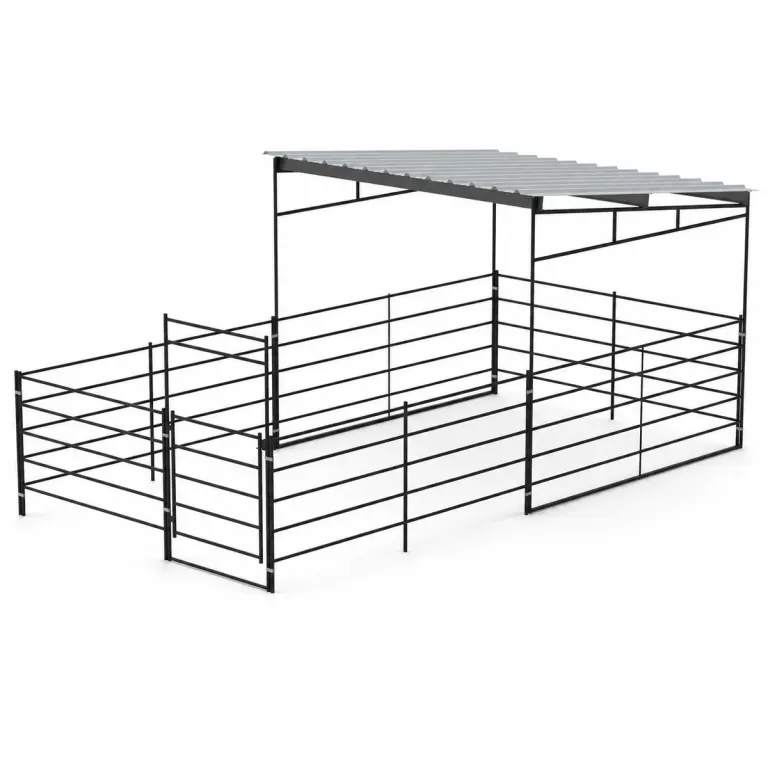
Covered standalone stall
A 12×24 enclosure with a 12×12 sloped cover; compare the 4-rail and 5-rail listings.
View kit details
Covered horse stall kits and side-by-side stall rows for your New Mexico property.
Equipment for daily use on your property.
Review the included components before you order.
Delivery details are confirmed with your quote.
Compare covered standalone stalls and rows of two or three stalls. The enclosure size and the covered area are separate choices; each listing identifies both.
A 12×24 enclosure with a 12×12 sloped cover; compare the 4-rail and 5-rail listings.
View kit details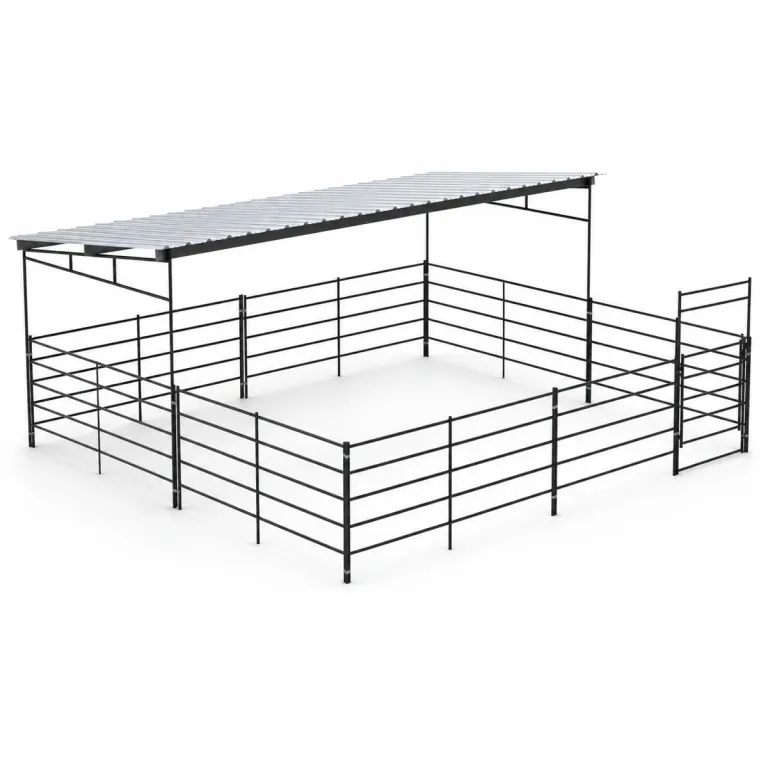
A 24×24 enclosure with a 12×24 sloped cover. Stall area and covered area are different.
View kit details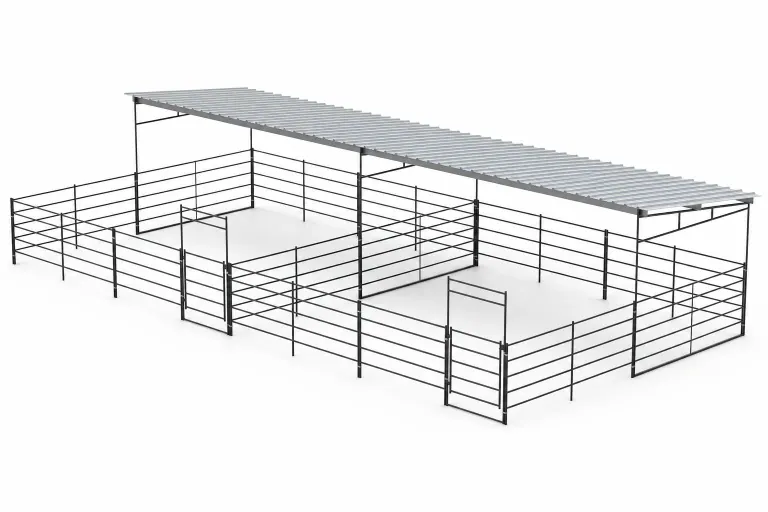
Two side-by-side 24×24 stalls with two 12×24 covers; compare rail counts.
View kit details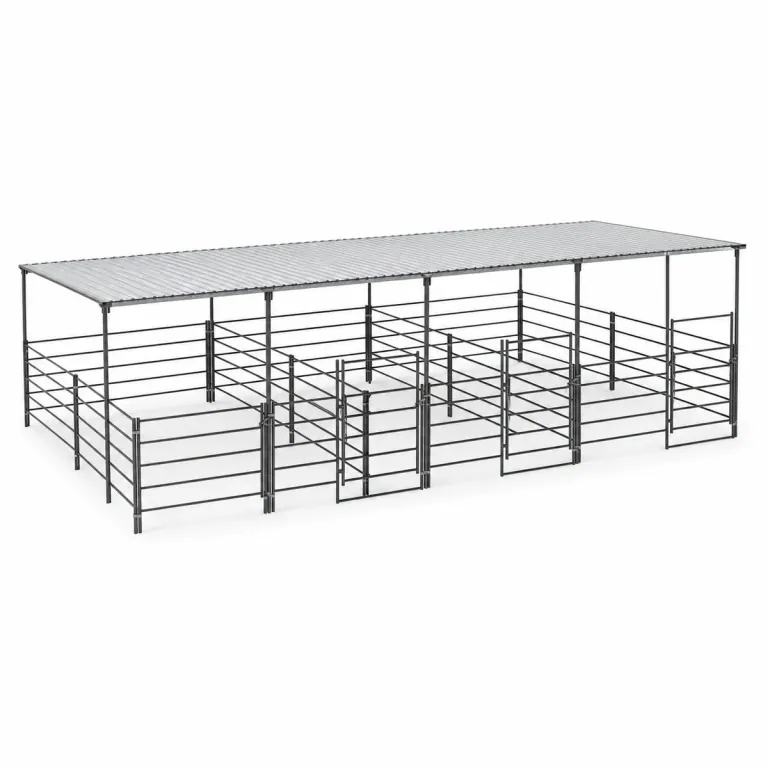
Compare open two- and three-stall rows. These featured configurations do not include a roof.
View kit detailsA 12×24 enclosure with a 12×12 sloped cover; compare the 4-rail and 5-rail listings.
12x24 Stall, 12x12 Sloped Cover 5-Rail$2,120.00 · listed kit price; freight separate.
A 24×24 enclosure with a 12×24 sloped cover. Stall area and covered area are different.
24x24 Stall, 12x24 Sloped Cover 5-Rail$2,860.00 · listed kit price; freight separate.
Two side-by-side 24×24 stalls with two 12×24 covers; compare rail counts.
Two 24x24 Stalls 5-Rail Side by Side, Two 12x24 Covers$5,130.00 · listed kit price; freight separate.
Compare open two- and three-stall rows. These featured configurations do not include a roof.
Three 12x24 Stalls Side by Side 5-Rail$3,260.00 · listed kit price; freight separate.
Stall dimensions, the number of enclosures, roof coverage, rail count, and finish determine the selected kit price.
Compare a single stall with side-by-side rows and larger enclosures.
A 12 × 24 ft stall with a 12 × 12 ft cover is only partially covered.
Review the 4-rail or 5-rail listing and its included gates and connections.
Open stall rows do not include a roof. The selected listing identifies the enclosure and cover separately.

Keep feeding, turnout, and cleaning routes on the same layout.
Mark each gate and the route between the stall and turnout.
Allow room for feed, cleaning and equipment alongside the enclosure.
Plan drainage and installation requirements for the selected cover.
An exposed New Mexico stall site needs a plan for the ground around the enclosure as well as the roof above it. Start with usable access, water and the covered area each horse needs, then compare individual stalls with a shared row.
Walk the proposed New Mexico stall location without looking only at its corners. Note the open approach, nearby structures and the direction from which weather reaches the yard. A narrow leftover space between fences may fit the panels but leave no sensible place to work. Compare an individual covered stall with a side-by-side row before committing the full width of the site.
Exposure varies between properties, so a state-wide orientation recommendation would miss the important details. Photographs from each side of the proposed row make your quote discussion more useful. Include a sketch showing open ground beyond the enclosure and anything that interrupts that space. These observations help define the layout without pretending that a roof shape or a steel gauge establishes a wind rating.
Place the existing water point on the plan before selecting the stall position. Trace the path used to fill and clean containers and to reach each enclosure with a horse alongside you. A stall row that looks compact on paper can create awkward crossings when its gate line faces away from the only practical water or feeding approach on the property.
Leave room for the equipment you actually handle rather than an imagined empty aisle. Ask for the selected kit’s gate arrangement when comparing a covered single stall with two adjacent stalls. The catalog describes the enclosure; your site drawing needs to describe the work around it. Mark any fixed obstructions so that the quote is not based on a clear approach that does not exist.
The listed 12×24 covered stalls use 12×12 sloped covers, while the 24×24 covered stalls use 12×24 covers. Those dimensions show why a larger enclosure and a larger roof are separate decisions. Identify where you expect the horse to stand under cover and where you expect open space before choosing the stall size from a photograph or a price alone.
For a paired arrangement, check the number of covers as well as the stall count. Some two-stall configurations list a separate cover over each stall; open rows do not include a roof merely because similar covered products are nearby in the collection. Your order should name the exact configuration. Any support or footing requirements belong to that configuration, not to a general description of portable panels.
Two- and three-stall open rows can suit a plan that needs separate enclosures now. They should not be purchased on the unconfirmed assumption that a particular roof can be added later. When future cover is part of the New Mexico project, put that requirement in the first conversation so the enclosure and proposed support arrangement can be considered together.
Modular add-ons are listed separately in portable horse stalls and share a wall with an existing enclosure. A complete row is not the same product as one of those extensions. Record dimensions, rail count and connection details before comparing an extension with a fresh standalone stall. This keeps a phased plan tied to compatible components instead of a series of similarly named products.
A useful quote brief gives the New Mexico project location, each stall’s size, the intended number of enclosures and the exact amount of cover. Include a measured approach and photographs of the ground. Mark existing services and fixed obstacles on your plan. Confirm the complete layout with the shop before arranging preparation around an estimated footprint taken from an individual stall dimension.
Installation and site work are not included in a listed stall kit price. Request the appropriate support information for the selected covered model and have the site requirements reviewed before construction. Keep any proposed protection from exposure as a question to resolve, not an advertised kit rating. Product pages remain the source for current prices, available options and permanent item identities.
Start with a size or layout. We can help you compare options.
Include truck access, gate openings and unloading details.
Review the selected configuration and delivery quote with our team.
Equipment, delivery details and freight are confirmed with your quote. About delivery
Use the Get a Quote link to prepare your request, or call (619) 914-6657. Send the number of horses, each proposed stall size, the cover you need and a sketch of the gates and cleaning route. Include the project location and any existing panels you need to match.
Freight is separate from the product price. Send the project address or ZIP code with your selected configuration so delivery and access requirements can be confirmed with the quote.
Compare covered standalone stalls and side-by-side rows. Enclosure dimensions and cover dimensions are separate. Open single stalls and modular extensions belong to the portable horse stalls collection.
No. The listed price is for the product, not an installed project. Check the selected listing and installation guide for assembly, support, and site-preparation requirements before ordering.
No. The roof shape and listed material dimensions are not a site-specific engineering rating. Obtain the appropriate installation and support information for the chosen kit and have the local site requirements reviewed before building.
Include the water point, gates and access route in a measured sketch. Compare the complete row layout with the way you fill and clean containers. Confirm the gate arrangement before positioning the enclosures.
The featured 12×24 covered stalls list 12×12 sloped covers. That is partial coverage. Read the roof dimensions separately from the enclosure dimensions when comparing another model.
Confirm compatibility between the proposed roof, its supports and the selected enclosure. The presence of an open stall kit in the catalog does not establish that a later roof fits it. Include the future-cover requirement with your first quote.
From Albuquerque, Santa Fe, Las Cruces and beyond, send your city or ZIP so we can confirm delivery for your property.
Let’s find the right equipment for your New Mexico property.