

Horse shelter kits for Texas
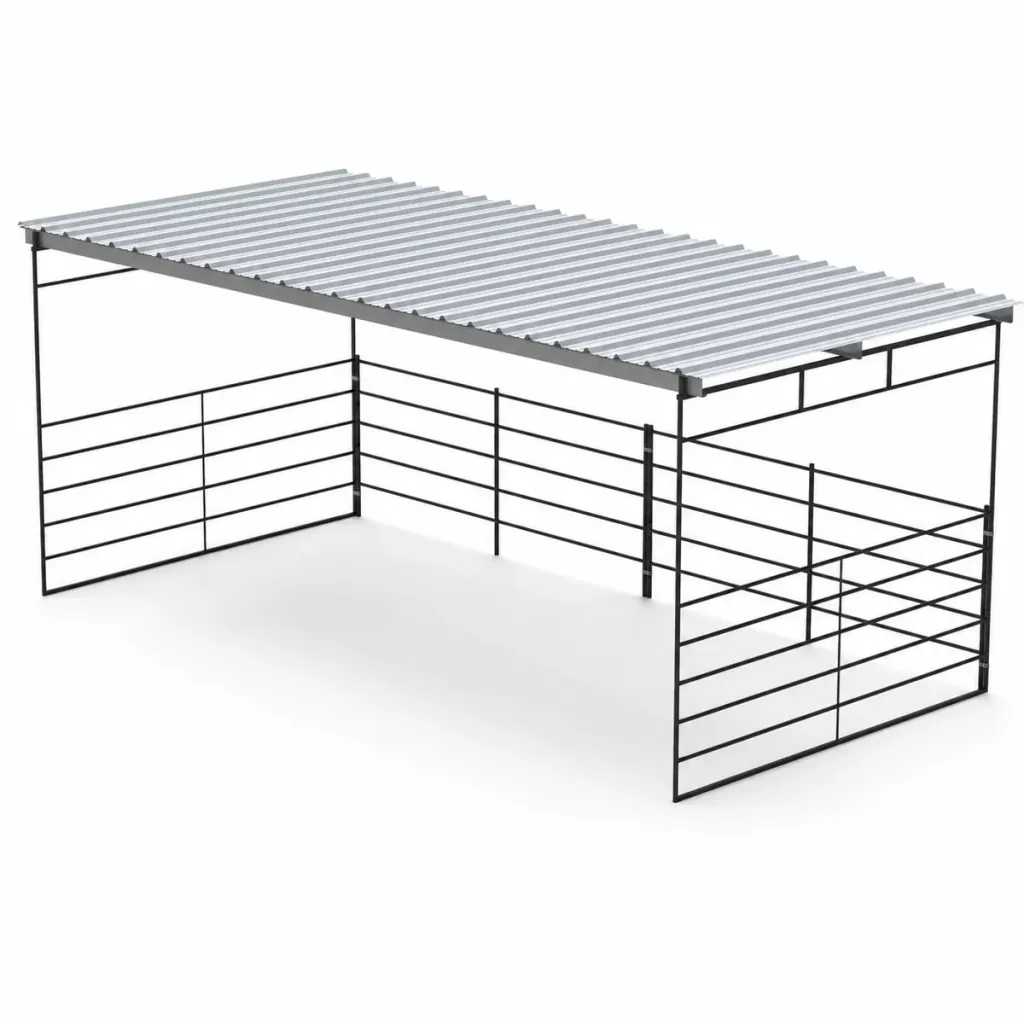
Flat-roof shade covers
Shade without walls for South Texas, the Coastal Bend and the Rio Grande Valley, where summer heat matters more than winter wind. Open rails on three sides let the Gulf breeze through under a 12×12 or 12×24 flat roof. Choose five rails for foals, minis or ponies.
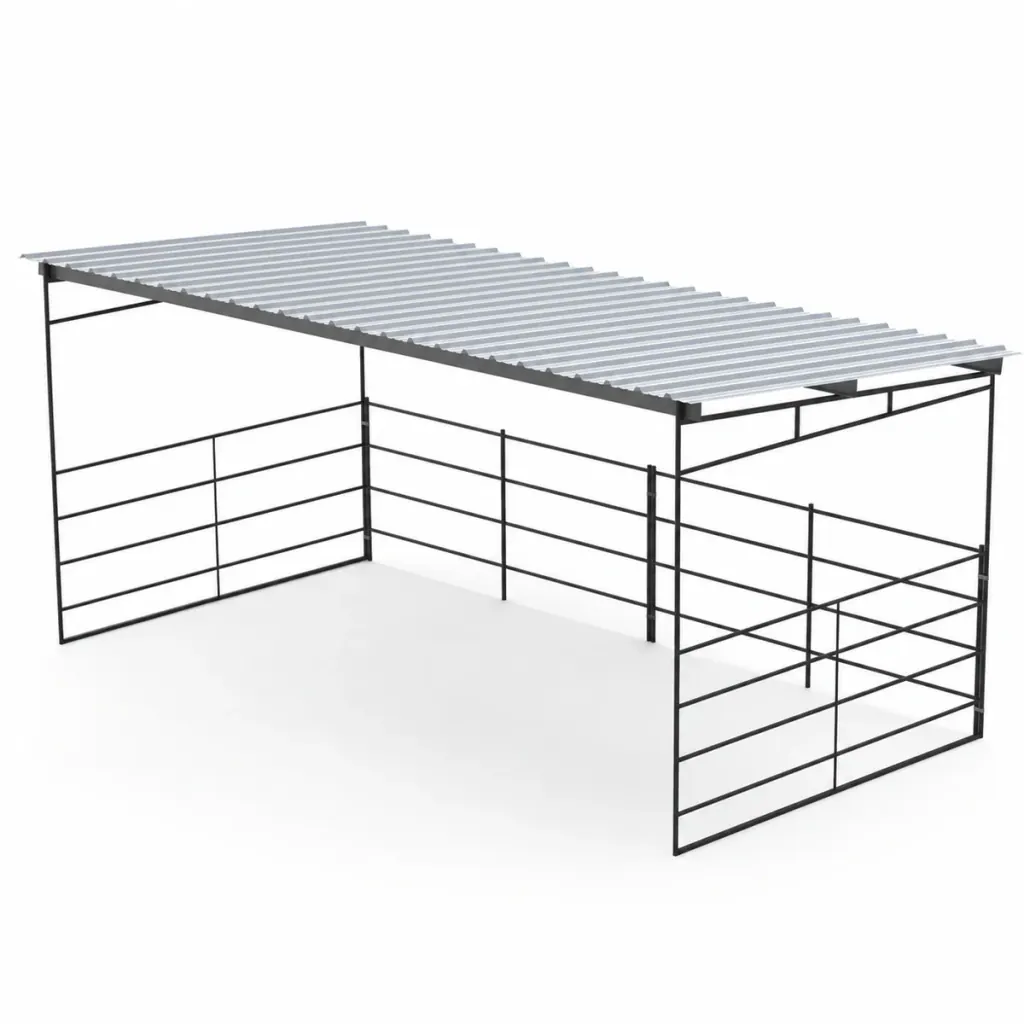
Sloped-roof shelters
For the wetter east, from the Piney Woods down to Houston and Beaumont, where roughly 45 to 60 inches of rain fall in a year. The roof drops water off one edge, so turn the shelter to land the runoff away from the opening, where horses stand and the ground turns to mud first.
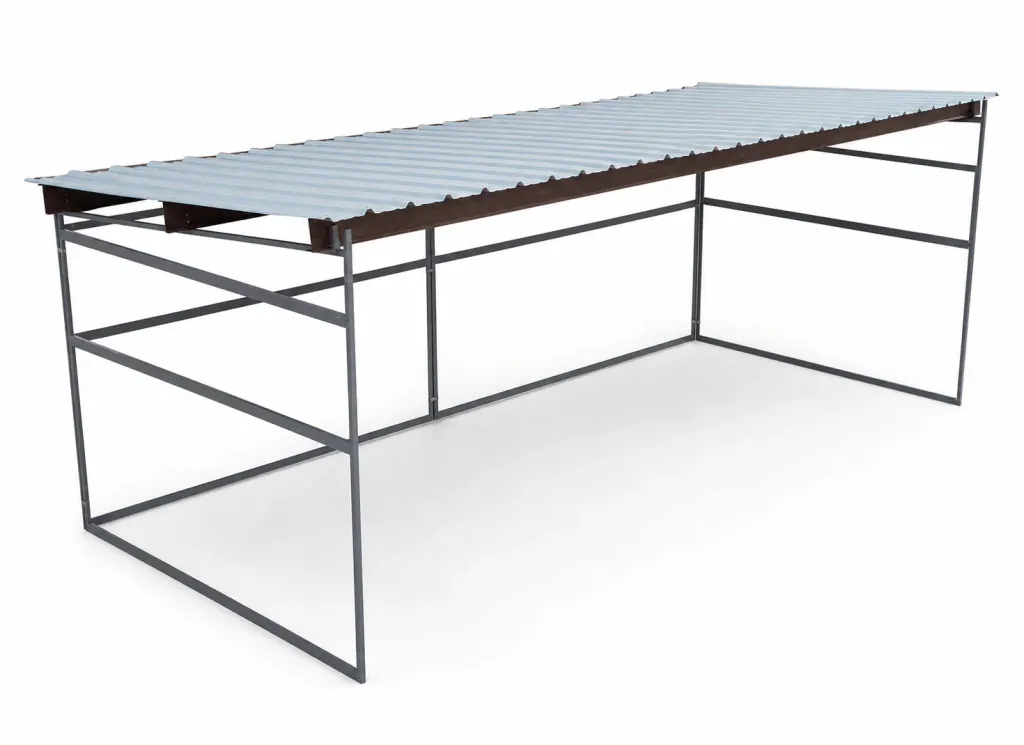
Three-wall loafing sheds
For the Panhandle, the Rolling Plains and North Texas, where northers hit hard in winter. Fill the bolt-on C-channel with 2 in boards from a local lumberyard, face the open front south or southeast, and the back wall takes the wind. The frame is 10 ft tall at the front. Wood is not included.
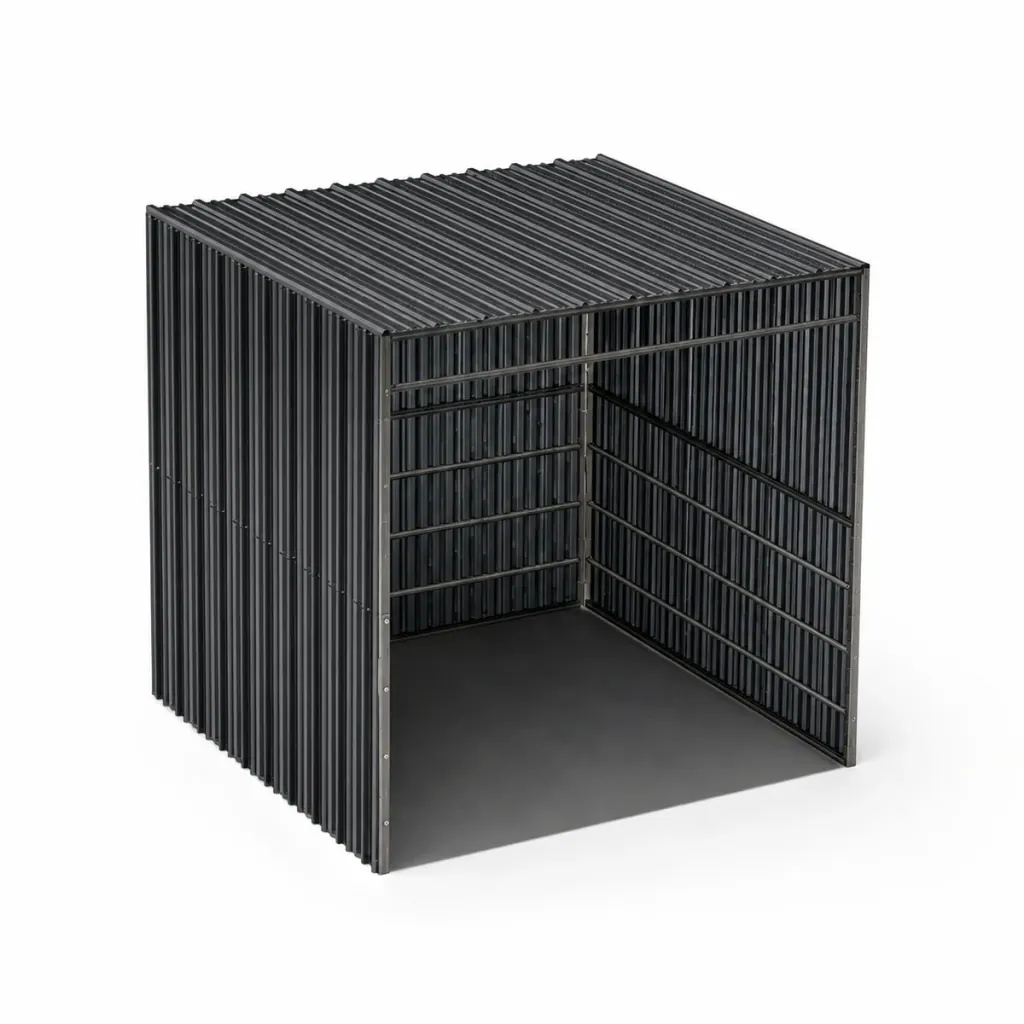
Three-sided metal shelter
From Midland–Odessa out to El Paso, spring wind drives sand and dust across open ground. Three metal-sheeted sides make a solid break, with no lumber to buy and nothing for a bored horse to chew on. The kit is 12×12, and the product page also offers a 12×24.
Blackland clay, caliche or sandy loam under the shelter
Texas ground changes a lot from one region to the next, and a shelter sits on whatever is under it. The Blackland Prairie, running from the Red River through Dallas, Waco and Austin to San Antonio, is black clay that swells when wet and cracks open in a drought. The Gulf Coast prairie around Houston and Victoria is flat clay that holds water for days. The Piney Woods have sandy loam over a clay subsoil. The Hill Country has thin soil over limestone, much of West Texas has a caliche layer that stops a shovel cold, and on the High Plains, playa lakes fill the low round spots after a heavy rain.
Every kit stands on four ground posts set in concrete, so where you pour is where the shelter stays. Pick the highest workable spot near your turnout, and keep it out of playas, draws and anywhere you have seen water stand. On clay, build the pad up a few inches with compacted base and slope it away from the open front, because that is where horses stand and turn and where mud starts. Ask a local contractor how deep posts need to go in your soil; black clay that shrinks and swells can lift a shallow footing. Dig a test hole where a corner post will go; it shows whether you are into clay, caliche or rock before the concrete arrives.
Northers, the Gulf breeze and late sun: which way to face a run-in shed
Across much of Texas the wind blows from the south and southeast most of the year, carrying Gulf moisture inland. In winter, the fronts Texans call northers swing it hard to the north and northwest and can drop the temperature fast, and in the Panhandle the spring wind often comes from the southwest. A shed with solid walls works best with its back to the northers, so face the open front south or southeast. In June the sun sets in the west-northwest, so a back wall turned that way also blocks the last hours of summer sun.
An open-rail shelter works differently. Rails stop very little wind or sun, so the roof does the work. In late afternoon its shadow falls well to the east of the frame, so leave open ground on that side rather than tucking the shelter into a fence corner. Spring hail in North Texas and the Panhandle can dent roof sheets, and replacement PBR sheets are sold separately. These shelters are not storm shelters, so make a separate plan for horses in severe weather.
Matching the shelter to the pasture, from the Valley to the High Plains
In South Texas, the Coastal Bend and the Rio Grande Valley, heat is a bigger problem than wind for most of the year. A flat-roof shade cover with open rails gives shade without blocking the breeze, and it suits a dry lot or a brush pasture where mesquite throws only thin shade. In the wetter east, from the Piney Woods to Houston, a sloped roof lets you decide which side the rain comes off, so the ground at the opening stays firmer through a wet spring.
North and west of the I-35 corridor, winter wind matters more. A three-wall wood-insert loafing shed or the metal-sided three-sided shelter gives a solid break from a norther, and the open front keeps the shed easy to walk into and clean out. Size comes down to roof and ground. A 12×24 doubles the roof of a 12×12 and gives a low-ranking horse room to get under cover without crowding, but it needs a level pad 24 ft long. We don't put a horse count on either size; that depends on your horses.
Rail sides, board walls or metal siding for Texas weather
The open-front shade shelter comes with a flat or sloped roof, in 12×12 or 12×24, with four or five rails on the sides and back. Five rails close the gaps for foals, minis and ponies. The wood-insert loafing shed is a welded frame 10 ft tall at the front and 8 ft at the back, with bolt-on C-channel that holds 2 in boards. On the 12×24, 2x8s cut to 62-1/4 in for the lower course and 29-5/8 in for the upper fit the channel. Wood is not included, so price boards at a local lumberyard. The three-sided metal shelter is sheeted instead, with nothing to board.
Every kit carries 26-gauge Galvalume PBR roof sheets on Z-purlins. On the loafing shed the roof falls toward the back, so rain comes off behind the back wall; give it somewhere to drain. The frame comes in bare metal as standard, and it weathers to a brown rust patina, quicker in the damp air around Houston and Beaumont than out near El Paso. Dapple grey, black or a custom powder coat costs more and is chosen on the product page.
Free, flat-rate or distance-priced: shelter freight across Texas
We deliver shelters anywhere in Texas, from Dalhart to Brownsville. Large orders ship free anywhere in the state, and smaller orders delivered near I-10, I-40 or US-287 ship at a flat rate. The delivery page gives the order size and the exact areas. A shelter on its own is a smaller order, so free freight usually takes several pieces of equipment on one truck. Off those highways, as around Lubbock, Tyler or the Rio Grande Valley, a smaller order is priced on distance. Freight is priced from the road miles to your address, as one load, with a $200 minimum. You see the amount before you pay.
The driver brings the kit to your place but doesn't unload it. Have a tractor with forks, a skid steer or a few people ready. The 12×24 kits include 25 ft Z-purlin trusses, so leave room to slide long pieces off and lay them flat. Roof sheets catch the wind, so stack them flat and weight them down until they go on, which matters on the plains. After rain, black clay can stop a loaded truck. Meet it on gravel or at the road, and tell us about narrow gates, low wires or a soft drive when you order.
Setting the posts and roof on a Texas loafing shed
The 14-gauge frame panels clamp together, and the kit includes the clamps, four ground posts with hardware, the Z-purlin trusses, the roof sheets and self-tapping roofing screws with rubber washers. Set the posts in concrete as the kit instructions show, clamp the frame to them, then run the trusses and screw down the sheets. Concrete is not included. In the Hill Country an auger can hit limestone not far down, so rent a rock auger or hire someone who has one. Plan roof work for a calm early morning; sheet metal in a Texas afternoon gets too hot to handle bare-handed.
Our shelters are not engineered structures and are not built to a specific building code. Rules for a farm shed differ from one county and city to the next, and small acreage near Austin, Dallas–Fort Worth, Houston or San Antonio can come with deed restrictions or an HOA that says where a barn may go. Check with your county, your city if you are inside its limits, and any HOA before you order. If you would rather not build it yourself, ask about installation with your quote.