

Mare motel kits for Louisiana
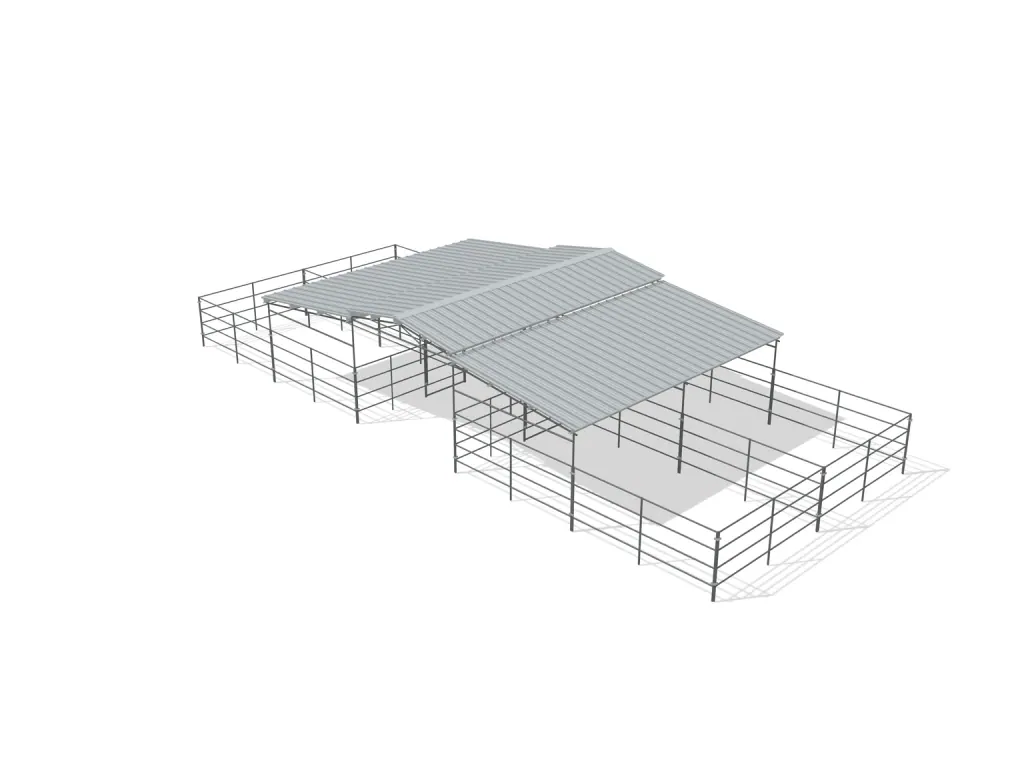
4-stall 12×24, standard cover
Four 12×24 stalls with roofed fronts and open back runs. It suits the better-drained hill ground of north Louisiana, around Ruston or Minden, where the open half of each stall dries between storms. On the flat claypan prairie of the south, those runs can stay wet for days, so look at full cover first.
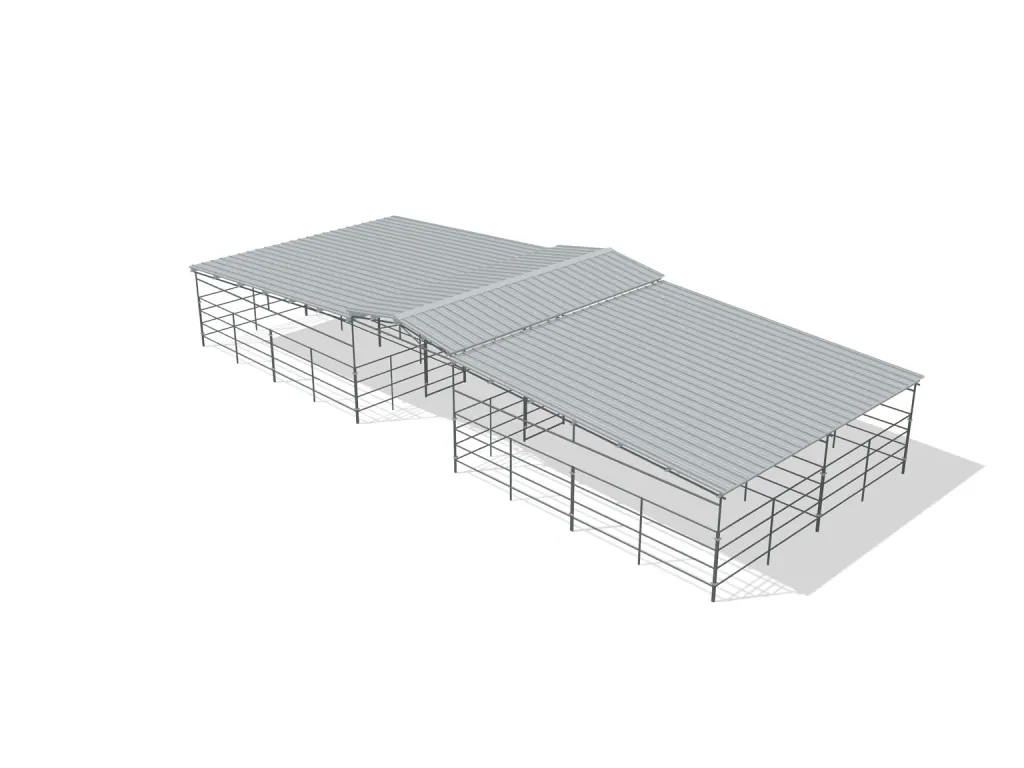
Fully covered 4-stall
The roof spans the breezeway and the full 24 ft of every stall. With around 60 inches of rain a year across much of south Louisiana, from Lake Charles to the north shore, that keeps the whole stall out of the rain. The welded-wire version suits foals.
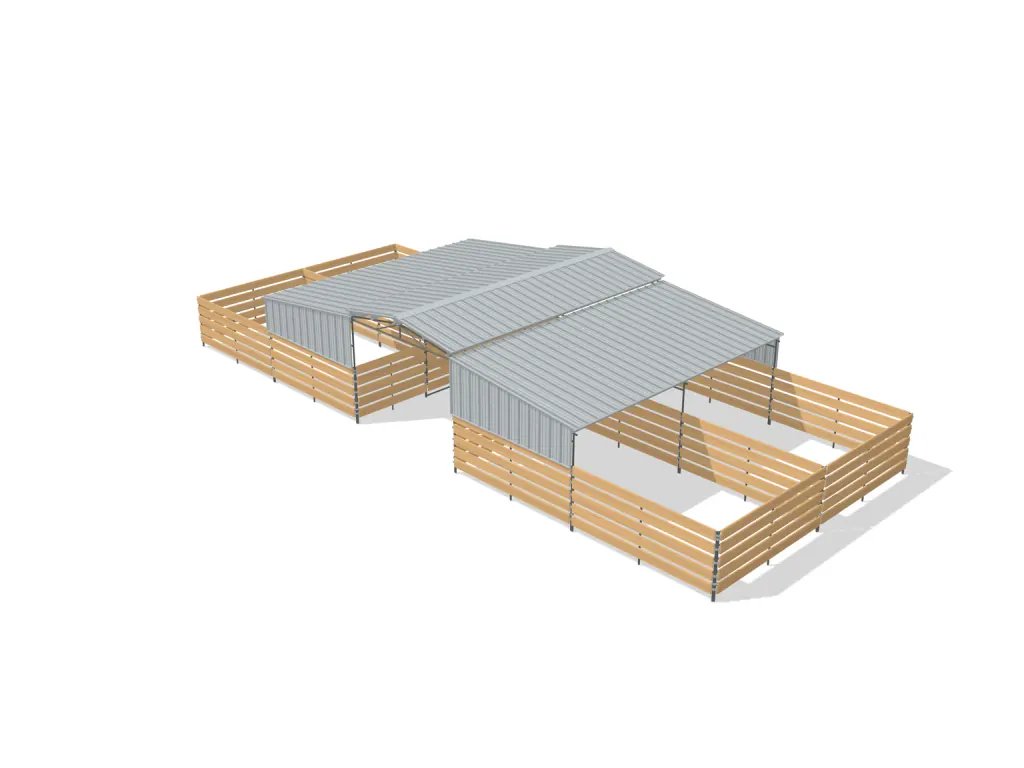
Wood-insert / PBR-sided
Lower panels take boards you buy locally, and the PBR-sided kit adds metal siding to the upper outer stall ends. Solid walls keep boarded horses from bothering each other at a barn near Baton Rouge or Covington, but they trap still, humid air in summer, and damp boards need watching for rot. Wood is not included.
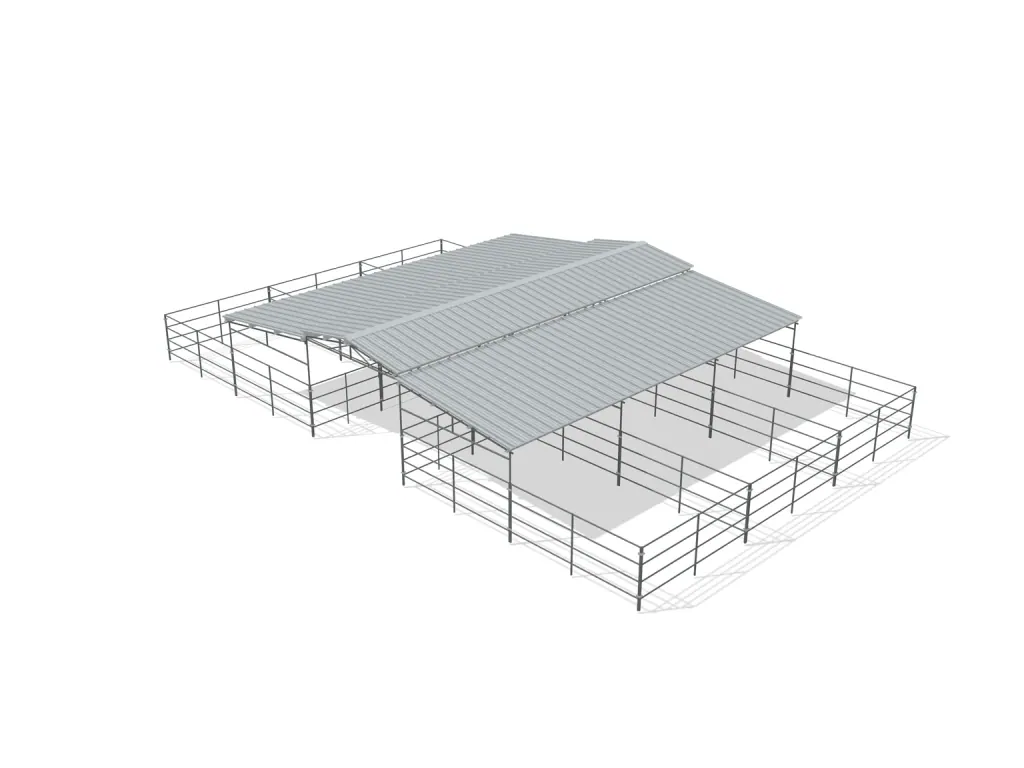
6–12 stall rows
Rows of 6 to 12 stalls for a Quarter Horse breeder around Opelousas or Lafayette, or a boarding barn in St. Tammany Parish or outside Shreveport. The 8- and 12-stall kits are fully covered, which suits south Louisiana's rain; the 6- and 10-stall kits roof the front half of each stall.
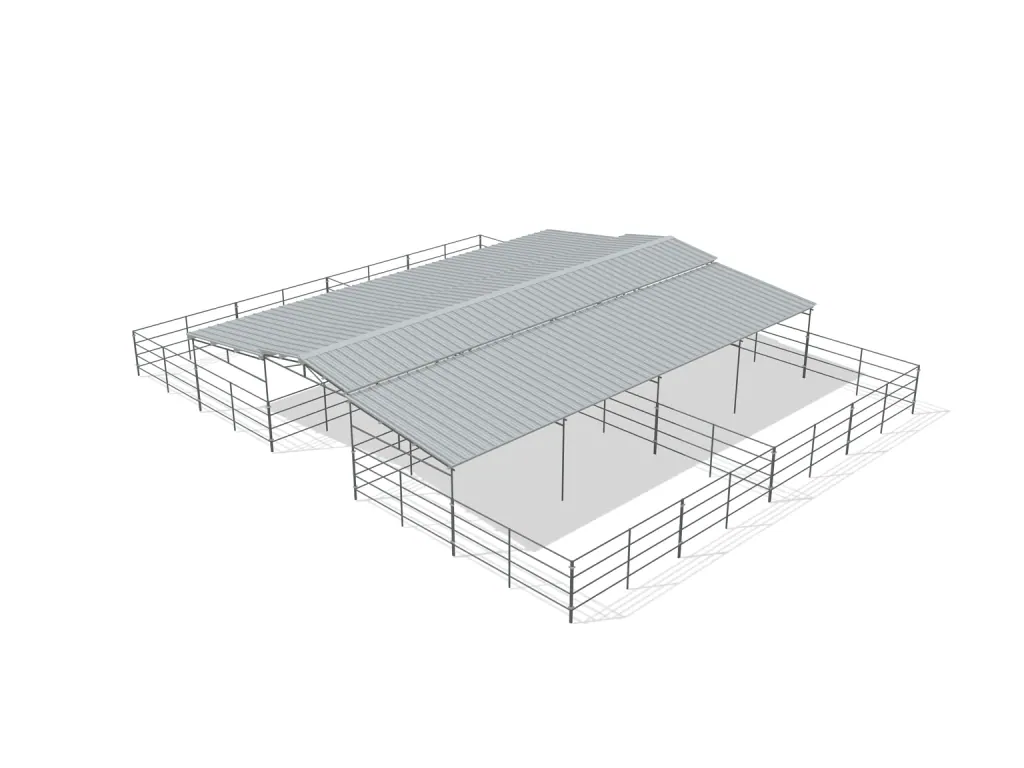
Larger 24×24 stalls
Four 24×24 stalls, each half under a 12×24 cover and half open. A cattle place on the southwest prairie or a farm in the Red River Valley has room for the roughly 60 by 48 ft building, and a mare and foal get space to move. Put it on the highest ground you have.
Prairie claypan, river front lands and red hills under a Louisiana mare motel
Louisiana ground is flat and wet in most places, but it isn't all the same. The prairie of Acadiana and the southwest, around Lafayette, Crowley, Eunice and Jennings, has silt loam over a dense clay pan that holds water near the surface, which is part of why rice grows there. Along the Mississippi, the Atchafalaya and the Red, the front lands beside the river sit a little higher and drain better than the heavy clay of the backswamps. The northern hills around Ruston, Minden and Homer have sandy loam over red clay, and the Florida Parishes north of Lake Pontchartrain are rolling, loamy pine country.
A mare motel stands on ground posts set in concrete, 12 for a standard 4-stall kit and 24 for a fully covered one, on a level pad about 60 ft wide. In much of south Louisiana the water table sits close to the surface, and a post hole can fill with water while you dig, so ask a local contractor how they handle wet holes. Backswamp clay is sticky when wet and cracks when it dries. On sandy hill soil the holes dig easily, but the sides can cave.
Water is the main thing to plan for. On flat prairie or bottomland, build the pad up above the ground around it and slope it so water leaves, and keep the building out of low spots that hold water after a storm. The roof drops rain off its outer edges, and a standard-cover roof ends halfway back in each stall, so give that runoff a path away. Before the dirt work, walk the site after a heavy rain and note where water stands; that tells you more about the soil than a dry day will.
Gulf heat, heavy rain and hurricane season at a Louisiana mare motel
Rain runs from about 50 inches a year in the northwest corner to around 60 or more across much of the south, and a summer thunderstorm can drop a lot of it in an hour. A standard-cover kit roofs the breezeway and the front 12 ft of each stall and leaves the back 12 ft open. A fully covered kit roofs the whole stall. Across most of south Louisiana, that open back half will be wet much of the year, so full cover is often the better pick there.
Summer heat and humidity are the daily problem, and horses need air moving as much as they need shade. The breeze off the Gulf generally comes from the south in summer, so a breezeway running roughly north and south can catch it. Keep trees and buildings from blocking that side, and lean toward open rails or welded wire over solid walls. Winters are mild, with freezes more common in the north than near the coast.
Hurricane season runs from June through November, and tornadoes come with spring storms and with tropical systems. A mare motel kit is not an engineered structure. It gives shade and a dry place to feed, and it is not shelter from a hurricane or a tornado. Make your storm plan for horses before the season starts, and put away loose gear, feed bins and tools around the barn ahead of a storm.
Matching a mare motel to a Louisiana breeding farm, boarding barn or cattle outfit
Quarter Horse racing has deep roots in Acadiana, and farms from the prairie to the north hills foal out race and ranch mares every spring. A breeder foaling out mares can use the 24×24 kit for twice the floor of a 12×24 stall, half roofed and half open, or a fully covered kit to keep the whole stall dry in a wet spring. Five-rail or welded-wire panels close the gaps a foal could get a leg or head through.
Boarding barns around Baton Rouge, Lafayette and Shreveport–Bossier, and in the horse country around Folsom in St. Tammany Parish, need more stalls on less ground. The 6- to 12-stall rows put every stall on one breezeway, and the 8- and 12-stall kits are fully covered. A cattle outfit on the southwest prairie keeping a few working horses, or a family with two or three, can start with a 4-stall kit. The catalog doesn't list an add-on for a mare motel, so plan the stall count you'll need in a few years.
Stall count, rails, boards and rust on a Louisiana mare motel
Kits come in 4, 6, 8, 10 and 12 stalls, with 12×24 or 24×24 stalls on a 12 ft breezeway. With 12×24 stalls, a 4-stall kit covers about 60 by 24 ft and each extra pair of stalls adds 12 ft of length. The 6- and 10-stall kits roof the stall fronts. A shed row, with every stall in one line, fits a long strip of high ground, such as the front land along a bayou.
Four rails suit grown horses. Five rails, or welded wire in 5 ft or 6 ft panels, suit foals and young stock. Wood-insert panels hold boards you buy locally, the PBR-sided kit adds metal siding to the upper outer stall ends, and the Heritage Series, fully covered or with open runs, has steel channel for boards and a dapple grey powder coat. Wood is not included. In Louisiana heat, solid walls hold still air, and damp boards rot, so weigh wood against airflow.
Bare steel is the standard finish and costs the least. In humid air, and in salt air near the coast, it weathers to a rust patina faster than it would in a drier climate. Dapple grey, black or a custom powder coat costs more and keeps its color. Every option uses 14-gauge steel panels.
Freight down parish roads to a Louisiana mare motel
A mare motel is one large shipment: a 4-stall kit has 20 panels and gate combinations, breezeway trusses, 25 ft Z-purlins, PBR roof sheets, ridge caps, clamps and ground posts. We deliver to every parish, from Caddo to Plaquemines. Freight is priced from the road miles to your address, as one load, with a $200 minimum. You see the amount before you pay. The free and flat-rate freight offers on the delivery page are for parts of Texas, New Mexico and Arizona, so a Louisiana order is priced on distance.
The driver brings the load to your place but doesn't unload it. Have a tractor or skid steer with forks and enough people to handle the long purlins and roof sheets. A wet pasture or a soft shoulder can swallow a loaded truck, so pick a firm unloading spot on a shell or gravel drive close to the pad. Narrow parish roads, small bridges with weight limits, levee crossings and low lines are worth mentioning when you order.
Posts, crew, flood zones and parish permits for a Louisiana mare motel
The kit comes with its ground posts, clamps and hardware; concrete isn't included. Set the posts in concrete, let it cure and clamp the panels to them, keeping the panel legs out of the concrete. A standard 4-stall kit uses 64 clamps, with no welding. The breezeway roof is 9 to 10 ft high, so a crew of two or three with ladders or a lift sets the trusses, runs the purlins and screws down the roof. Installation is available and quoted separately.
Mare motel kits are not engineered and are not built to a specific building code, so ask before you order. In Louisiana that means the parish permit office, and the city if you're in town. A large share of the state lies in mapped flood zones, and parishes may set rules for building there, so ask about that at the same time. Subdivisions around Baton Rouge, Lafayette and the north shore may have covenants about outbuildings.