
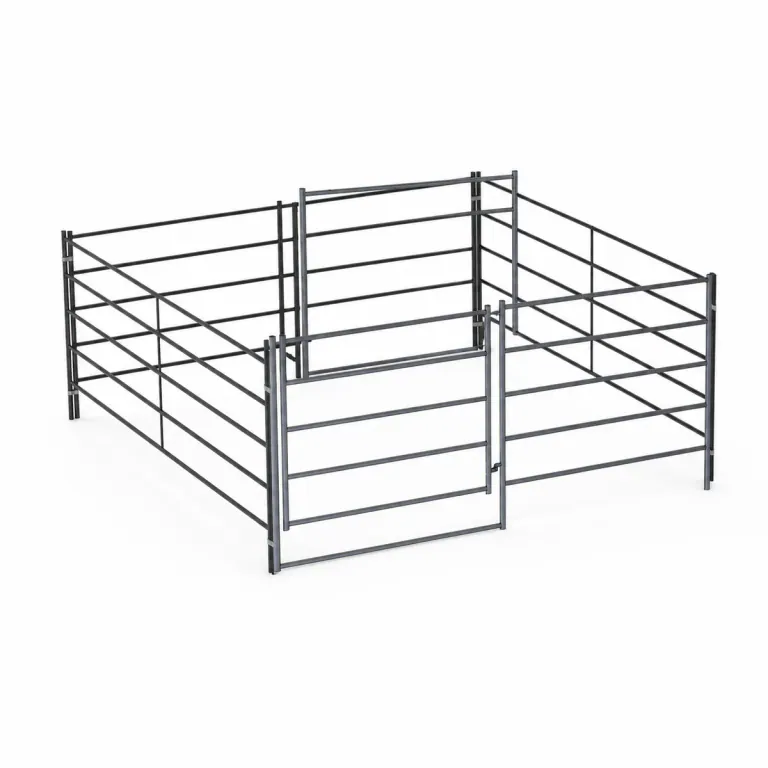
12×12 and 12×24 open stalls
Complete open single enclosures, with 4-rail and 5-rail versions on their original product pages.
View kit details
Freestanding horse stalls and compatible modular add-ons for your Louisiana property.
Equipment for daily use on your property.
Review the included components before you order.
Delivery details are confirmed with your quote.
Start with a complete open enclosure, or choose an add-on matched to an existing stall. A covered add-on has separate roof-support requirements.
Complete open single enclosures, with 4-rail and 5-rail versions on their original product pages.
View kit details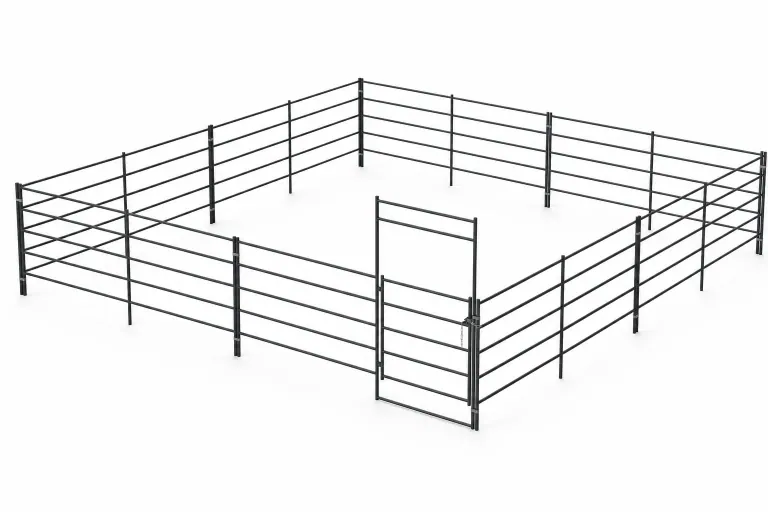
Larger freestanding single-stall configurations without a roof.
View kit details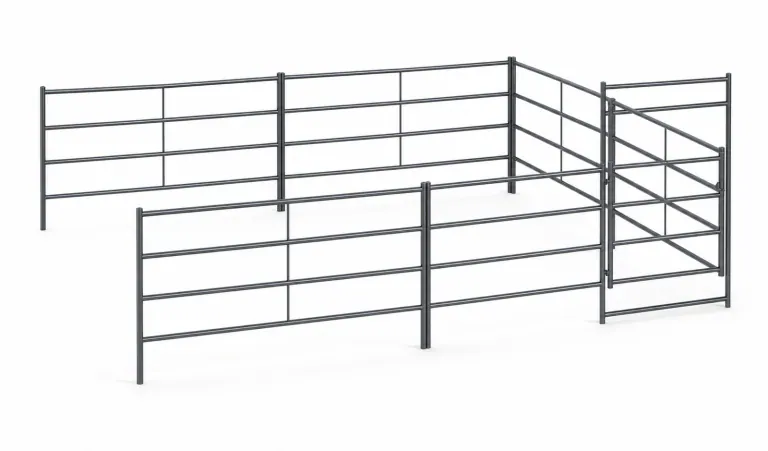
Extensions that share a wall with a compatible existing stall, not complete standalone enclosures.
View kit details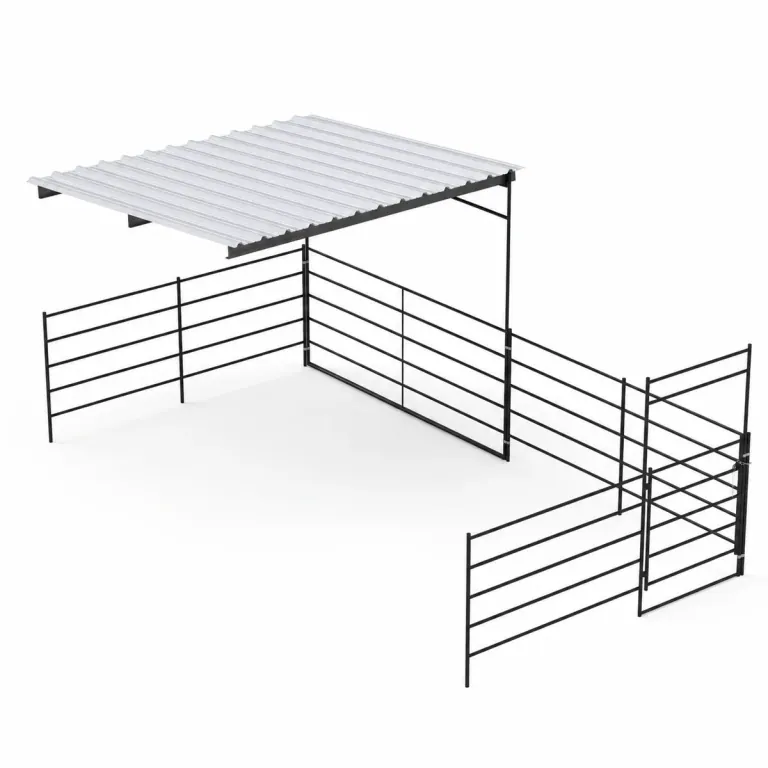
Compare 12×24 and 24×24 extensions with their listed partial covers and installation requirements.
View kit detailsComplete open single enclosures, with 4-rail and 5-rail versions on their original product pages.
12x12 Horse Stall Kit 5-Rail$975.00 · listed kit price; freight separate.
Larger freestanding single-stall configurations without a roof.
24x24 Horse Stall Kit 5-Rail$1,460.00 · listed kit price; freight separate.
Extensions that share a wall with a compatible existing stall, not complete standalone enclosures.
24x24 Add-On Stall 5-Rail$1,170.00 · listed kit price; freight separate.
Compare 12×24 and 24×24 extensions with their listed partial covers and installation requirements.
12x24 Add-On Stall with 12x12 Sloped Cover 5-Rail$1,695.00 · listed kit price; freight separate.
A standalone stall and an add-on are different purchases. Dimensions, rail count, finish, and any included cover affect the selected price.
Choose a standalone stall when you need all sides of a new enclosure.
An add-on shares a wall with compatible existing equipment.
Covered add-ons have separate support and installation requirements.
Portable panels do not establish portability of a roof. Confirm connections and the exact parts list before extending a stall.

Choose a complete stall first. Confirm compatibility before extending it.
Include the stall footprint, gates and working room.
Share photos and dimensions when adding to a current enclosure.
Allow space for moving equipment and maintaining the stall area.
Portable panels do not make wet ground disappear. A Louisiana modular stall project starts with a usable enclosure site and a second plan for any later move. Keep complete stalls, shared-wall additions and roof supports separate when comparing the order.
When a Louisiana stall needs to move, begin at the proposed destination. Look at its approach, surrounding ground and the space outside the gate before dismantling an existing enclosure. The move is useful only when the new site improves the practical arrangement. Portability describes the panel system, not a guarantee that any other part of the yard is ready for occupied stalls.
Keep both locations on a sketch while planning the change. Mark water, feeding access and fixed obstacles that limit the route between them. Include the space needed to handle components and prepare the destination. Do not assume a roofed addition follows the same sequence as open panels; its installation and support details require separate consideration before the structure is treated as movable.
Complete open single-stall kits are listed in 12×12, 12×24, 20×20 and 24×24 ft sizes. They are different from the add-on products in the same collection. A shared-wall extension depends on part of an existing enclosure, so it should not be ordered as a replacement for a complete first stall simply because the dimensions appear suitable.
Compare the selected footprint with the prepared surface and the approach you can keep using. Allow room for a horse, a person and routine equipment outside the gate rather than consuming every usable edge with panels. Confirm the 4-rail or 5-rail configuration for the animals and intended use. The location plan and the live product specifications answer different parts of the decision.
A modular addition can change the path you rely on when another part of the Louisiana yard is wet. Draw its outside boundary and gate approach over the existing layout before deciding which side to extend. Check whether the new enclosure occupies the firmest route between water, feed and the current stalls. A convenient shared wall is not the only condition that matters.
After checking the route, record the existing stall’s dimensions, rail count and connection details. Photographs should show both the proposed joining area and the ground around it. The shop can discuss the selected components with that information; the property preparation needs its own plan. Avoid buying an extension from size alone and leaving both the joins and the access to be resolved during assembly.
The portable range includes covered additions, but their roofs introduce product-specific supports and installation requirements. The 12×24 extensions list 12×12 covers; the 24×24 extensions list 12×24 covers. These are not fully roofed simply because they are called covered add-ons. Read the enclosure area and the covered area as two separate requirements for the project.
Consider water arriving from outside the stall as well as water leaving the roof. A larger cover does not establish that the ground and entrance will stay usable. Compare the proposed extension with a covered standalone stall where the site allows either arrangement. Confirm the support details before ordering around an assumed connection to existing panels or planning a later relocation of the roof.
For a Louisiana quote, label every proposed item as a complete open stall, an open add-on or a covered add-on. Give the dimensions and rail count, then attach a sketch showing the existing walls and access routes. Include the project location and relevant connection photographs. This distinguishes the number of usable enclosures you want from the number of products that depend on another stall.
Keep site work, installation and any extra hardware separate from the displayed product prices. Confirm each listing’s included parts and the requirements of a chosen cover before starting the project. The original catalog retains the prices, options and SKUs; the location plan supplies the context. Both should describe the same selected configuration before you order components for a yard that may change again.
Start with a size or layout. We can help you compare options.
Include truck access, gate openings and unloading details.
Review the selected configuration and delivery quote with our team.
Equipment, delivery details and freight are confirmed with your quote. About delivery
Use the Get a Quote link to prepare your request, or call (619) 914-6657. Tell us whether this is your first enclosure or an extension. Send the project location, stall dimensions, rail count, photos of existing connections and whether you need a covered add-on.
Freight is separate from the product price. Send the project address or ZIP code with your selected configuration so delivery and access requirements can be confirmed with the quote.
Start with a complete open enclosure or an add-on that shares an existing wall. Covered add-ons have their own roof support requirements; portability of the panels does not establish portability of a roof.
No. The listed price is for the product, not an installed project. Check the selected listing and installation guide for assembly, support, and site-preparation requirements before ordering.
Portability is not confirmation that a destination is suitable. Review the surface, access and preparation needs before moving the enclosure. A different location still requires a practical site plan.
Compare a complete open single-stall kit rather than an add-on. The open single range includes 12×12, 12×24, 20×20 and 24×24 ft configurations. Confirm the selected kit’s contents and suitability for the intended use.
Place the proposed panels and gate approach on the existing yard sketch. Check routes to water, feed and cleaning areas under the ground conditions you encounter. Move the proposed addition on paper before giving up an essential passage.
State the enclosure and cover dimensions and whether the item is a covered add-on. Ask for the model’s support and installation requirements. Do not assume an open enclosure’s portability describes the complete roofed arrangement.
From Baton Rouge, Lafayette, Shreveport and beyond, send your city or ZIP so we can confirm delivery for your property.
Let’s find the right equipment for your Louisiana property.