

Mare motel kits for Arkansas
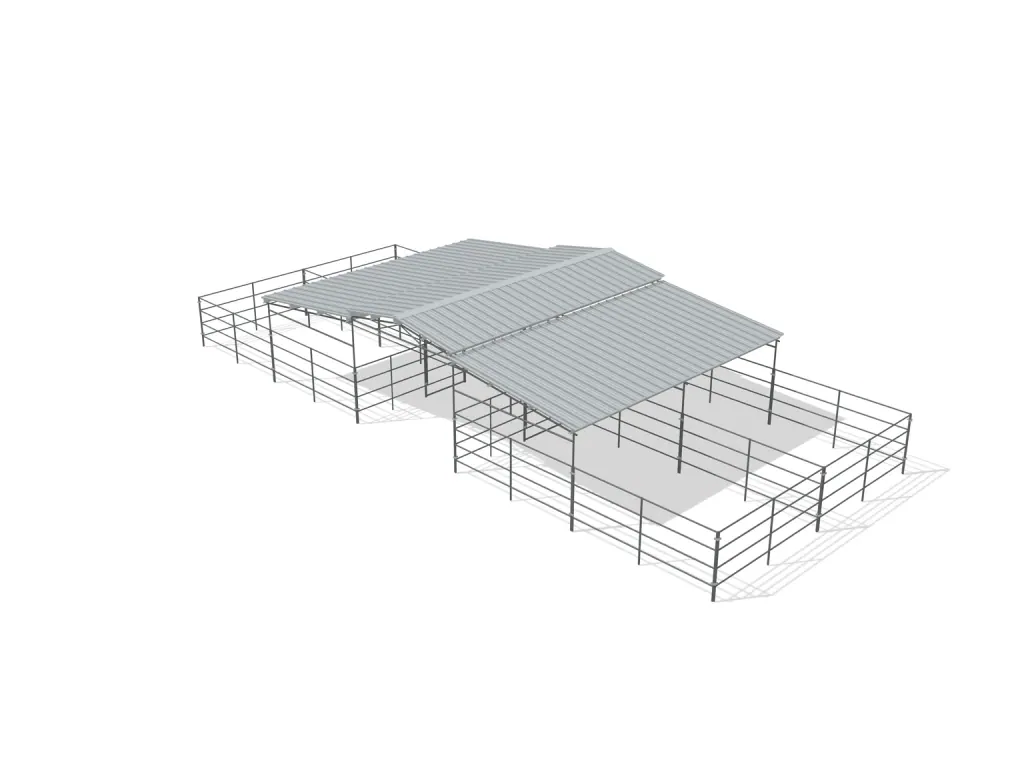
4-stall 12×24, standard cover
Four 12×24 stalls with roofed fronts and open back runs. It fits well-drained ground, such as an Ozark ridgetop, Crowley's Ridge or the sandy loam around Camden and Magnolia, where the open half of each stall drains between rains. On flat Delta clay, the fully covered kit is usually the better fit.
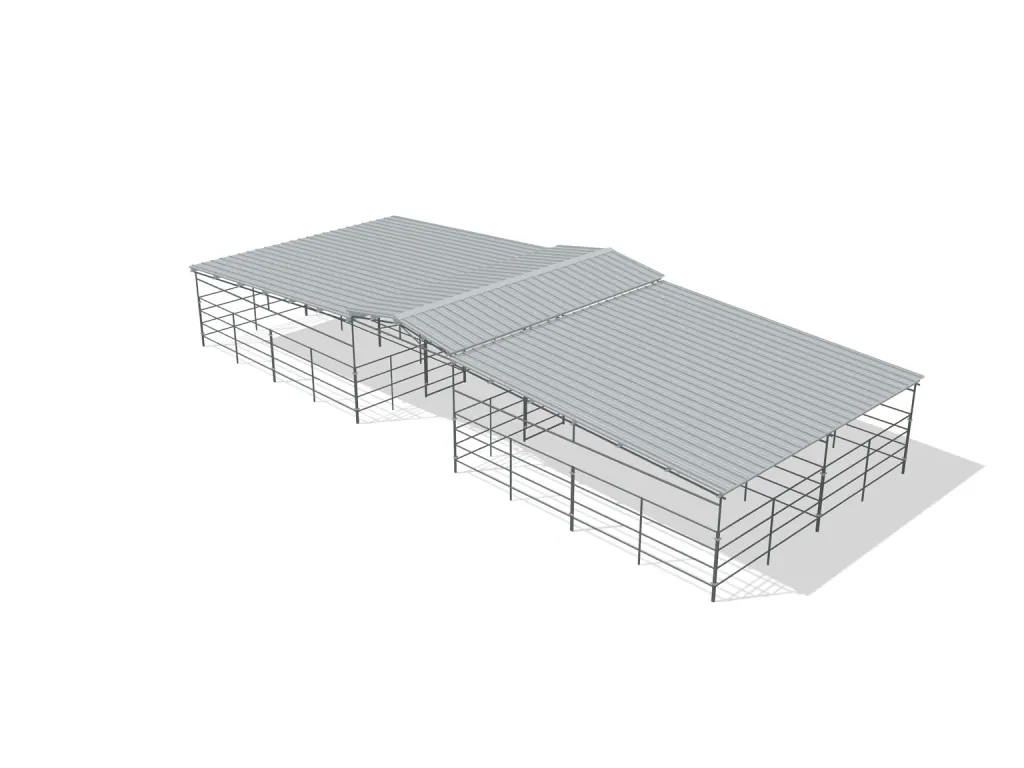
Fully covered 4-stall
Roof over every stall from the breezeway to the back rail. Rain falls in every season here, and on River Valley bottoms or Delta clay that stays wet, full cover keeps the whole stall floor out of it. The welded-wire version suits foals and young stock.
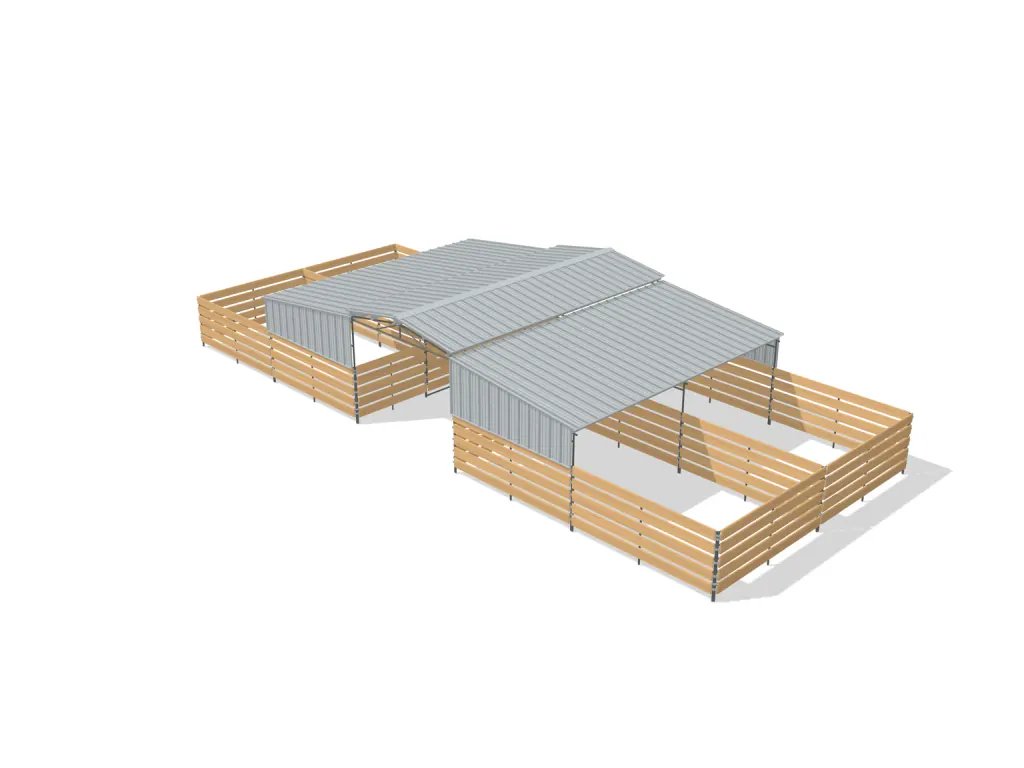
Wood-insert / PBR-sided
Lower panels hold boards you buy locally, and the PBR-sided kit adds metal siding to the upper outer stall ends. Solid walls keep boarded horses apart at a barn near Little Rock or Conway, but on a still, muggy Delta site they also cut the airflow horses need. Wood is not included.
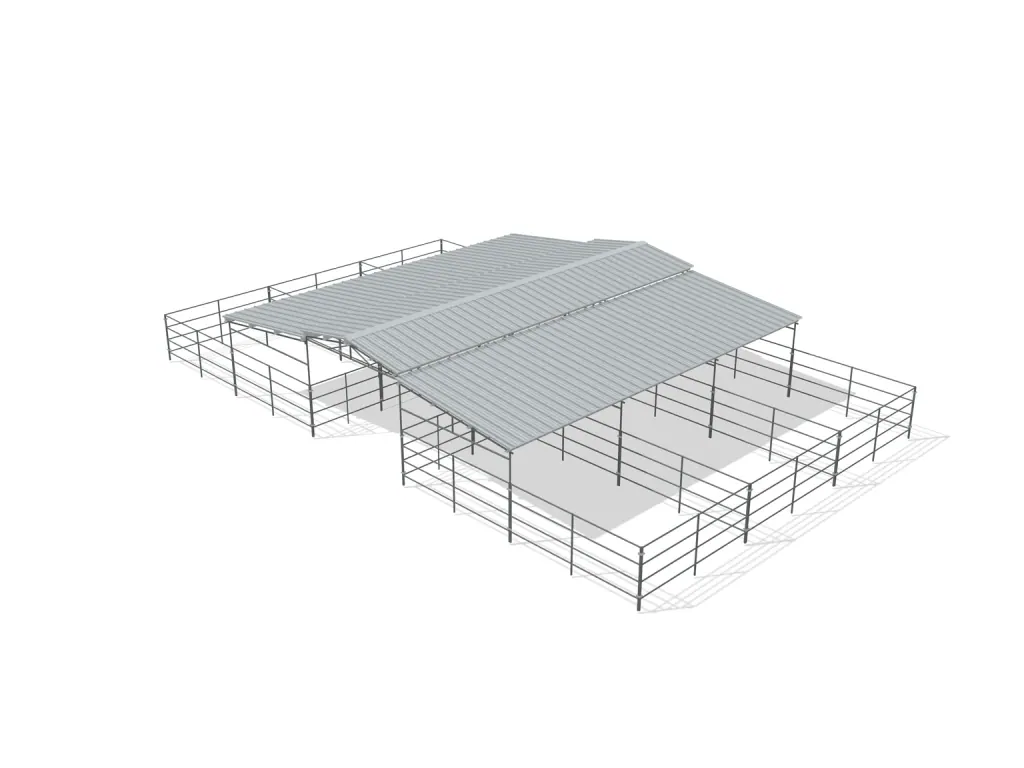
6–12 stall rows
Rows of 6 to 12 stalls for a boarding barn in Northwest Arkansas or around Little Rock, a breeder foaling out several mares, or a cattle farm keeping horses for working stock. The 8- and 12-stall kits are fully covered, which counts for a lot in this much rain; the 6- and 10-stall kits roof the stall fronts.
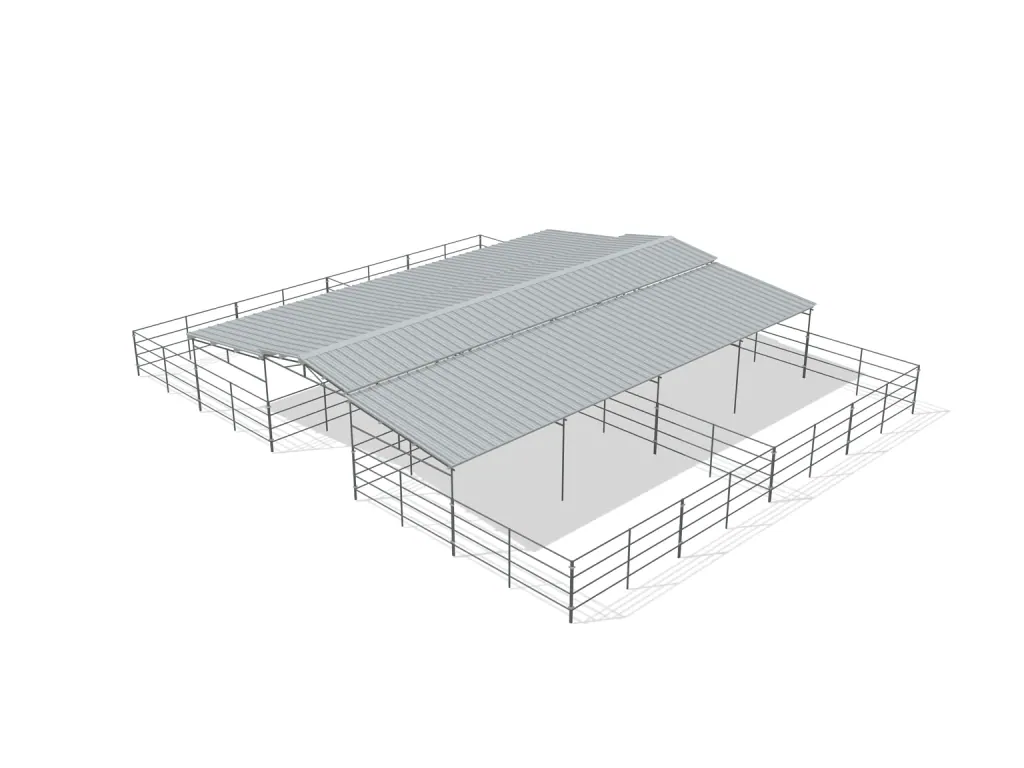
Larger 24×24 stalls
Four 24×24 stalls with a 12×24 cover over half of each. A River Valley or Delta farm with open, level ground can fit the roughly 60 by 48 ft building, and a mare and foal get room to move apart. Expect the open half of each stall to be wet after a rain.
Chert, karst, Delta clay and pine-woods sand under an Arkansas mare motel
Arkansas packs very different ground into one state. The Ozark Plateau across the north has thin, rocky soil full of chert, over limestone with springs, caves and sinkholes, and the Boston Mountains along its southern edge are steep sandstone. The Arkansas River Valley between Fort Smith and Little Rock has deeper loam on its bottoms. The Ouachitas to the south are folded shale and sandstone. The Delta in the east is flat, heavy clay that some farmers call buckshot, broken only by the loess of Crowley's Ridge, and the pine country of south Arkansas has sandy loam.
A mare motel sits on ground posts set in concrete, 12 for a standard 4-stall kit and 24 for a fully covered one, and it needs a level pad about 60 ft wide. In the Ozarks, chert and ledge rock can stop an auger, and a hillside lot may need cut and fill to make a level bench. In karst country, look for any dip or soft spot before you lay out the building, because a sinkhole opening under a post is hard to fix later. Delta clay is sticky when wet and cracks wide when it dries, so ask a local contractor how deep the posts should go there.
Then plan for water, because Arkansas gets a lot of it. In the Delta and on river bottoms, build the pad up above the field around it and keep the building out of low swales and old sloughs. In the hills, don't set it across a draw or at the foot of a slope that sheds water in a storm. The roof drops rain off its outer edges, so give that water somewhere to go. Watch the site during a heavy rain before you lay out the building; you'll see where water runs and where it pools.
Rain, muggy summers, ice and spring storms at an Arkansas mare motel
Rain runs from the mid-40s in inches a year in the Ozarks to the mid-50s and up in the Ouachitas, and it comes in every season. A standard-cover kit roofs the breezeway and the front 12 ft of each stall and leaves the back 12 ft open. A fully covered kit roofs the whole stall. In much of Arkansas the open back half of a standard stall will be wet often, so full cover is worth a hard look, especially on clay.
Summers are hot and humid, with dew points that make 90 degrees feel worse, and the Delta's flat fields often sit still on August afternoons. Air moving through the stalls matters as much as shade. In summer the breeze generally comes from the south, so a breezeway running roughly north and south catches what wind there is. In the Ozarks, a site on a ridge or a gentle rise gets more breeze than a hollow, which holds damp and cold air. Open rails or welded wire let more air through than solid wood walls.
Winter brings frost, some snow in the hills and the occasional ice storm, and spring brings tornadoes and hail. The kit is not an engineered structure, so treat the building as shade and a dry place to feed, not storm protection. Clear heavy ice or snow from the roof when you can do it safely, check the clamps and roof screws after a storm, and keep a plan for where horses go when severe storms are forecast.
Which mare motel suits an Arkansas foaling, boarding or trail-horse barn
For a breeder foaling out a few mares, the 24×24 kit gives each mare and foal twice the floor of a 12×24 stall, half roofed and half open. Choose five rails or welded wire so a foal can't put a leg or head through the gaps. In a wet spring, a fully covered 4-stall kit with welded-wire panels keeps the whole foaling stall under the roof, at the cost of the larger floor.
Boarding barns around Little Rock, Conway and Benton, and along the growing corridor from Fayetteville to Bentonville, need more stalls on less land. The 6- to 12-stall rows put every stall on one breezeway, and the fully covered 8- and 12-stall kits keep all of them dry. A cattle farm in the River Valley, or a trail rider keeping a few horses in the Ozark or Ouachita hills, can start with a 4-stall kit. The catalog doesn't list an add-on for a mare motel, so plan the stall count you'll need in a few years.
Stall layout, airflow and finish for an Arkansas mare motel
Kits come in 4 to 12 stalls in pairs, with 12×24 or 24×24 stalls on a 12 ft breezeway. A 4-stall kit with 12×24 stalls covers about 60 by 24 ft, and every extra pair adds 12 ft of length. The 8- and 12-stall kits are fully covered; the 6- and 10-stall kits roof the stall fronts. A shed row, with every stall in one line, can fit a narrow bench cut into a hillside.
Four rails suit grown horses, and five rails or welded wire, in 5 ft or 6 ft panels, suit foals and young stock. Wood-insert panels hold boards you buy locally, the PBR-sided kit adds metal siding to the upper outer stall ends, and the Heritage Series, fully covered or with open runs, has steel channel for boards and a dapple grey powder coat. Wood is not included in any of them. Boards that stay damp can rot, so check them each spring for rot and chewing.
Bare steel is the standard finish and costs the least. In Arkansas humidity it weathers to a rust patina sooner than it would in a dry climate. Dapple grey, black or a custom powder coat costs more and keeps the color. Both finishes go on the same 14-gauge steel panels.
Freight and the last mile to an Arkansas mare motel
A mare motel ships as a single large load: a 4-stall kit is 20 panels and gate combinations plus breezeway trusses, 25 ft Z-purlins, PBR roof sheets, ridge caps, clamps and ground posts. We deliver anywhere in Arkansas, from Bentonville to Lake Village. Freight is priced from the road miles to your address, as one load, with a $200 minimum. You see the amount before you pay. Our free and flat-rate freight offers cover parts of Texas, New Mexico and Arizona and don't reach Arkansas, so your freight is priced on how far the load travels.
The driver brings the load to your property but doesn't unload it, so have a tractor or skid steer with forks and a few people for the long purlins and roof sheets. The last miles decide a lot here. Steep Ozark grades, narrow gravel county roads and low-water crossings can stop a long truck, and a Delta field road can turn to grease after rain. Pick a firm spot the truck can reach, and tell us about bridges, crossings, low lines or tight turns when you order.
Posts, crew, floodplains and county rules for an Arkansas mare motel
The kit includes its ground posts, clamps and hardware. You supply the concrete, set the posts and let them cure, then clamp the panels on; the panel legs stay out of the concrete. A standard 4-stall kit uses 64 clamps and needs no welding. The breezeway roof is 9 to 10 ft high, so plan on ladders or a lift and two or three people to set trusses, run purlins and fasten the roof sheets. Installation is available and quoted separately.
Mare motel kits are not engineered and are not built to a specific building code, so ask before you order. Check with your county, and with the city if you're inside or close to town limits, since a city's planning area can reach past them. Subdivisions around Bentonville, Rogers and Conway may have covenants about outbuildings. Parts of the Delta and the river bottoms are mapped floodplain, so ask the county floodplain administrator whether a permit applies.