

Riding arena kits for Louisiana
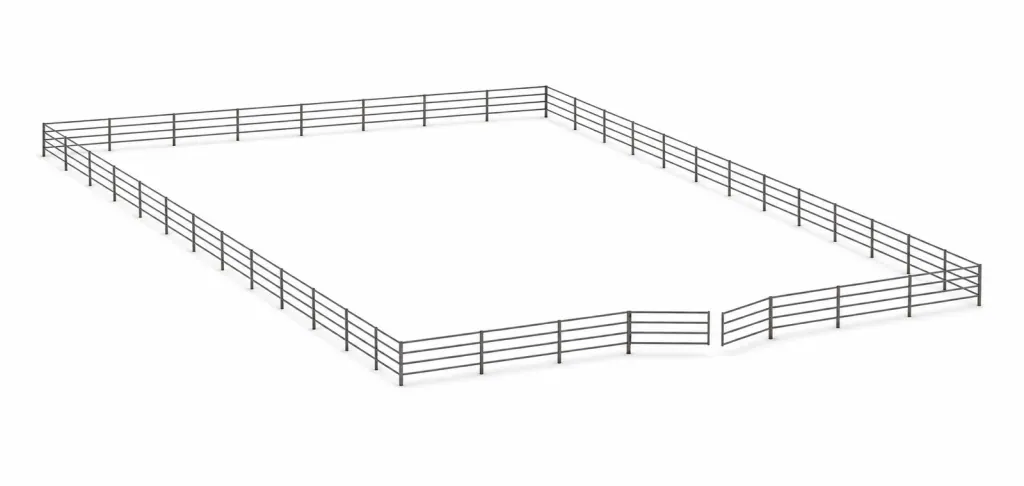
80×120 ft arena perimeter
Fits a small place in the Florida Parishes or on the edge of Baton Rouge or Lafayette, where land is tight and often wet. The 80 x 120 takes the least fill to raise above the ground around it, and it covers flatwork, groundwork and slow pattern practice for a horse or two.
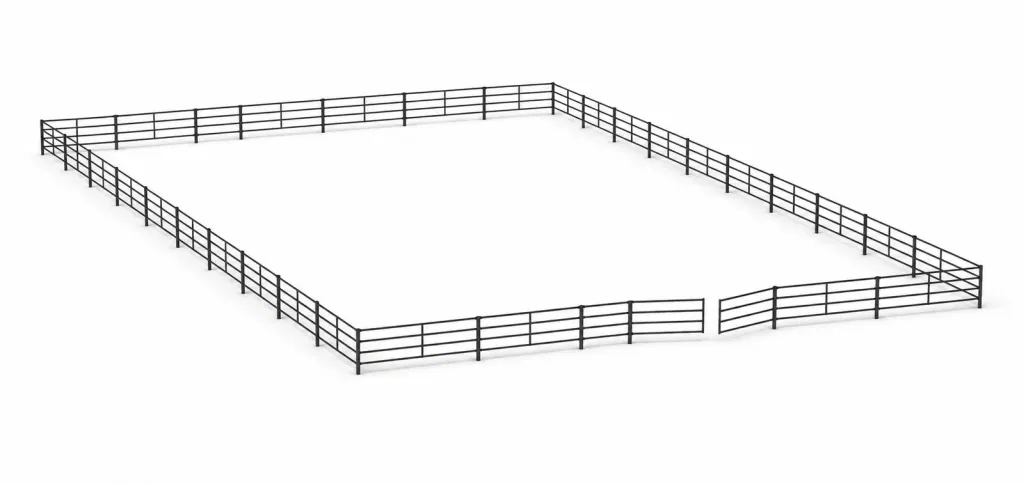
120×200 ft arena perimeter
Suits a lesson or practice barn on the Acadiana prairie around Opelousas, Crowley and Abbeville. It holds a 20 x 60 m dressage ring or a slightly tightened barrel pattern, and on flat claypan ground its pad takes far less fill to build up than the largest kit's.
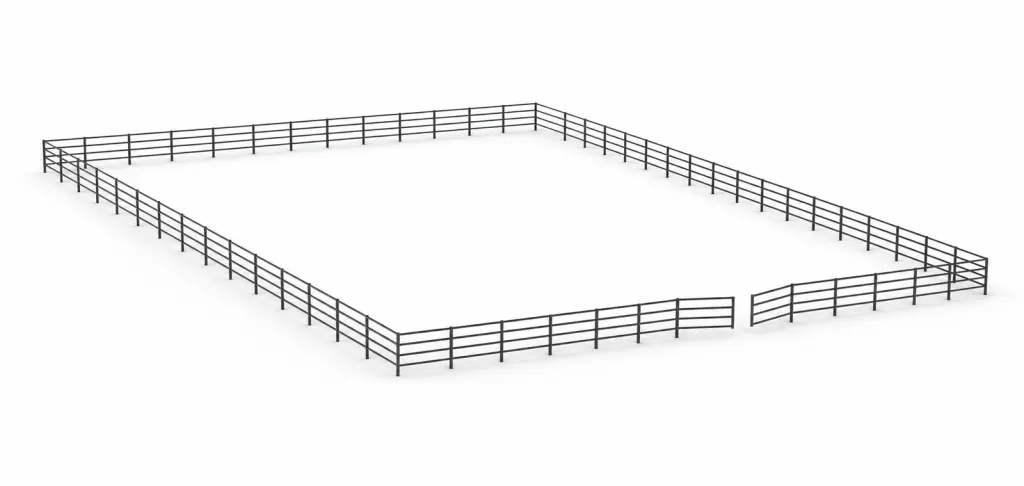
140×240 ft arena perimeter
For roping and full-size barrel patterns. The rolling, better-drained ground around Ruston, Minden and Many makes its 33,600 sq ft pad easier to build than on low prairie, where raising it 6 in takes about 620 cu yd of fill. Plan for 74 panels and a firm truck approach.
Prairie claypan, river silt or hill sand under a Louisiana arena
Much of southwest Louisiana, from Lake Charles to Lafayette and north toward Opelousas, is flat prairie with a dense clay layer a short way down. That claypan is part of why the prairie grows rice, because it holds water at the surface. Under an arena it does the same thing: rain soaks through the footing, stops at the clay and sits there. The answer is a pad raised above the surrounding ground, with a compacted base and enough slope to push water off before it soaks in.
Along the Mississippi, the Atchafalaya and the Red, the highest ground is the natural levee beside the river, where silty soil drains best, while the backswamp clay farther out stays wet. The Florida Parishes north of Lake Pontchartrain have silty soils with a hardpan in places. The north Louisiana hills around Ruston and Minden are sandier and rolling, with some of the best natural drainage in the state. Before the dirt work starts, dig a few test holes across the site and watch how fast they drain after a rain.
Rain, heat and storm months at a Louisiana arena
Rain falls hard and often, and tropical systems are possible from June through November on top of the year's ordinary thunderstorms. A 140 x 240 pad collects about 21,000 gallons for each inch, and a tropical storm can drop several inches. Slope the pad 1 to 2 percent toward a ditch on the low side that carries water away from the arena and the barn. Keep the fence line back from that ditch so the bottom rail doesn't catch floating debris, and stop runoff from the barn roof or the drive from flowing onto the pad.
Heat and humidity shape the riding day more than cold does. Summer rides happen early or late, and footing stays damp longer in humid air, though sand can still dry out on top in a hot spell. Winters are mild in the south, with the odd freeze farther north. After a tropical storm or a strong thunderstorm, walk the whole fence before turning horses back in. Look for limbs on the rails, loosened clamps, washed-out footing and soft ground around the posts.
Sizing a Louisiana arena for barrel racing, roping or lessons
Fill sets the budget here as much as the fence does. Raising the area inside the fence by 6 in takes about 180 cu yd of fill for an 80 x 120, about 450 for a 120 x 200 and about 620 for a 140 x 240, before any slope or apron. Loose fill also shrinks when it's compacted, so the order will be larger than those numbers. That makes each step up in size a real jump in site work, not just a few more panels, so match the size to the riding you do most.
For barrel racing and roping at speed, the 140 x 240 is the kit that holds a full cloverleaf, roughly 90 ft between the first two barrels and 105 ft to the third, with turning room at the fence. The 120 x 200 takes a slightly tighter pattern, fits a 20 x 60 m dressage ring lengthwise and leaves room for lessons with a few riders. The 80 x 120 suits flatwork, groundwork and one or two horses, though it's short for even a 20 x 40 m ring. Add 15 to 20 ft of firm apron around the fence for trucks and the tractor.
Rails, gates and finish for an arena in Louisiana's damp air
Whichever size you order, the panels are 10 ft lengths standing 5 ft tall, made of 14-gauge steel with 1-5/8 in posts and 1-1/4 in rails. The rails pass through the posts, a tube down the middle braces each panel, and the end caps are welded. Four rails leave openings of about 14-1/4 in, and five rails tighten them to about 10-1/4 in. Go with five for foals, minis or an arena beside a busy road. Go with four for grown horses that already know panels, at a lower cost and weight.
The two included gates are a 10 ft panel gate combo with a 4-1/2 ft walk-through, and a 10 ft swing gate that hangs on a 2-3/8 in post with welded hinges and latches to a matching post. Hang the swing gate on the firmest approach to the pad, because that's where the tractor and trailer cross in wet weather, and add a 12 ft arena swing gate if your equipment is wide. Bare metal is standard and weathers to a rust patina, sooner in damp air than in a dry climate. Powder coat in dapple grey, black or a custom color costs more.
Shipping an arena kit to a Louisiana parish
Arena kits go to any parish in Louisiana, from Caddo in the northwest corner to St. Tammany across the lake from New Orleans. Freight is priced from the road miles to your address, as one load, with a $200 minimum. You see the amount before you pay. The free and flat-rate freight offers don't extend to Louisiana, so the cost here follows distance. An 80 x 120 ships as 38 panels, a 120 x 200 as 63 and a 140 x 240 as 74, with the two gates and the clamps on the same truck. Extra gates or panels added to the order travel with them.
Rural deliveries here often end on a narrow parish road with deep ditches on both sides, a culvert crossing at the drive and soft shoulders after rain. A shell or gravel drive holds a truck better than grass or clay. Tell us about tight culvert crossings, low limbs or soft ground when you order, so the load can come in safely. The driver doesn't unload, so have a tractor with forks, a skid steer or a few helpers ready, check the count and note any damage on the delivery receipt.
Raising the pad and setting posts for a Louisiana arena
Build the pad first and give it time. Spread the fill in lifts, compact each one, and let a few rains settle it before the posts go in, because posts set in loose fill can lean as it packs down. The kit doesn't include ground posts. Set one every two to three panels and clamp the panels to it, and don't set the panel legs in concrete. On a raised pad, a local fence builder can tell you how deep posts need to go to reach native soil under the fill. A 120 x 200 takes about 21 to 32 posts; start with the swing gate's two.
Spread the footing after the fence is up so it stays inside. Installation isn't part of the kit, so plan on your own crew or a local fence builder. Louisiana has parishes rather than counties, and outside city limits the parish handles permits, so check with it, and with the city or HOA if you're in town or a subdivision. If the site is in a mapped flood zone, ask the parish whether bringing in fill needs a permit, and ask about drainage servitudes before you build next to a ditch.