

Round pen kits for Louisiana
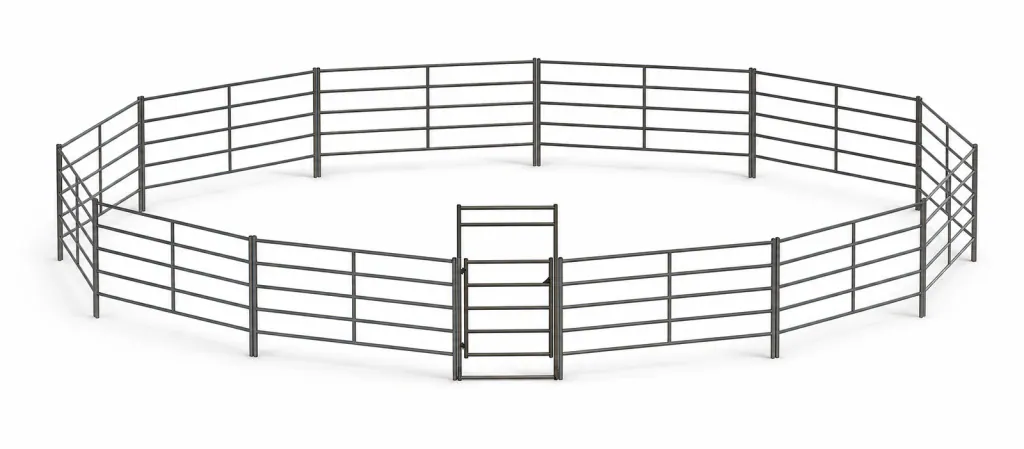
40 ft steel round pens
Groundwork on foot on a small place around Baton Rouge, Lafayette or the Northshore. A 40 ft circle needs the least fill to raise above wet ground, which matters when every load of dirt for the pad has to be hauled in.
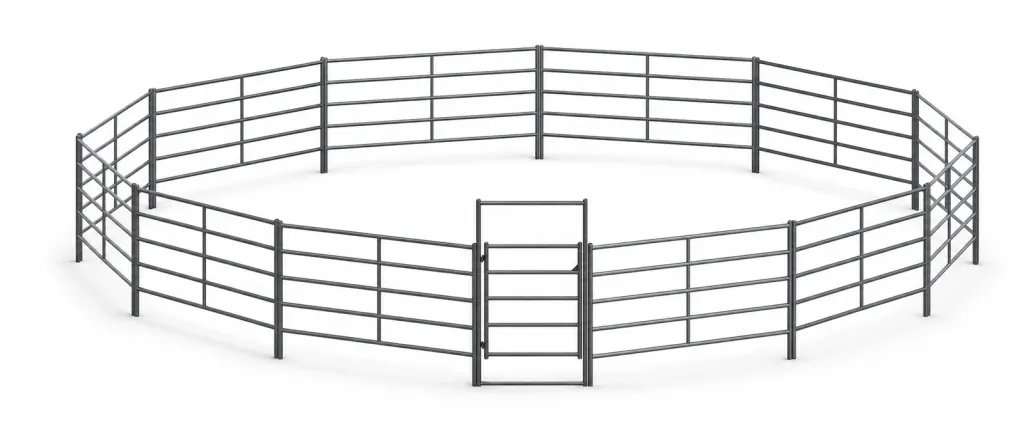
50 ft steel round pens
The usual pick for groundwork plus some riding, and the safe choice if you haven't decided. On rolling Florida Parishes ground around Folsom or Amite, a 50 ft circle fits on a rise and keeps the drained pad to a size a tractor can maintain.
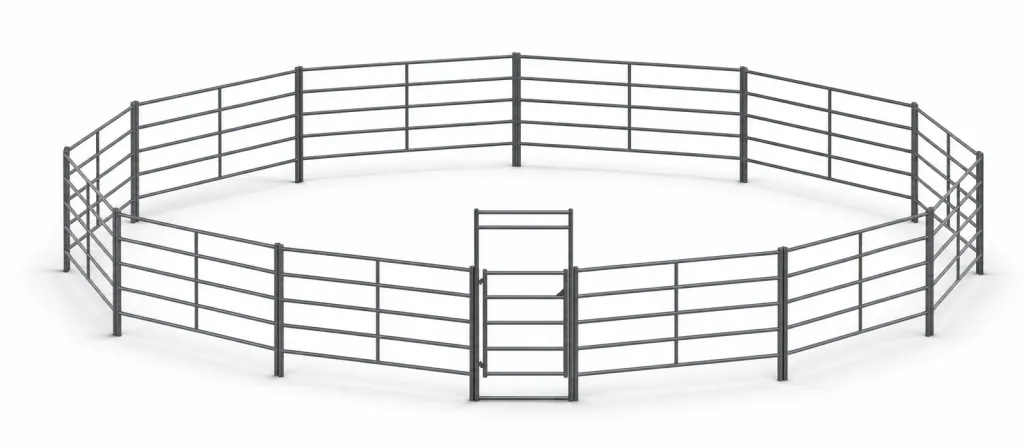
60 ft steel round pens
For regular riding. The pine hills of north Louisiana and the Red River valley around Natchitoches have more high ground, with room for a 60 ft circle and the working space outside it. A footing that size dries slowly, so crown it well.
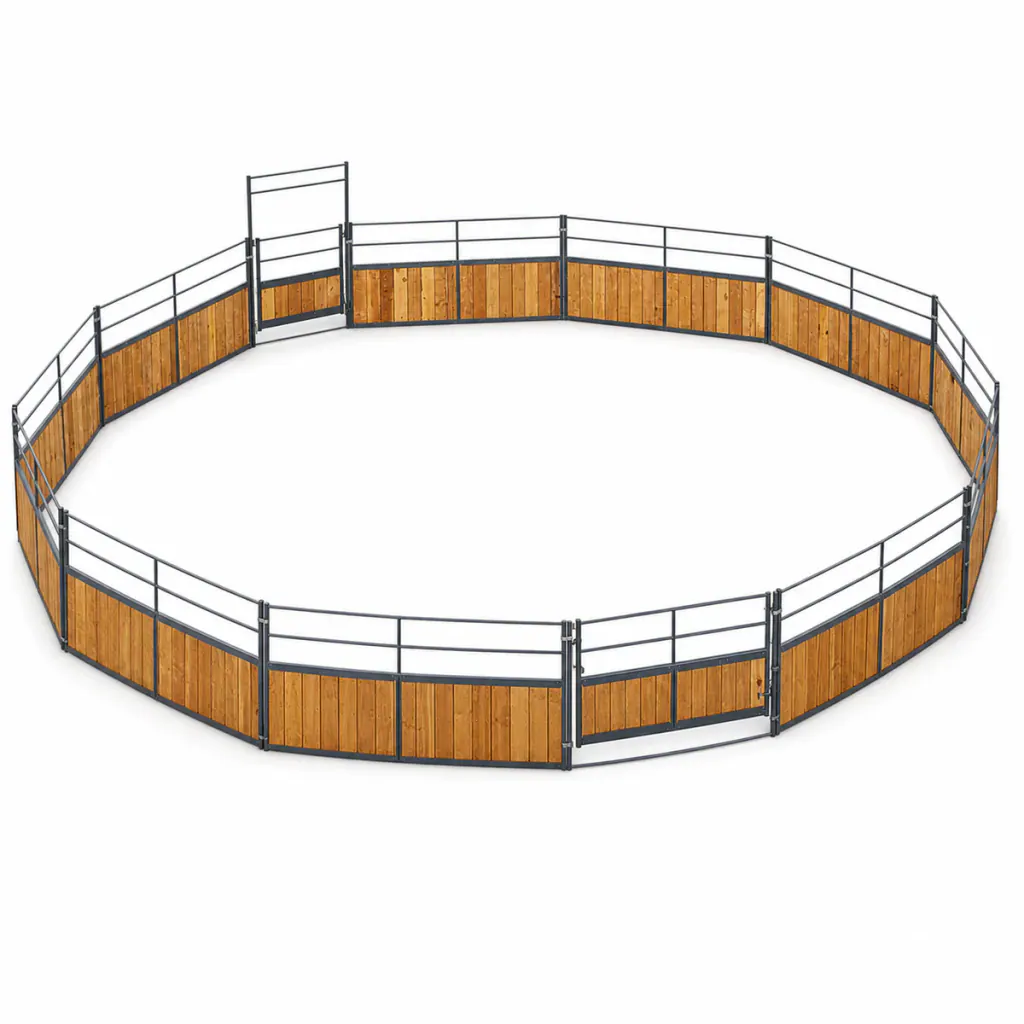
Wood-insert round pen
C-channel along the lower part of each panel holds 2x6, 2x8 or 2x10 boards you supply, with a separate 10 ft swing gate for equipment. It suits an Acadiana or Northshore place where the pen sits near the house. Treated lumber outlasts untreated pine in damp Gulf air. Wood is not included.
Round pen ground from Acadiana prairie to the north Louisiana hills
South Louisiana is mostly flat and wet underfoot. The prairies of Acadiana and the southwest, around Lafayette, Crowley, Eunice and Jennings, sit on silty soil over a dense clay pan, which is a big reason so much of that ground grows rice: water stands on top instead of soaking in. Along the Mississippi, Atchafalaya and Red rivers, the natural levees next to the channel are the higher, better-drained silt loam, and the backswamp clay farther from the river can hold water a long time.
North of Lake Pontchartrain, the Florida Parishes around Covington, Folsom, Hammond and Amite roll a little and have silty soil that drains better on the rises, though some of it has a dense layer a couple of feet down that keeps the ground damp. North Louisiana's pine hills, from around Shreveport east to Ruston, are red sandy loam over clay, with red silty bottoms along the Red River around Natchitoches and Alexandria. A local dirt contractor, or a few test holes dug with a post-hole digger, can tell you what's under your pasture.
That makes the pad the main job almost everywhere. On prairie or backswamp clay, raise the pad above the field with hauled-in fill and base, and crown it so rain runs out under the bottom rail. In the Florida Parishes and the north, pick a rise, cut it level and add base so the footing doesn't mix into the native soil. The panels sit on whatever you build, so a pad that settles or holds water takes the circle with it.
Gulf rain, heat and hurricane season at a Louisiana round pen
Louisiana gets roughly 50 inches of rain a year around Shreveport and more than 60 near New Orleans, and it can come in any month. Summer thunderstorms can drop an inch or two in an afternoon, and tropical systems from June through November can bring days of rain. A pen on flat ground with nowhere for water to go will be out of use after every storm. Walk the site after a heavy rain, note where water stands and for how long, and build higher than that.
Heat and humidity push most riding to early morning or evening, and footing that never fully dries turns slick and breaks down. Footing dries fastest in sun with a breeze moving through, so set the pen in the open rather than tucked under live oaks, and keep the grass trimmed along the outside so the bottom rail and the edge of the footing can dry. A round pen is a work space, not shelter. When a tropical storm is coming, follow your own plan for the horses, and walk the circle afterward for panels moved by water or debris.
Which round pen size fits a Northshore lot or a north Louisiana farm
On a small place around Baton Rouge, Lafayette or the Northshore, the 40 ft pen often fits where nothing bigger will, and in wet country the smaller pad counts for a lot. It takes 12 panels and covers about 1,260 sq ft, so it needs the least fill to raise, and it's the right size for groundwork on foot and starting young horses. The 50 ft pen, 15 panels and about 1,960 sq ft, is the usual choice for groundwork plus some riding, and the safe one if you're undecided.
The 60 ft pen takes 18 panels and about 2,830 sq ft, for regular riding. It's easiest to place where higher ground is plentiful, in the north Louisiana hills or on a broad rise in the Florida Parishes. On Acadiana prairie it means raising and crowning about half again as much pad as a 50 ft pen, so price the fill first. Add about 10 ft of working room outside the panels for a tractor and the gate, which makes the pad around 60, 70 or 80 ft across.
The Signature Series uses the same diameters with C-channel along the lower part of each panel for your own 2x6, 2x8 or 2x10 boards, and adds a 10 ft swing gate for equipment. It suits a pen near the house or along a front fence, where wood fits the place. The boards are yours to buy, and in Louisiana humidity, treated lumber or a rot-resistant species will last longer than untreated pine.
Rail count and steel finish for a round pen in Louisiana humidity
Each steel kit is made from 10 ft by 5 ft panels of 14-gauge steel with 1-5/8 in posts, 1-1/4 in rails and welded end caps. Four-rail panels have 14-1/4 in gaps between rails; five-rail panels cut that to 10-1/4 in. Choose five rails for young or green horses, ponies and minis, or where the public can reach the pen, such as a boarding barn or a pen near a parish road. Four rails cost less and suit a settled horse.
Bare metal is the standard finish and the lowest cost. In south Louisiana's damp air it develops a surface-rust patina quickly, and near the coast salt air speeds that up; pens in the drier north weather a little more slowly. That patina is only the finish changing, and the 14-gauge steel underneath is the same panel. If you want a color that stays, dapple grey, black or a custom powder coat costs more and is picked on the product page.
Round pen freight to Louisiana farms and culvert drives
We ship round pens to every parish in Louisiana, from Shreveport to Houma. Freight is priced from the road miles to your address, as one load, with a $200 minimum. You see the amount before you pay. The free and flat-rate offers on the delivery page apply only in parts of Texas, New Mexico and Arizona, so Louisiana orders are priced on distance. A round pen with extra panels or a gate goes as one load for one freight charge.
The driver brings the load to your place but doesn't unload, so plan for a tractor with forks, a skid steer or enough people. Many rural drives in south Louisiana cross a roadside ditch on a culvert, and a narrow culvert, a soft shoulder or a wet pasture can stop a loaded truck. Meet the truck on the road or a gravel pad and carry the panels to the pen from there. Tell us about low limbs, overhead lines, narrow gates or a soft drive when you order.
Raising the pad and putting up a round pen on wet ground
Steel kits need no posts or concrete. Stand the 10 ft panels in a circle on the finished pad, hang the 4.5 ft bow gate and fit the clamps: 26 on a 40 ft pen, 32 on a 50 and 38 on a 60. That's useful where the water table is high, because a post hole in much of south Louisiana can fill with water before you finish digging. Build and compact the pad first, set the panels, then add footing inside the circle. Installation can be quoted with the kit if you'd rather not do it.
The Signature Series is the exception: its 10 ft swing gate hangs on an 8 ft by 2-3/8 in post you set yourself, so plan for that hole on wet ground. If your land is in a mapped flood zone, ask the parish floodplain office before hauling in fill for the pad; some parishes require a permit for it. Check with your parish, and with an HOA on the Northshore or around Baton Rouge, before you build. Because a steel pen isn't buried, you can unclamp it and move it to higher ground.