

Round pen kits for Arkansas
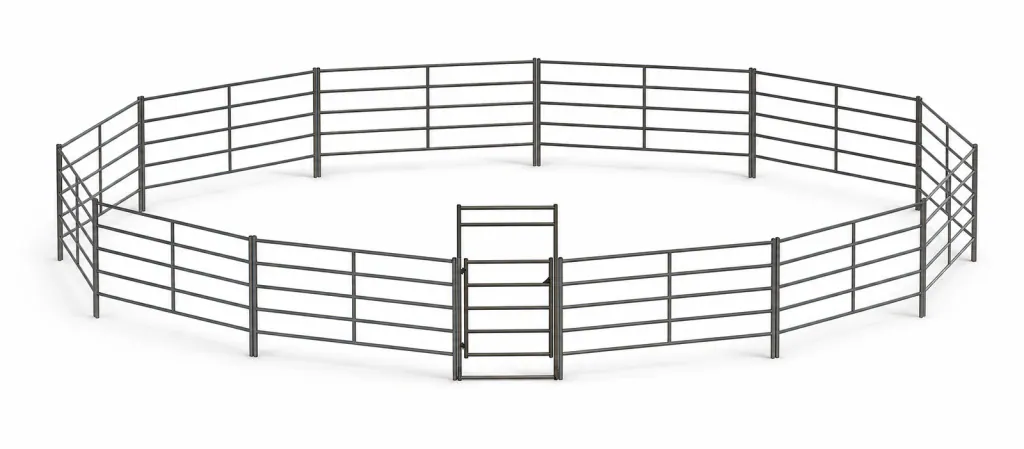
40 ft steel round pens
Groundwork on foot and starting young horses where flat ground is scarce. In the Ozarks or the Ouachitas, a 40 ft circle may fit on a bench or ridge top that a bigger pen won't, with less chert and rock to clear before the panels go down.
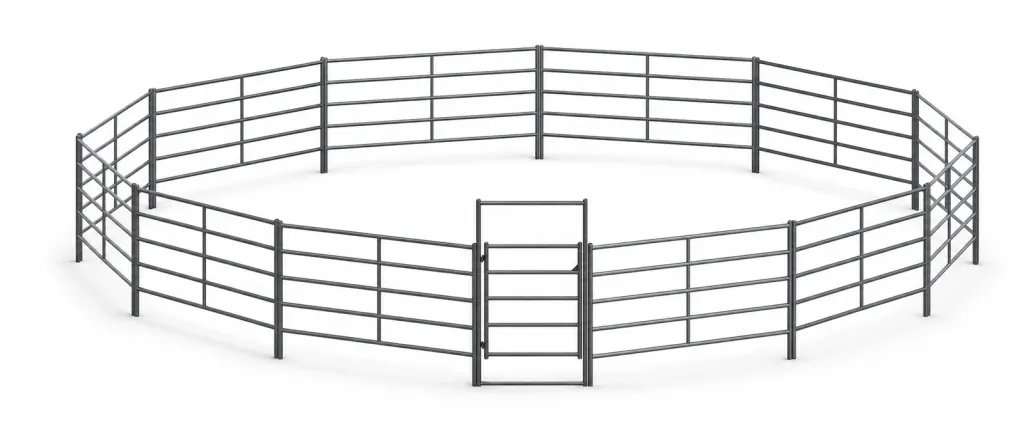
50 ft steel round pens
Groundwork plus some riding, and the one to buy if you're undecided. In the Arkansas River Valley around Russellville or Conway, a 50 ft circle fits on a rise above the bottomland and keeps the raised, drained pad a reasonable size.
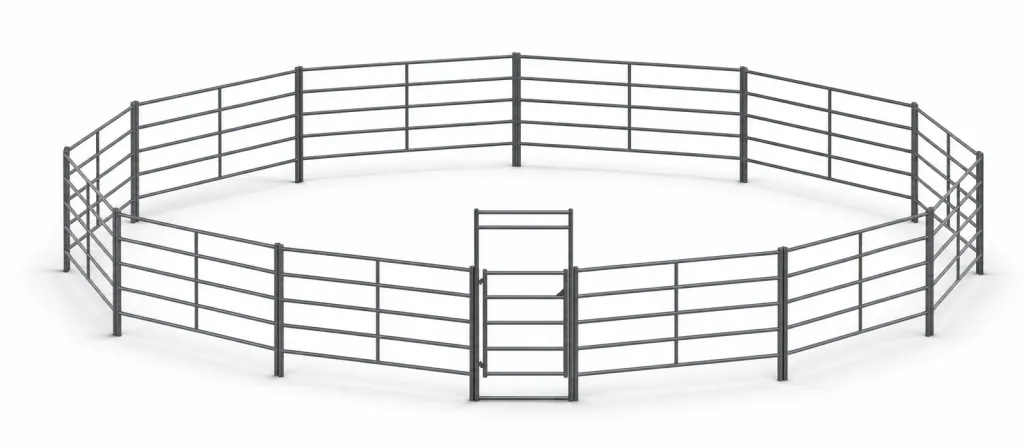
60 ft steel round pens
For riding in the pen regularly. Flat Delta or Grand Prairie ground has room for a 60 ft circle, but the clay holds water, so it needs the most hauled-in fill and base of any size. Price that pad before you settle on 60 ft.
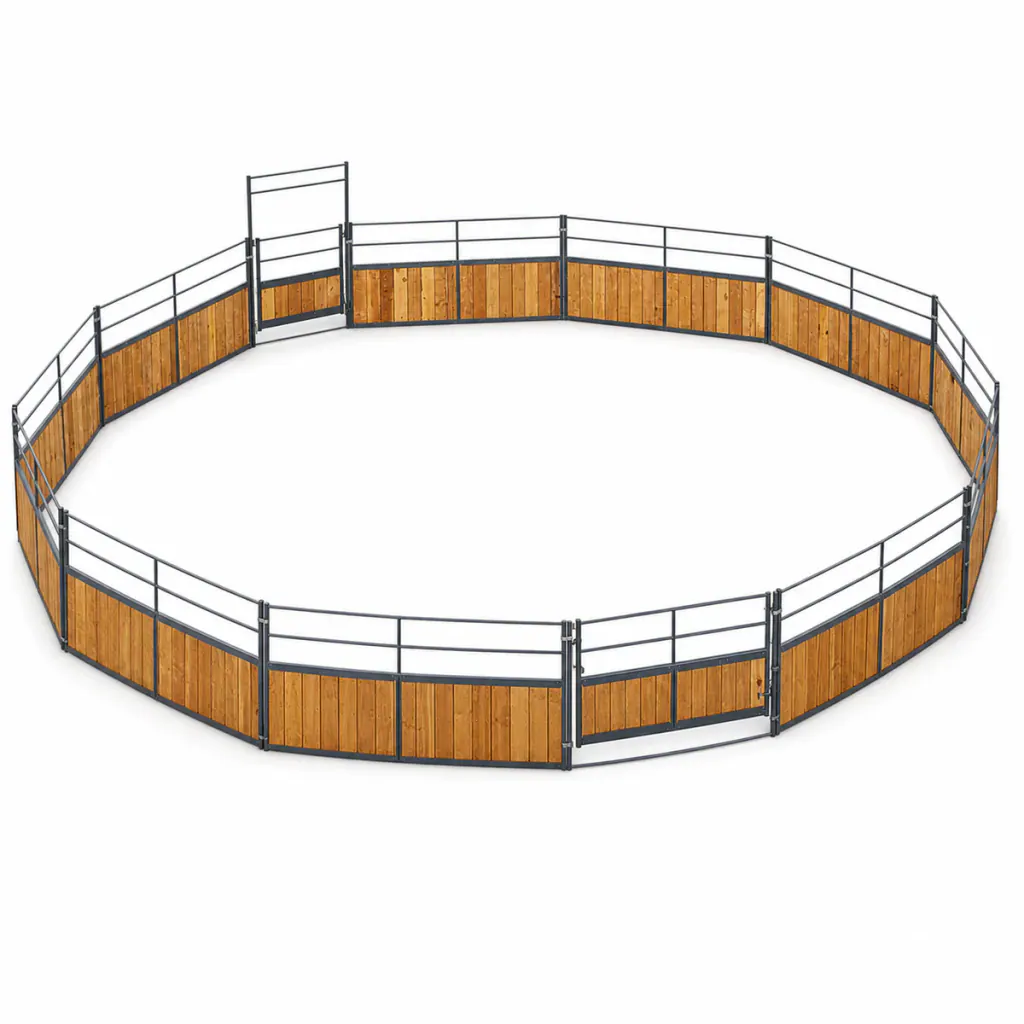
Wood-insert round pen
C-channel along the lower part of each panel takes 2x6, 2x8 or 2x10 boards, and a separate 10 ft swing gate lets equipment in. It fits a pen by the house or barn in northwest Arkansas or the south Arkansas pine country. Use treated boards in this humidity. Wood is not included.
Round pen ground from Ozark chert to Delta buckshot clay
The Ozark Plateau across northern Arkansas, from Bentonville and Fayetteville east past Harrison and Mountain Home, has thin, stony soil full of chert, often over limestone. Much of it is karst country, with sinkholes and springs. South of the Arkansas River, the Ouachita Mountains around Mena and Hot Springs are long ridges of shale and sandstone, and level ground sits mostly on narrow valley floors. In both, finding a flat circle can take more dirt work than putting up the pen.
The Arkansas River Valley between them, from Fort Smith through Russellville and Conway to Little Rock, has deep bottomland soil that grows good grass but sits low and can flood. In the Delta, on either side of Crowley's Ridge, the ground is flat, heavy clay. Sharkey clay, the buckshot farmers know, breaks into hard clods when dry and holds water when wet, and the Grand Prairie around Stuttgart has a clay pan that keeps rain sitting on top. South Arkansas pine country runs to sandy loam over clay. A local dirt contractor can say how much base your soil needs.
The panels stand on the ground and clamp together, so the pad decides how the pen behaves. On Ozark or Ouachita ground, cut the circle level, rake out chert and loose rock, and add base so stone doesn't work up through the footing. On Delta or bottomland clay, raise the pad above the field around it and crown it so rain runs out under the bottom rail. Don't set a pen over a sinkhole or a soft spot that stays green in August; both can settle.
Arkansas rain, summer humidity and ice storms at the round pen
Most of Arkansas gets 45 to 55 inches of rain a year, more in parts of the Ouachitas, and spring is the wettest season. On clay, a pen can sit wet for days after a storm, and footing that stays wet gets slick and breaks down. Pick the highest workable spot near the barn, walk it after a hard rain, and look at where water comes from upslope. A shallow swale cut above the pen to carry runoff around it can do more than extra footing.
Summers are hot and humid, so most riding happens early and late in the day. Shade outside the pen is welcome, but don't build under big trees. Roots heave the pad, leaves load up the footing, ground under a canopy stays damp longer, and the ice storms that hit the Ozarks and the River Valley bring down limbs that can bend a rail. Winter freeze-thaw on clay can also shift a panel or drop one end of the gate, so walk the circle each spring, set anything that moved back in line and snug up the clamps.
Fitting a round pen size to Arkansas hill farms and Delta flats
In the Ozarks and Ouachitas, level ground is the limit. A 40 ft pen needs 12 panels and about 1,260 sq ft, or a pad about 60 ft across once you leave 10 ft of working room around it. It may fit on a bench or ridge top where nothing bigger will, and it's the right size for groundwork on foot and starting young horses. On a small place outside Bentonville, Fayetteville or Little Rock, it leaves room for a barn and turnout.
The 50 ft pen, with 15 panels and about 1,960 sq ft, is the usual pick for groundwork plus some riding, and the one to buy if you haven't decided. In the River Valley it fits on a rise above the bottom. The 60 ft pen takes 18 panels and about 2,830 sq ft, which suits regular riding and the flat ground of the Delta or the Grand Prairie. There, the extra 870 sq ft over a 50 ft pen is fill and base you'll haul in and raise, so price the pad before you choose.
The Signature Series comes in the same three diameters, with C-channel along the lower part of each panel for your own 2x6, 2x8 or 2x10 boards and a separate 10 ft swing gate for equipment. It suits a pen near the house or barn where wood matches the setting. The wood is yours to buy.
Rails, bare steel and powder coat in Arkansas humidity
Every steel kit uses 10 ft by 5 ft panels of 14-gauge steel, with 1-5/8 in posts, 1-1/4 in rails and welded end caps. The difference between kits is the rail count. Four rails leave 14-1/4 in gaps, which suits a settled horse and costs less. Five rails narrow the gaps to 10-1/4 in, the better choice for young horses, ponies and minis, or for a pen at a boarding or lesson barn where other people come and go.
Bare metal is the standard finish and the least expensive. In Arkansas humidity it turns to a surface-rust patina fairly quickly, often first along the bottom rail where wet footing and grass touch it. That's how bare steel weathers, and the panel is the same 14-gauge steel underneath. If you'd rather keep a color, dapple grey, black or a custom powder coat costs more and is chosen on the product page. Keeping the grass trimmed along the outside of the circle helps the bottom rail dry out after rain.
Getting a round pen delivered up Arkansas hill roads and Delta lanes
We deliver round pens anywhere in Arkansas, from Bentonville to Lake Village. Freight is priced from the road miles to your address, as one load, with a $200 minimum. You see the amount before you pay. No free or flat-rate freight offer applies in Arkansas; those offers cover parts of Texas, New Mexico and Arizona, so your freight is figured on distance like any other address. Extra panels, a gate or other equipment on the same order ride on the same load for one freight charge.
The driver delivers to your property but doesn't unload, so have a tractor with forks, a skid steer or a few strong helpers there. In the Ozarks and Ouachitas, steep gravel drives, tight switchbacks and low-water crossings can keep a loaded truck from reaching the barn, and in the Delta a field road can bog after rain. Pick an unloading spot on firm, level ground where the truck can turn around, carry the panels the rest of the way, and tell us about any of this when you order.
Setting a round pen on rocky hillsides or soft bottomland
There's no concrete in a steel kit and nothing to dig. The panels stand in a circle, the 4.5 ft bow gate hangs between two of them, and clamps hold it all together: 26 on a 40 ft pen, 32 on a 50 and 38 on a 60. That helps in the Ozarks, where an auger hits chert or limestone almost at once. Finish the pad before the truck comes, set the panels, and spread footing last so it stays inside. Installation can be quoted with the kit if you'd rather hand the job off.
The Signature Series 10 ft swing gate hangs on an 8 ft by 2-3/8 in post you set yourself, so check what's under that spot first; on rocky ground it may take a rock bar or a contractor. Before you build, check with your county, and in the subdivisions around Bentonville, Rogers and Conway, with the property owners' association. Since a steel pen isn't fixed to the ground, you can unclamp it and move it if the spot stays wet, or take it with you when you sell.