

Continuous fence project kits for Louisiana
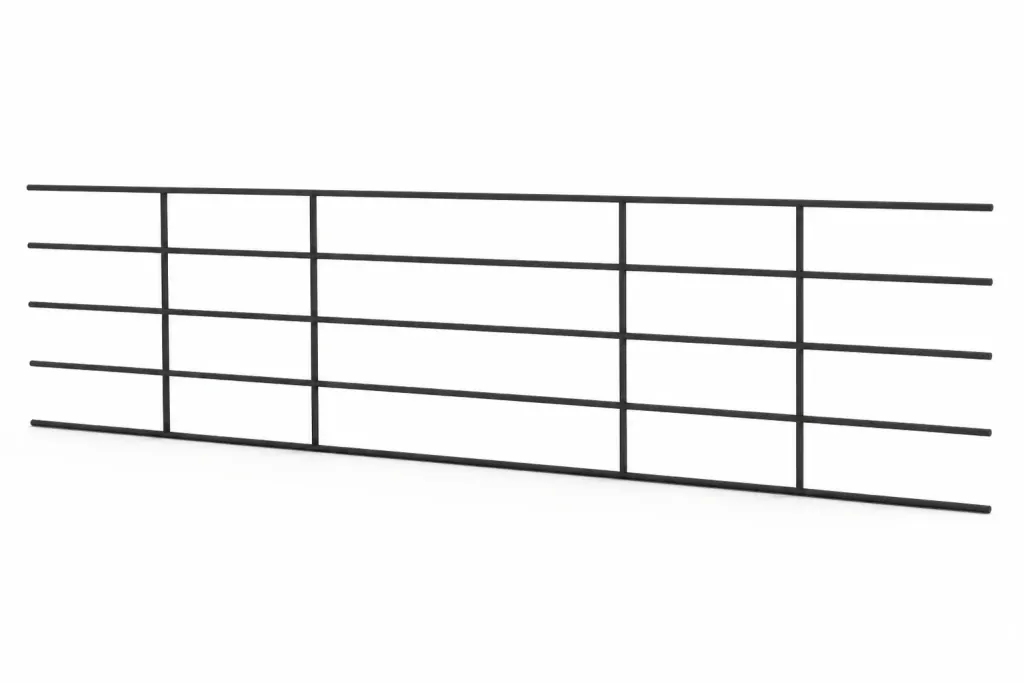
20 ft, 5-rail sections
Paddock and road frontage on horse farms in the Florida Parishes around Folsom, Covington and Amite, where St. Tammany growth brings traffic and new neighbors close to the turnout. Five rails make smaller openings for foals and minis, and 20 ft sections give a long frontage fewer joints.
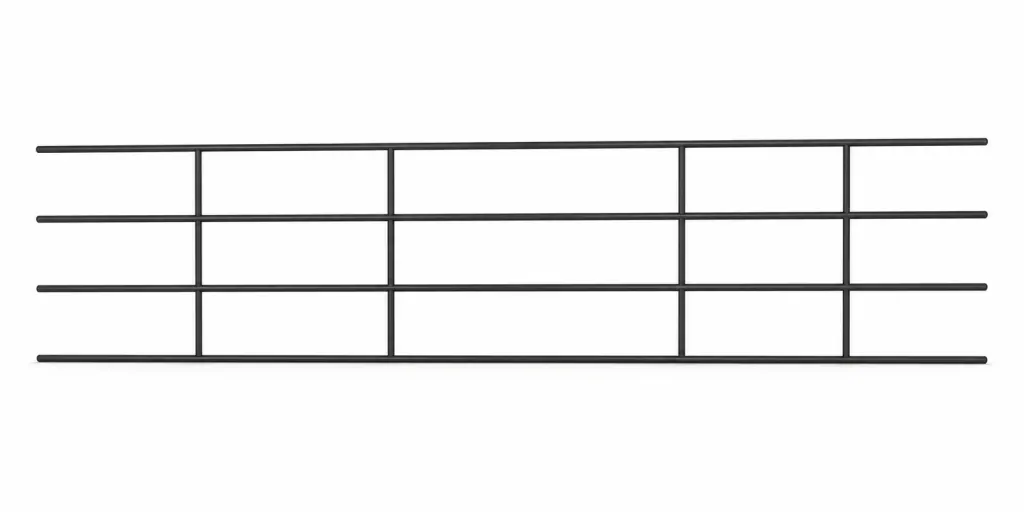
20 ft, 4-rail sections
Long, flat lines on southwest Louisiana cattle ground around Jennings, Kaplan and the prairie toward Lake Charles, where grown cattle graze big pastures beside rice fields and the land lets full sections run straight. Four rails puts less steel on each 20 ft span of a long boundary.
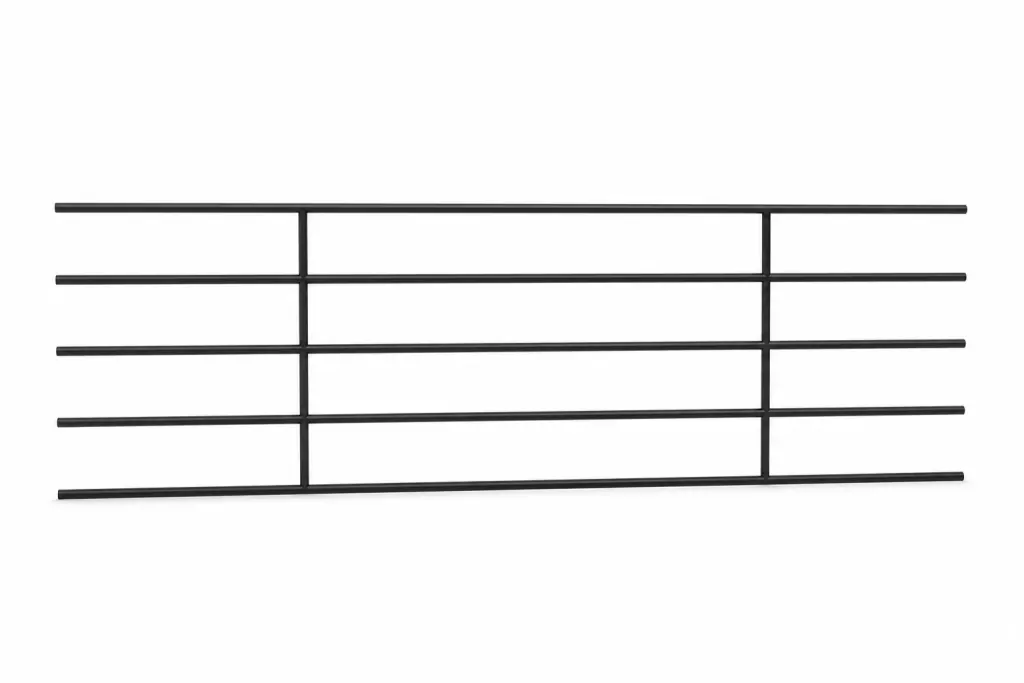
10 ft, 5-rail sections
Rolling pine country in north Louisiana near Ruston, Minden and Natchitoches, where a horse paddock climbs a red clay hill and the grade changes over a short distance. The 10 ft section follows those changes more closely than a 20, and five rails keep the openings small.
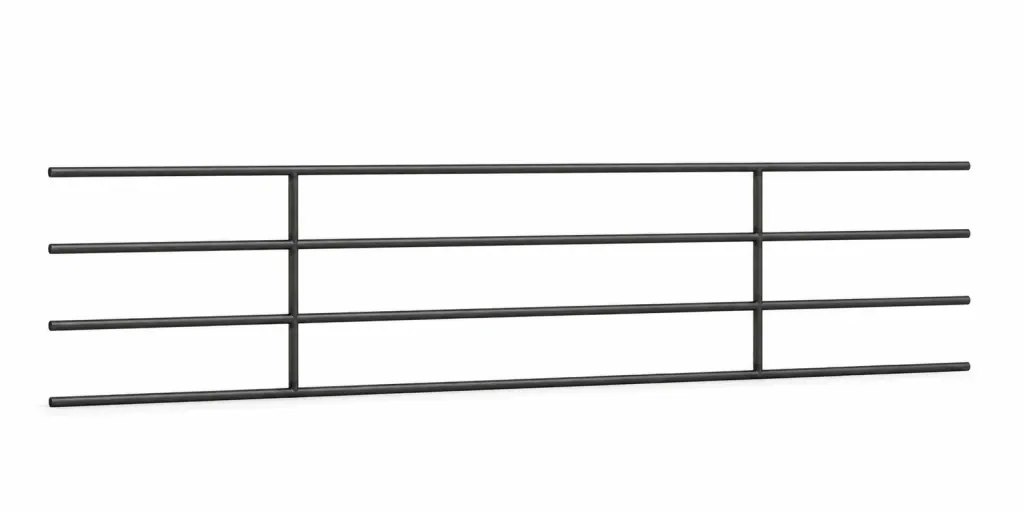
10 ft, 4-rail sections
Barn lots, pens and the short pieces between coulees and field ditches on Acadiana places near Lafayette, Opelousas and Ville Platte. Four rails suits grown horses and cattle, and the 10 ft length is also offered in powder coat for anyone who wants a color instead of bare steel.
Continuous fence post holes in Louisiana prairie claypan, river bottoms and red hills
On the southwest Louisiana prairie, from Lafayette west through Crowley and Jennings toward Lake Charles, a silty topsoil sits on a dense claypan a foot or two down. Holes start easily and then slow down in the pan, and rainwater sits on top of it, so a fresh hole often fills. Along the Mississippi, the Red River and the old bayou channels like the Teche and the Lafourche, the high ground on the natural levees is loamy and digs well. The low backswamp behind it is heavy clay that stays wet for months.
North Louisiana is different ground. Around Shreveport, Ruston and Minden, and down through the central pine hills, the soil is red sandy clay with pine roots and, in places, ironstone gravel or ledges that stop an auger. In the Florida Parishes, the higher ground around Amite and Franklinton is silty, and closer to Lake Pontchartrain it is flat and slow to drain. Have buried lines marked before you dig. A local fence contractor knows the soil and how deep posts need to go there.
Heavy rain, standing water and salt air along a Louisiana continuous fence
Shreveport averages around 50 inches of rain a year, and much of south Louisiana gets closer to 60 or more. On flat land that much rain has nowhere fast to go, so pastures hold water after a storm and low corners stay soft for weeks. That shapes the fence job. A post set in mud has little to brace against until the concrete cures, a loaded truck can't cross a wet field, and a line run through a low spot spends part of the year standing in water. Put a permanent line on the highest ground the layout allows.
Near the coast and the marsh edge, humid salt air rusts bare steel faster than the drier air up around Monroe or Shreveport. Bare metal weathers to a rust patina anywhere; the 10 ft sections are offered in powder coat, and each product page shows the finishes for that length. Hurricanes and tropical storms bring down live oak limbs and pine trees, so keep the line out from under big trees where you can, and walk it after a storm passes. A bent section unclips from its posts and can be replaced on its own.
Continuous fence for Florida Parishes horse farms and Acadiana cattle
Horse farms cluster in St. Tammany and Tangipahoa parishes around Folsom, Covington and Amite, on the edges of Baton Rouge near Central and Zachary, and across Acadiana around Lafayette, Carencro and Opelousas. Many are a few acres to a few dozen, with a parish road out front and turnouts near the barn. The 20 ft, 5-rail section suits that frontage and the turnout lines: five rails close up the openings for foals and minis, and the long sections look straight from the road. The 10 ft, 5-rail section takes the short sides and the gate runs.
Cattle run on the southwest prairie and the marsh edge, and on cow-calf places through the north Louisiana hills. The long boundaries there are usually barbed wire. Continuous fence pays off near the barn, along a lane, around the pens and in the lot where cattle are worked. The 20 ft, 4-rail section suits that work with grown cattle, and the 10 ft, 4-rail section fits between coulees and field ditches. Every section is 14-gauge steel, 4 ft tall, with 1-1/4 in rails and round-tube verticals. Neither rail count keeps goats or sheep in by itself.
Planning a Louisiana continuous fence line around ditches, coulees and culverts
Walk the route with a measuring wheel and mark every ditch, coulee, culvert, gate, tree and building on a drawing. A 20 ft section takes a post at each end and one at its open center, so posts stand 10 ft apart, and a straight 400 ft paddock side takes 20 sections and 41 posts. Each post gets one clip per rail with a self-tapping screw, which is 205 clips for that side in 5-rail or 164 in 4-rail. The clip is 10-gauge steel for 1-1/4 in pipe and fastens to wood or steel posts. Posts and clips are ordered apart from the sections.
Most Louisiana pasture is flat, so ditches shape a line more than slope does. Keep posts well back from a ditch bank that sloughs in wet weather, and leave room for whoever cleans the ditch. Where equipment has to cross, put a culvert and a gate there rather than running sections over the ditch. Plan corners and gates before the straight runs. The shop can make elbow sleeves to carry rails around a corner; ask when you order. Steel posts come in 8 ft lengths in 1-5/8 in and 2-3/8 in, and the 2-3/8 in post belongs at corners and gates. Our 10 ft and 12 ft arena swing gates match the 4 ft height and come with hang and latch posts.
How freight is figured for continuous fence going to Louisiana
We deliver continuous fence across Louisiana, from Shreveport to Houma. Freight is priced from the road miles to your address, as one load, with a $200 minimum. You see the amount before you pay. The free and flat-rate offers on our delivery page cover only Texas, New Mexico and Arizona addresses, so they don't reach Louisiana, even along I-10 through Lake Charles, Lafayette and Baton Rouge. Posts and clips ordered alongside the sections travel on the same load.
The driver brings the load but doesn't unload it. Have forks on a tractor or skid steer, or two people for each 20 ft section, and a firm, level spot longer than the sections. A pasture after rain won't carry a loaded truck, so meet it on a shell or gravel drive or beside the parish road and move the sections from there. Stack them on blocks so they don't sit in water. When you order, tell us about narrow gates, a tight culvert crossing at the drive, low lines or oak limbs hanging over the way in.
Hanging continuous fence on posts set in wet Louisiana ground
You or a local fence crew set the posts, usually in concrete, and let it cure before anything clips on. In south Louisiana a hole may fill with water before the concrete goes in, so ask your contractor how they handle wet holes in your parish, or wait for a dry spell. Pull a string along the posts so the rails run true, then clip the sections on with the bottom rail about 12 in off the ground for a 5 ft fence. That leaves about 3 ft of an 8 ft post in the ground. Ask whether soft ground or corners call for more.
Check your property line before the first hole, since old fence lines often wander off the survey. Inside a town, or in subdivisions in St. Tammany, Livingston, Ascension or around Lafayette, check with your parish or city and any HOA about height, setbacks and style. If the line runs along a drainage ditch, ask the parish or the drainage district whether it holds a servitude on the bank before you set posts there. Have the posts in and the concrete hard before the truck arrives, so the sections go from the trailer straight onto the line.