

Continuous fence project kits for Texas
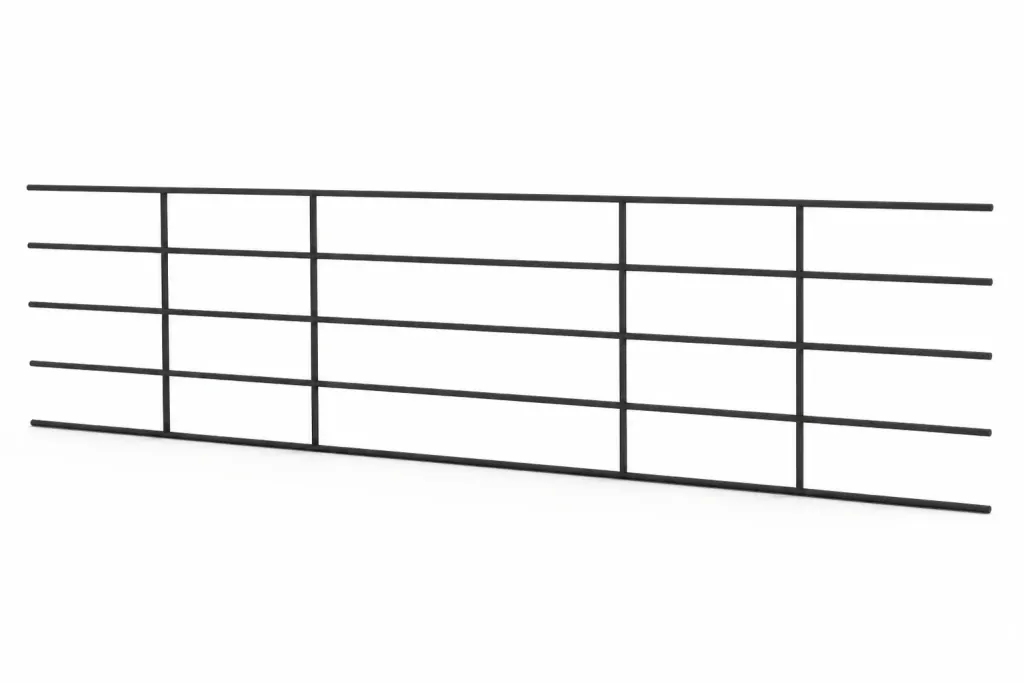
20 ft, 5-rail sections
Long road frontage and paddock lines on horse places around Dallas–Fort Worth, Austin and San Antonio, where foals, minis or traffic make the smaller openings worth having. A 20 ft section takes a post at each end and one in its open middle, so posts stand 10 ft apart.
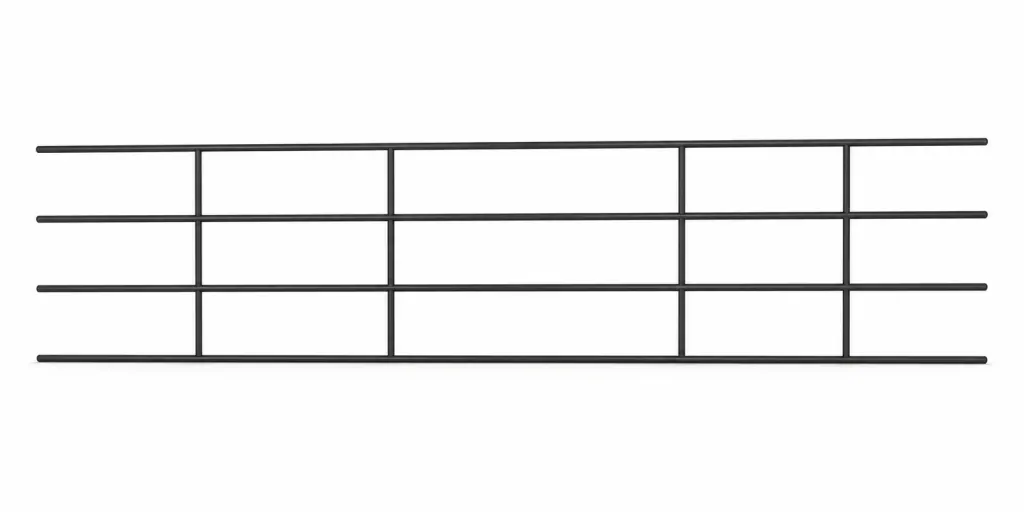
20 ft, 4-rail sections
Long straight boundaries on West Texas and South Plains ranch ground, where grown cattle or horses run big pastures and the line goes on for miles. Four rails is less steel on every span. The openings are larger over the same 4 ft height, so keep it away from foals and small stock.
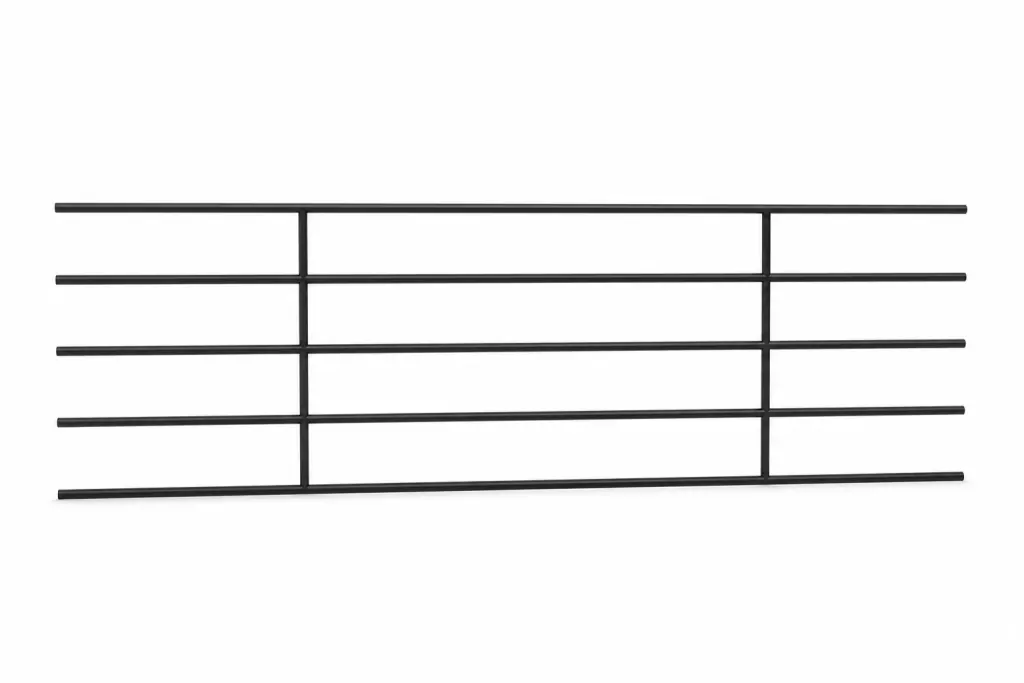
10 ft, 5-rail sections
Short returns, gate runs and line ends in Hill Country limestone, where rock sometimes decides where a post can go. The 10 ft length fits the gaps a 20 ft section can't and follows rolling ground more closely, while five rails keep a horse lane tight.
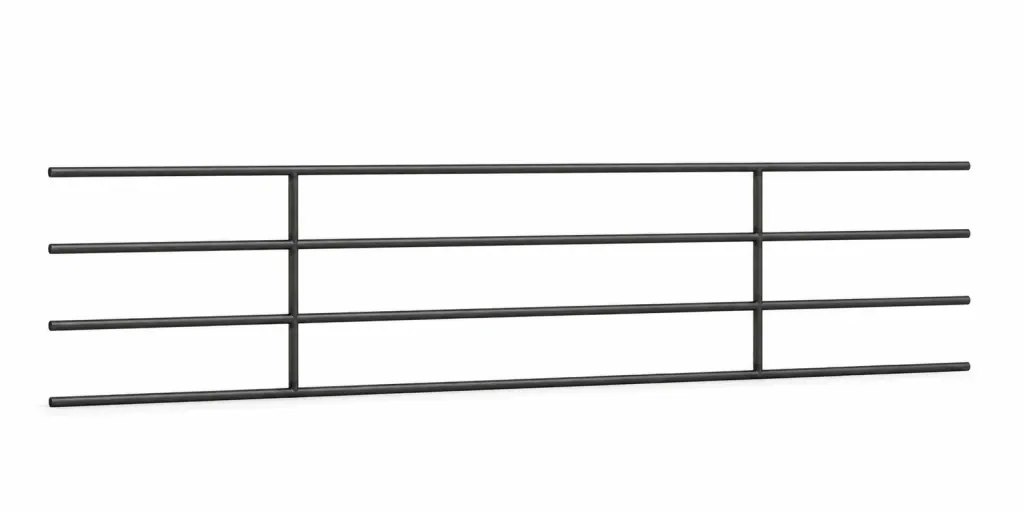
10 ft, 4-rail sections
Barn lots, pens and alleys on smaller East Texas places near Tyler or College Station, and pieces of line fitted between pines in the Piney Woods. Four rails suits grown horses and cattle, and the 10 ft sections are also offered in powder coat if you want color.
Continuous fence post holes in Texas caliche, limestone and blackland clay
Continuous fence hangs on posts you set, so the ground along the line decides most of the work. On the High Plains around Amarillo and Lubbock, and across the Permian Basin, a bed of caliche often lies a foot or two down. It is hard enough to stall a tractor auger, and getting through it can take a rock bit, a digging bar or a crew with a bigger machine. West of Austin and San Antonio, the Hill Country has thin soil over limestone, and a hole can hit solid rock within inches.
East of I-35 the trouble is clay. The Blackland Prairie from Dallas–Fort Worth to San Antonio swells when it is wet and shrinks and cracks in a dry summer, and that movement works on any post that isn't set deep. On the Gulf Coast around Houston, heavy clay and a high water table mean a new hole can fill with water before the concrete goes in. A fence contractor who works in your county knows how deep posts need to go there. Before anyone digs, have buried lines marked along the whole run.
Drought cracks, Gulf humidity and plains wind along a Texas steel fence
Drought is hard on fence posts in clay. A long dry spell pulls the soil away from each post and opens cracks down the line, and the first heavy rain swells it back. After a few of those cycles, a post that was set shallow starts to lean, and the sections clipped to it rack out of line with it. In the Panhandle, hard winter freezes can lift a shallow post too. Walk the fence after a dry summer and again after a wet spring, and reset any post that has moved before it pulls its neighbors along.
Out west, wind blows across the line most of the year. An open rail fence gives it far less to push on than a solid wall, but tumbleweeds and blown dirt pile against the bottom rail, so clear them now and then. Near the coast, from Beaumont to Corpus Christi, humid salt air rusts bare steel much faster than the dry air around El Paso or Midland does. Bare metal weathers to a rust patina anywhere in the state. If you want color that lasts, the 10 ft sections are offered in powder coat, and each product page shows the finishes for that length.
Which continuous fence sections suit a Texas ranch, horse place or frontage
The 20 ft sections are for long straight runs: a county road frontage, a lane between traps, the line between a horse pasture and the neighbor. They cover the ground with half the joints of 10 ft sections, which keeps a long frontage looking straight from the road. The 10 ft sections fill everything else: the short run beside a gate, a return to a barn wall, the end of a line that doesn't come out even, and places where rock or a live oak forces a post off its mark.
Every section is 14-gauge steel, 4 ft tall, with 1-1/4 in rails and round-tube verticals. Five rails close up the openings over that height, which suits mares and foals, minis, and fence along a busy road on the edge of Dallas–Fort Worth, Austin or San Antonio. Four rails is less steel and suits grown horses and cattle on big West Texas and South Plains pastures. Neither rail count is built to hold goats, sheep or dogs on its own. You can mix them on one place: five rails along the road and around the house, four rails out back.
Laying out a Texas continuous fence line: posts, corners, gates and grade
Walk the route with a measuring wheel and mark every corner, gate, building and change in grade. A 20 ft section takes a post at each end and one at its middle, where the section is left open for it, so posts stand 10 ft apart down a straight run. Count one clip per rail at every post: five per post on a 5-rail line, four on a 4-rail line, each with a self-tapping screw. The clip is 10-gauge steel made for 1-1/4 in pipe, and it fastens to a wood or a steel post. Posts and clips are ordered separately from the sections.
Corners and gates break the run, so plan them first and fill the straight lengths after. The shop can make elbow sleeves to carry rails around a corner; ask about them when you order. Steel posts come in 8 ft lengths in 1-5/8 in and 2-3/8 in, and the heavier 2-3/8 in post is the one to put at corners and beside gates. For a truck or tractor opening, our 10 ft and 12 ft arena swing gates are 4 ft tall like the sections and come with their own hang and latch posts. The sections are rigid, so on rolling Hill Country ground, 10 ft lengths follow a change in grade more closely than 20s. Mark each change on your drawing.
Freight for continuous fence sections across Texas
We deliver continuous fence to every part of Texas, from Dalhart to Brownsville. Large orders ship free anywhere in the state. Smaller orders delivered near I-10, I-40 or US-287 between Dallas and Amarillo ship at a flat rate. The delivery page gives the order size that qualifies and the exact areas. Anywhere else, the charge follows the distance. Freight is priced from the road miles to your address, as one load, with a $200 minimum. You see the amount before you pay. Posts and clips ordered with the sections are priced as part of the same load.
The driver brings the load to your property but doesn't unload it. Twenty-foot sections are long and awkward to handle, so plan for forks on a tractor or skid steer, or two people to a section, and a clear strip longer than the sections to set them down. Pick a meeting spot the truck can reach in any weather: a caliche ranch road is fine when dry, but blackland clay after a rain will stop a loaded truck. Set the sections on blocks along the line so they stay off wet ground, and tell us about narrow gates, low wires or a long ranch road when you order.
Setting Texas fence posts and hanging continuous fence sections yourself
Continuous fence arrives as sections, plus the posts and clips you ordered; it is not a finished fence. You or a local fence crew set the posts, usually in concrete, let it cure, and then clip the sections on. Clip the bottom rail about 12 in off the ground for a 5 ft fence line, and stretch a string down the posts first so the rails run level and straight. An 8 ft post standing 5 ft tall leaves about 3 ft in the ground. Ask a local fence contractor whether that is enough in your soil, or whether corners and gate posts want more.
Before the first hole, check where your property line is. Old ranch fences often wander off the survey, and a new permanent line is the time to get it right. Inside city limits or a subdivision around Austin, San Antonio or Houston, check with your county or city and any HOA about fence height, setbacks and what is allowed along the road. Have the posts set and the concrete cured before the truck comes, so the sections go from the trailer straight onto the line instead of sitting in the grass for weeks.