

Cattle corral kits for Texas
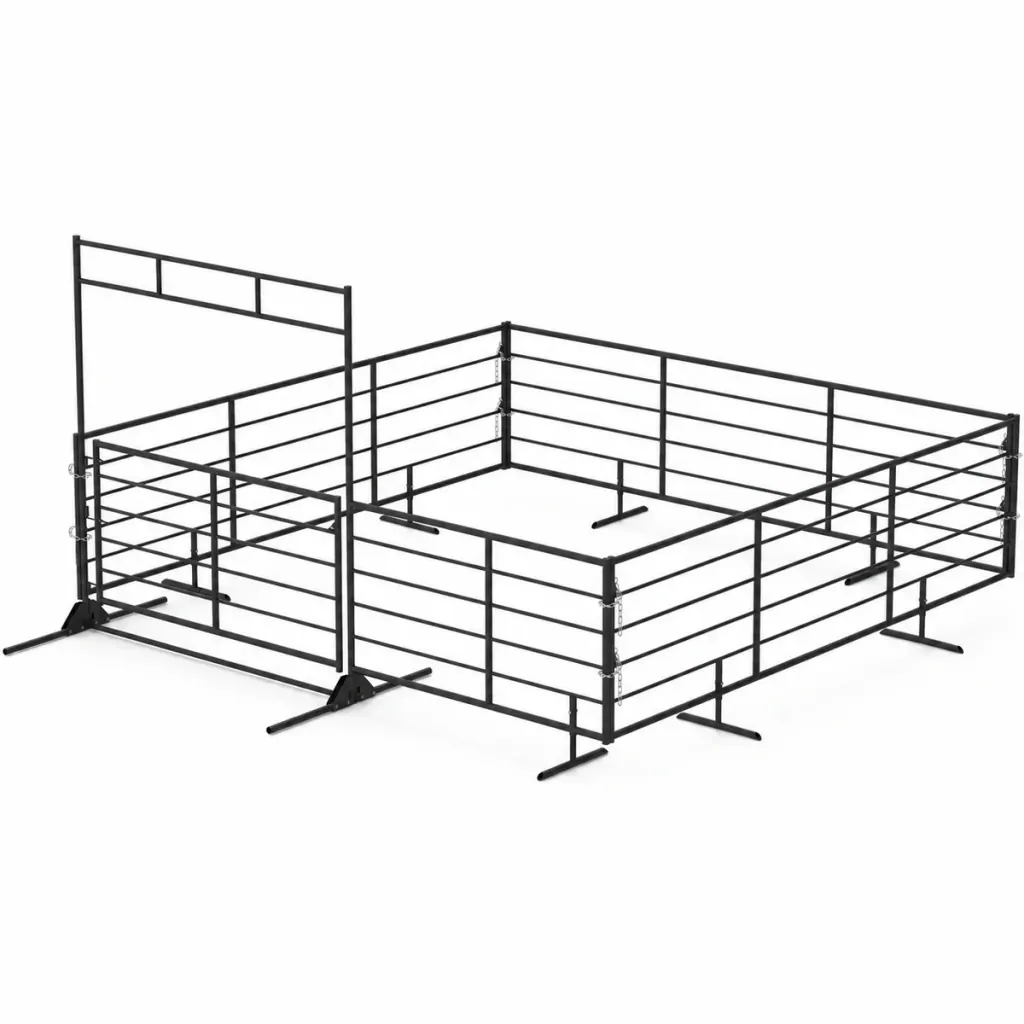
One 20×20 ft cattle pen
Three 20 ft panels and a gate combo make one 20 x 20 ft pen. It suits a small East Texas cow-calf place on coastal bermuda, where the jobs are catching a cow for the vet, holding a bull you just bought and loading a few calves for the sale barn.
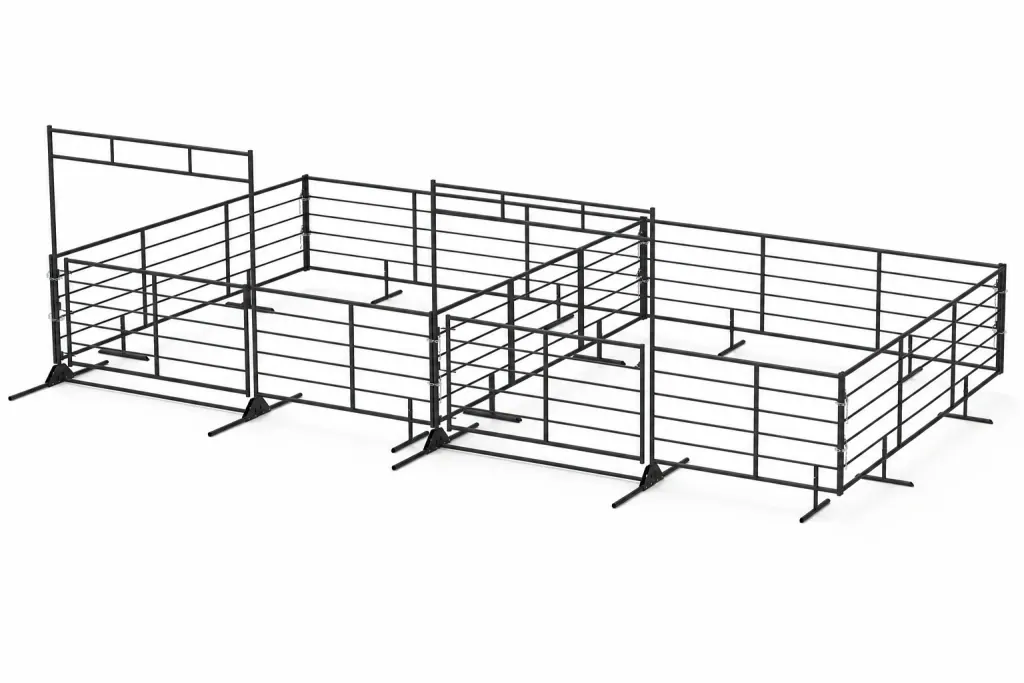
Two side-by-side 20×20 ft pens
Five panels and two gate combos make two 20 x 20 ft pens that share a middle wall. On a Rolling Plains or Panhandle stocker operation, one pen can hold newly bought calves while the other holds cattle sorted to ship, so the two groups never mix.
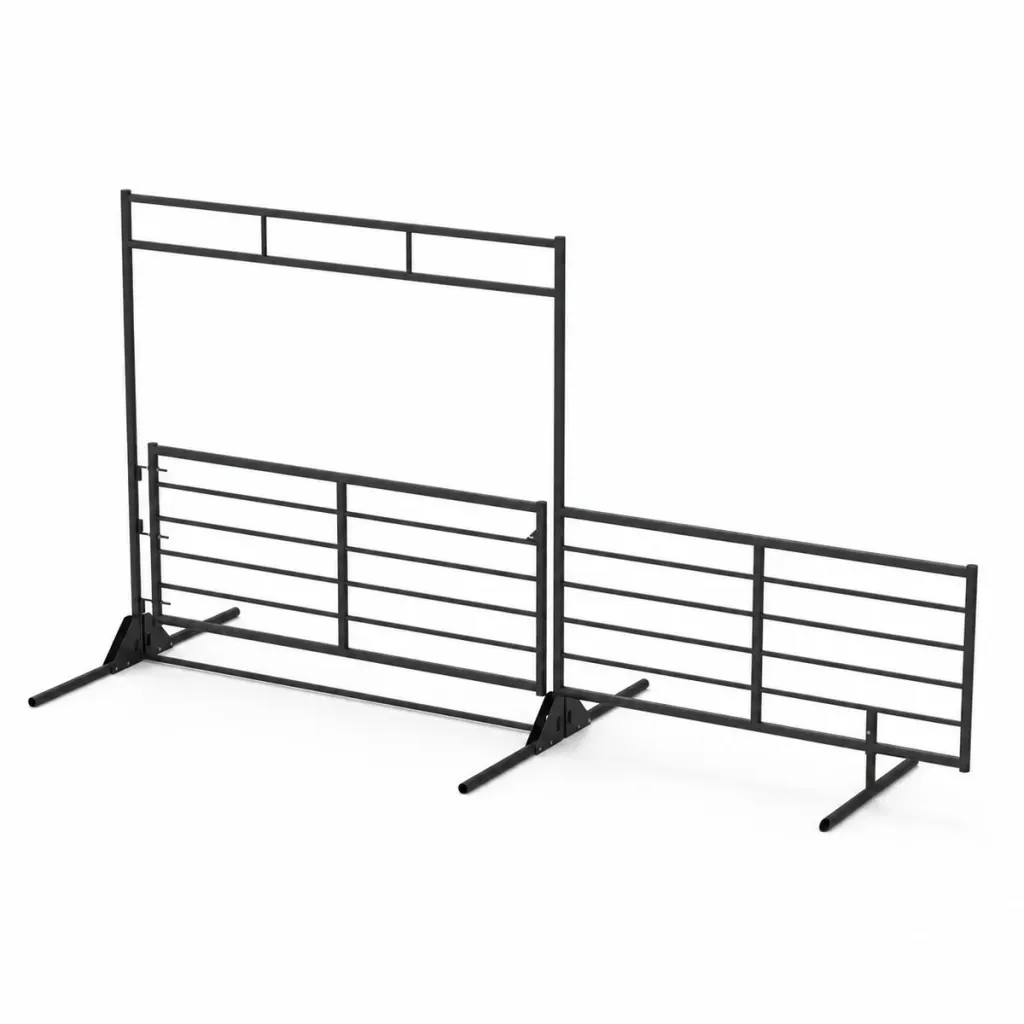
20 ft gate combination
A 20 ft freestanding section with a gate built in, on the same feet and chain as the panels. Add one where a Texas pen needs a second way out, such as one gate toward the trap and another toward the spot where you back in the stock trailer. Check the clear opening first.
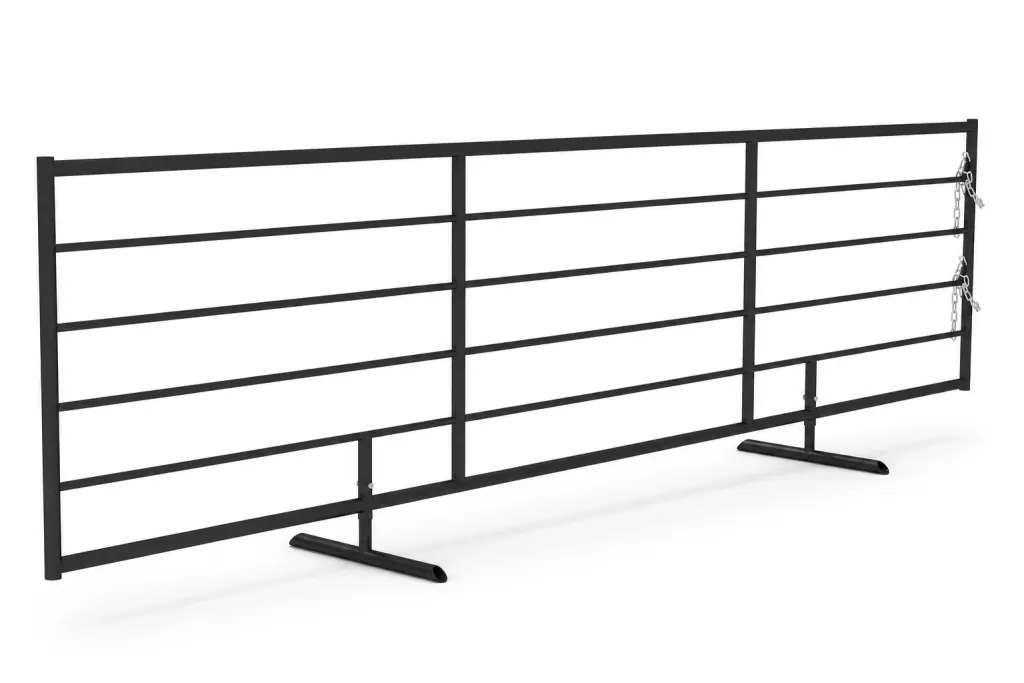
20 ft freestanding panel
Single 20 ft freestanding panels, 5 or 6 ft tall, each with its own welded chain and keeper. Use them to stretch a kit into a bigger pen, close the gap between a barn and a pipe fence, or add sides on a Hill Country place as the herd grows.
Cattle pens on Blackland gumbo and West Texas caliche
The Blackland Prairie, which runs from around San Antonio up through Austin, Waco and Dallas to the Red River, sits on deep black clay. It cracks open in a dry summer and turns to sticky gumbo after a rain, and the spot where cattle stand churns into mud fast. The coastal prairie around Houston and Victoria is flat, heavy clay as well, and water can sit on it for days. East Texas is mostly sandy loam over a clay subsoil. It drains better on top but stays soft through a wet winter.
West of the Balcones Escarpment, the Hill Country is thin soil over limestone. Across the Rolling Plains, the Panhandle and much of West Texas, caliche lies anywhere from a few inches to a few feet down, and on the High Plains rain drains into playas, shallow basins that fill after a big storm. Keep a pen off a playa's edge. The panels stand on detachable feet and chain together, so nothing goes in the ground. What you need is a spot that is close to level, a little higher than the land around it, and firm where the gate swings. Walk the spot after a hard rain before you settle on it, because water that stands there will stand in the pen.
Holding cattle in Texas heat and blue northers
Summer is the hard season for penned cattle in most of Texas. Afternoons near or above 100°F are common from July into September across much of the state, and cattle that are gathered, bunched and held in a bare pen heat up quickly. Gather and sort at first light, keep the time in the pen short, and have water where every animal can reach it. A water trough is not part of a kit, so decide where it sits and how you fill it from outside the fence.
Drought changes how much a pen gets used. In a dry year many Texas herds are culled hard, and a pen for sorting cows to sell or pulling calves off early sees heavy use. On the Rolling Plains and in the Panhandle, spring wind and winter blue northers bring dust, cold rain and the odd blizzard, and on the coast a tropical storm can leave pastures under water. A pen gives cattle no shelter, so plan where the herd rides out a hard storm. After a storm, walk the line, set any panel that has shifted back on its feet and check every chain.
One pen or two for Texas cow-calf and stocker setups
Texas runs more cattle than any other state, on everything from a few cows on a place outside Tyler or College Station to big cow-calf ranches in South Texas and stocker outfits on Panhandle wheat. One 20 x 20 ft pen covers the basic jobs on a small place: catching a cow for the vet, keeping a new bull apart from the herd for a few weeks, or penning calves the night before they go to the sale barn. The single kit is three 20 ft panels and one 20 ft gate combo, about 400 sq ft inside.
Two pens make sense once you sort. Cows go on one side and calves on the other at weaning, steers are split from heifers, or new arrivals stay off the rest of the herd. The paired kit is five panels and two gate combos, and the pens share the middle wall, so the pair needs a space about 20 by 40 ft. Loose panels and gate combos fill in from there: a bigger pen, a wing back to an existing fence, or a second gate toward the trap. None of these kits is a chute, an alley or a crowding tub. They hold cattle; they don't restrain them for shots or a vet check.
Gate and stock trailer placement around a Texas corral
Start with the gate. Put the gate combo on the side the cattle come from, usually the trap or the lane from the pasture, so they walk in along a fence instead of turning back. A second gate combo on the far side, facing firm ground where you can back up a stock trailer, lets you load without driving cattle back out through the gate they came in. The 20 ft figure is the length of the whole section, not the clear opening, so check the opening against your trailer and tractor before you settle the plan.
To grow a pen, count sides. Each side is 20 ft, so the single kit plus two panels makes a 20 x 40 ft pen, and plus four panels makes 40 x 40 ft. If you own a squeeze chute or plan to buy one, it and any alley leading to it come from another supplier. Leave room for it off one gate, and send us its make and a photo, since its fittings may not match our chain-and-keeper connection. For hay, a 4 x 8 ft big-bale feeder is sold separately. Set it near a panel so a tractor with a bale spear can set bales in from outside, rather than driving in among the cattle.
Freight for 20 ft cattle panels across Texas
We deliver cattle pens and panels anywhere in Texas. Large orders ship free anywhere in the state, and smaller orders delivered near I-10, I-40 or US-287 ship at a flat rate. The delivery page gives the order size and the exact areas. Other Texas orders are priced on distance. Freight is priced from the road miles to your address, as one load, with a $200 minimum. You see the amount before you pay. Pens, extra panels and gate combos on one order go on the same truck.
The feet come off for shipping, so the panels travel stacked flat, but they are still 20 ft long. The driver brings the load to your place and doesn't unload it. Have a tractor with forks, a skid steer or at least two people per panel. Meet the truck on firm ground, such as a caliche road, a gravel pad or the edge of the county road, not a pasture that just took two inches of rain. Someone has to be there when it arrives. Check the load before the driver leaves, and tell us about narrow cattle guards, low wires or tight gates when you order.
Standing up Texas cattle panels without post holes
There are no posts to set and no concrete. Fit the feet, stand each 20 ft panel up and chain it to the next with the chain and keeper welded to it. The gate combo goes in the same way, with no clamps, welding or cutting. On Hill Country limestone or Panhandle caliche, where an auger can stop in the first foot, that removes the hardest part of the job. Fresh stockers that haven't been handled much test a pen hardest, so check the chains and keepers often in the first weeks, especially on a pen beside a highway.
Set the panels on ground you have already leveled and packed, with every foot flat, then walk the line and fix any panel that rocks. The frame is 2-3/8 in, 14-gauge steel with six rails run through the uprights, and the standard bare finish weathers to a rust patina like oil-field pipe. Because nothing is buried, you can unchain the pen and move it to another pasture, or take it with you when a grazing lease ends. If you'd rather not set it up yourself, ask about installation with your quote.