

Continuous fence project kits for New Mexico
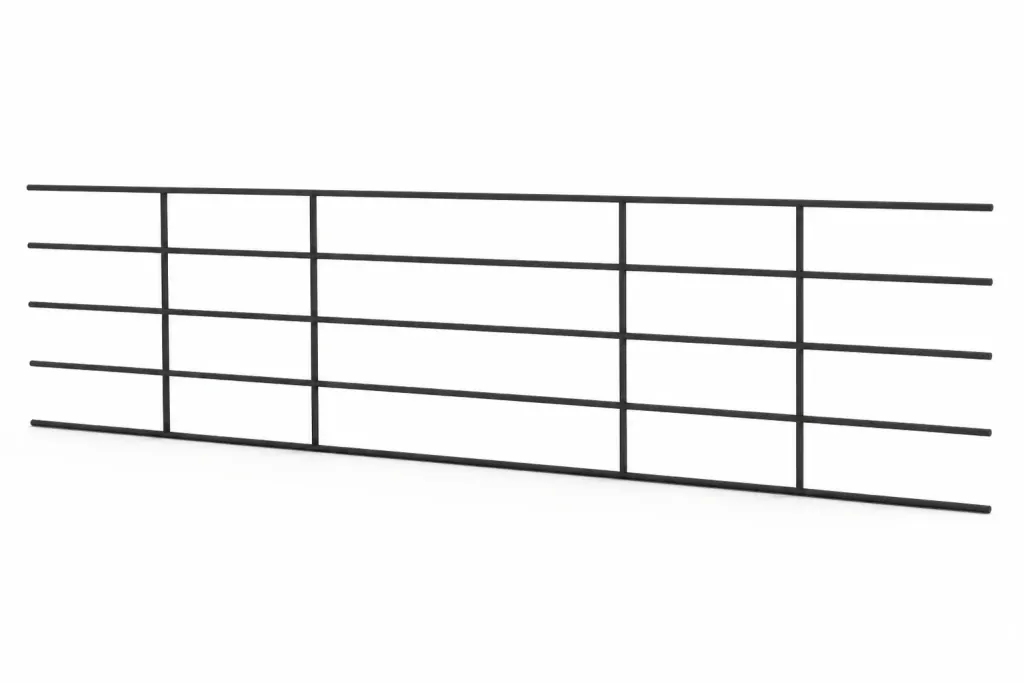
20 ft, 5-rail sections
Horse property in the Rio Grande Valley, from Corrales and the South Valley down to Los Lunas and the Mesilla Valley, where foals, minis or a busy road call for smaller openings. Long sections leave fewer joints along a road frontage or the edge of an irrigated pasture.
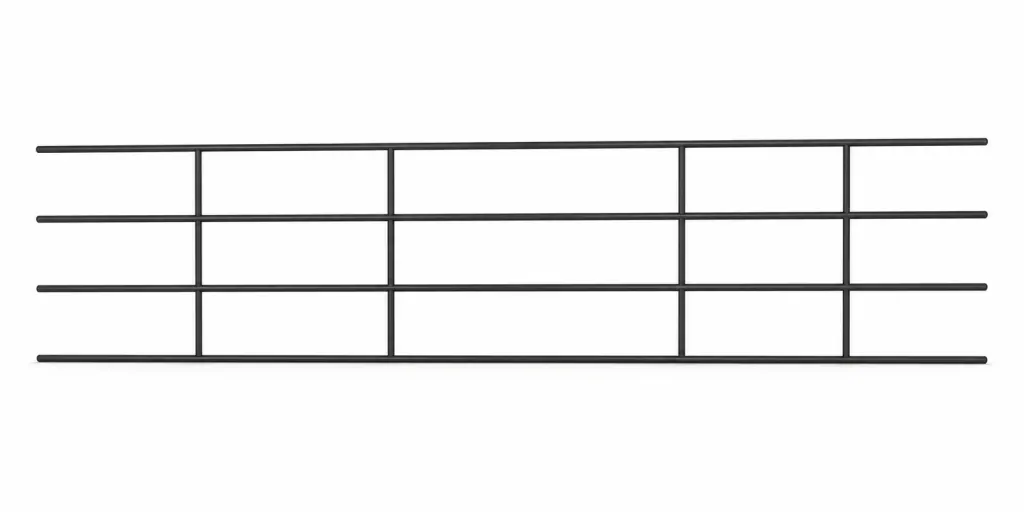
20 ft, 4-rail sections
Long, flat runs on the eastern plains around Clovis, Portales and Roswell, where grown cattle or horses graze big pastures and the ground lets full 20 ft sections run straight. Four rails puts less steel on each span, which adds up over a long boundary.
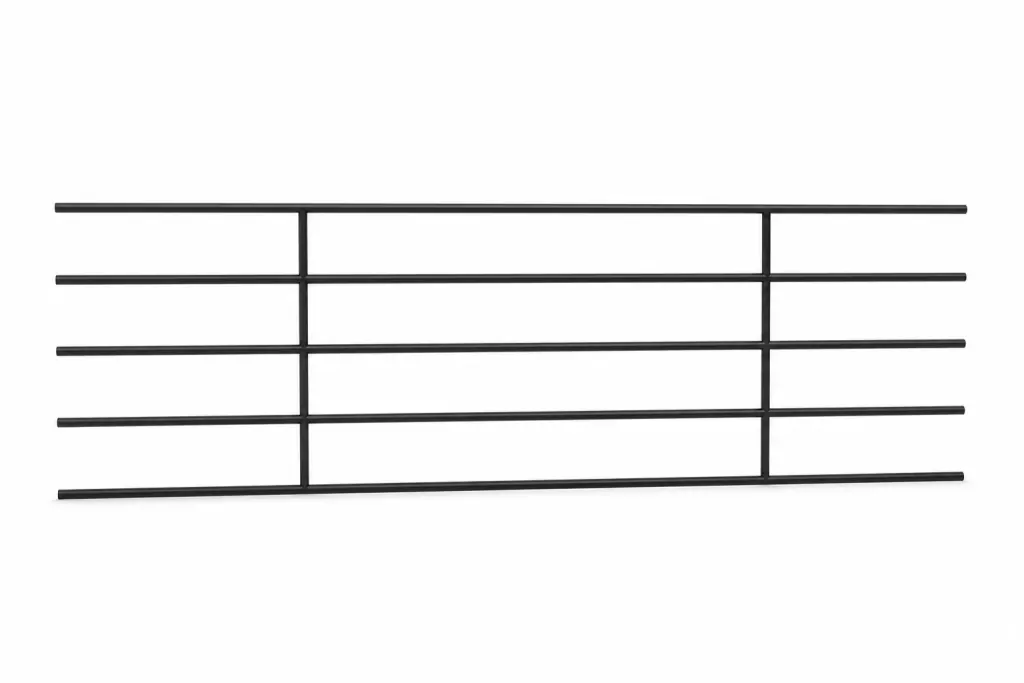
10 ft, 5-rail sections
Broken ground in the foothills and mountains around Santa Fe, Taos and Pecos, where the grade changes often and rock decides where a post goes. A 10 ft section follows a slope more closely than a 20, and five rails keep a horse lane or foaling pen tight.
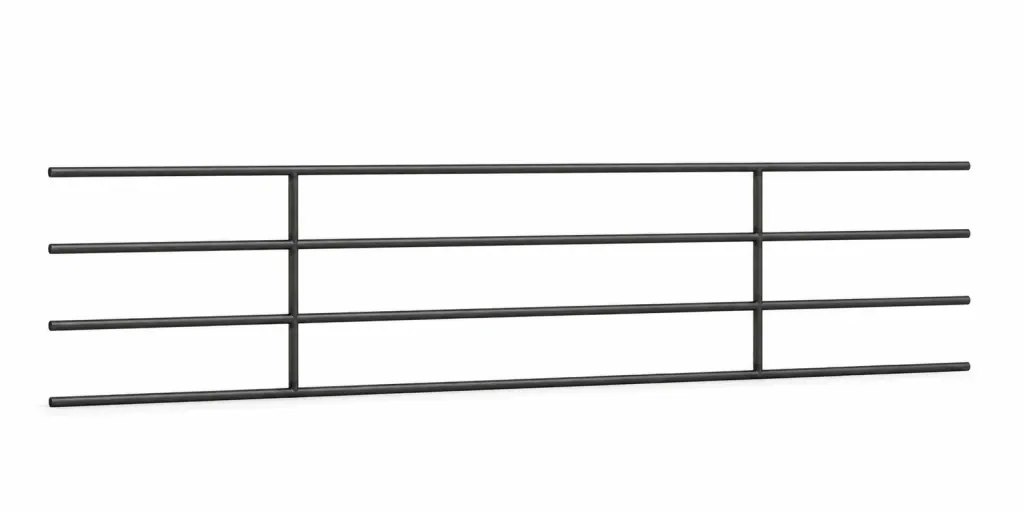
10 ft, 4-rail sections
Short runs on dry southern ground near Las Cruces, Deming and Socorro: the stretch between two washes, the run up to a gate, or one side of a pen. Four rails suits grown horses and cattle, and the 10 ft sections also come in powder coat if you want color.
Caliche, cobbles and river sand under New Mexico fence posts
Across southern and eastern New Mexico, caliche is usually the first hard thing a post hole finds. On the plains around Clovis, Portales and Hobbs it can be a white, rock-hard layer a foot or so down, and in the desert near Las Cruces and Deming it shows in arroyo banks and under the sand. An auger skates on it. A rock bit, a digging bar or a contractor with a heavier machine gets through, and soaking a hole overnight softens some of it. Budget more time per hole than you would on open dirt.
The Rio Grande Valley from Española through Albuquerque and Belen to the Mesilla Valley is mostly river sand and silt. It digs easily but holds a post loosely, so the concrete does the work there. In the northern mountains around Santa Fe, Taos and Las Vegas, holes run into cobbles and bedrock, and frost reaches deeper than it does in the south. A local fence contractor knows the soil and how deep posts go in your area, and you should have buried lines marked before you dig.
Spring wind, monsoon washes and frost along a New Mexico fence line
Spring is the windy season. From March into May, wind across the eastern plains and down the Rio Grande corridor drives sand and tumbleweeds against anything standing. An open rail fence lets most of the wind through, but a line packed with tumbleweeds starts to catch it like a solid wall, so rake them off before the pile builds. Blowing sand also drifts against the bottom rail on sandy ground. Set corner and gate posts solid, because those are the posts that take the most push.
July through September brings the monsoon: short, heavy storms that send water down dry arroyos with little warning. Don't run rigid sections straight across a wash. A flood piles brush against the rails, and unlike wire, a welded section can't lie down and be stood back up. End the line at strong posts on each bank and close the gap with something you can open or replace after a storm. The dry air is easy on steel, and bare metal weathers to a rust patina slowly here. Up north, freeze and thaw can heave posts that aren't set deep, so walk the line each spring.
Continuous fence sections for valley horse places and eastern plains ranches
Small horse properties in Albuquerque's North and South Valleys, Corrales, Los Lunas and the East Mountains often sit on a few irrigated acres with a road out front and neighbors close by. The 20 ft, 5-rail section fits that well: smaller openings for foals and minis, and fewer joints along the frontage. The 10 ft sections handle the barn side, the stretch to a gate and the corner that doesn't come out even. Every section is 14-gauge steel, 4 ft tall, with 1-1/4 in rails and round-tube verticals.
On ranches across the eastern plains and the Pecos Valley, continuous fence makes the most sense where cattle and people work: around the headquarters, along a lane, beside the pens. Long, flat ground suits the 20 ft, 4-rail section, which puts less steel on each span for grown cattle and horses. Neither rail count holds goats, sheep or dogs on its own. Rocky northern places with short runs lean on the 10 ft sections, which fit between outcrops and follow the ground. Mixing lengths and rail counts on one place works, since every section is the same height.
Measuring a New Mexico continuous fence line around arroyos, ditches and grade
Walk the route with a measuring wheel and mark every corner, gate, wash and change in grade. On 20 ft sections, posts go at each end and at the middle, where each section is left open for a post, so they stand 10 ft apart. Every post takes one clip per rail, which is five on a 5-rail line and four on a 4-rail line, each held with a self-tapping screw. The clip is 10-gauge steel sized for 1-1/4 in pipe and fastens to wood or steel posts. Posts and clips are ordered separately from the sections.
Plan the corners, gates and arroyo crossings before counting straight sections. The shop can make elbow sleeves to carry rails around a corner; ask when you order. Steel posts come in 8 ft lengths in 1-5/8 in and 2-3/8 in, and the heavier 2-3/8 in post belongs at corners and gates. Our 10 ft and 12 ft arena swing gates are 4 ft tall to match the sections and come with hang and latch posts. If the line runs beside an acequia or irrigation ditch, talk to whoever manages the ditch before you set posts; they may need access along the bank.
Continuous fence freight near I-10, I-40 and the rest of New Mexico
Large orders delivered near I-10 or I-40 ship free, which takes in places like Las Cruces, Deming, Albuquerque, Gallup and Tucumcari. Smaller orders near those two highways ship at a flat rate. The delivery page gives the order size and how close to the highway the address has to be. Farther out, freight follows the distance. Freight is priced from the road miles to your address, as one load, with a $200 minimum. You see the amount before you pay. Order the posts and clips with the sections so they come on the same load.
The driver delivers but doesn't unload. Have forks on a tractor or skid steer, or two people for each 20 ft section, and a flat spot longer than the sections to lay them down. Sandy drives in the valley can bog a loaded truck, and a caliche road turns slick after a monsoon storm, so name a meeting spot on firm ground. Lay the sections on boards along the line rather than in a low spot where runoff will pool. Tell us about a long dirt ranch road, a narrow gate or a tight turn when you order.
Setting posts and clipping on continuous fence sections in New Mexico
You or a local fence crew set the posts, usually in concrete, and let it cure before clipping anything to them. Run a string line down the posts so the rails come out straight, and clip the bottom rail about 12 in off the ground for a 5 ft fence. An 8 ft post at that height has about 3 ft in the ground. That may suit the valley and fall short where frost runs deep around Taos or Chama, so ask a fence contractor who works in your county, and ask whether corners and gate posts need more.
Check the property line before the first hole; old fences on rural land often drift off the survey. Subdivisions in Rio Rancho, Santa Fe and Los Lunas can have HOA rules on fence height and style, and the county or city may have rules about setbacks along a road, so check with them first. Have the posts in and the concrete hard before the truck arrives. Then the sections come off the trailer and go onto the line the same day, instead of lying around in the sun and wind.