

Continuous fence project kits for Arkansas
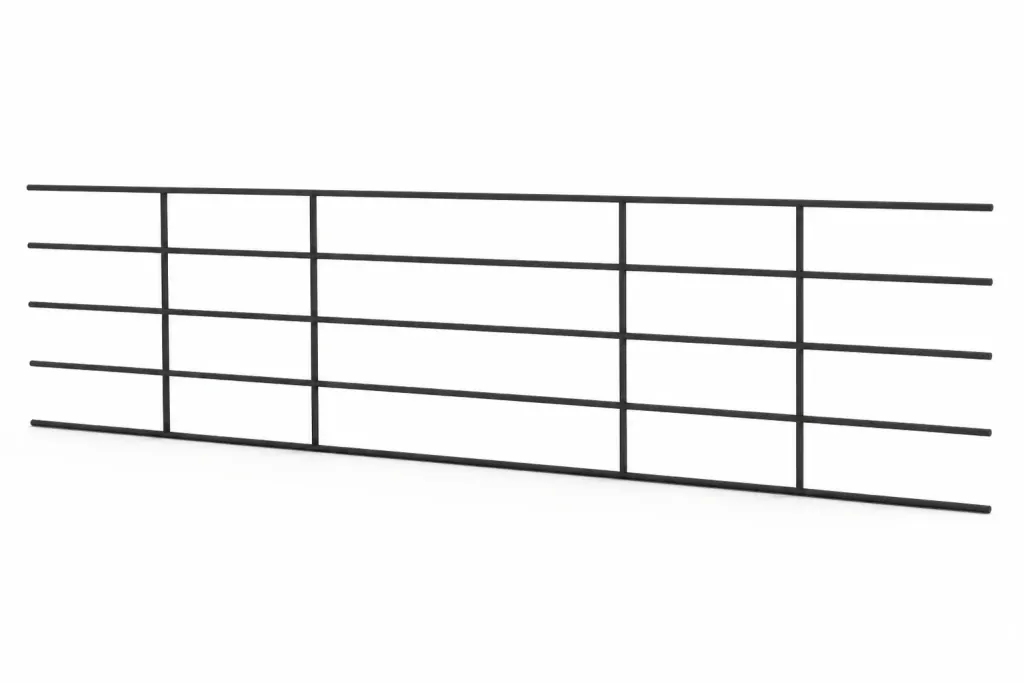
20 ft, 5-rail sections
Frontage and paddock lines on horse places around Bentonville, Rogers and Fayetteville, where Northwest Arkansas growth puts more traffic and more neighbors next to the fence. Five rails make the smaller openings, and 20 ft sections keep a long frontage clean with fewer joints.
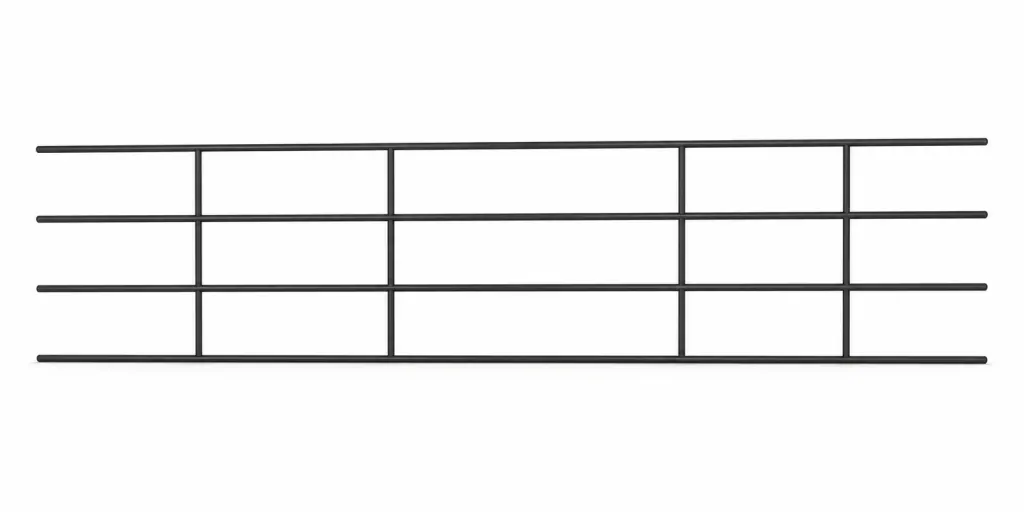
20 ft, 4-rail sections
Long, flat runs in the Delta around Stuttgart, Brinkley and Dumas, or on River Valley pasture near Russellville and Clarksville, where grown cattle or horses graze big fields and the ground lets full sections run straight. Four rails means less steel on every span.
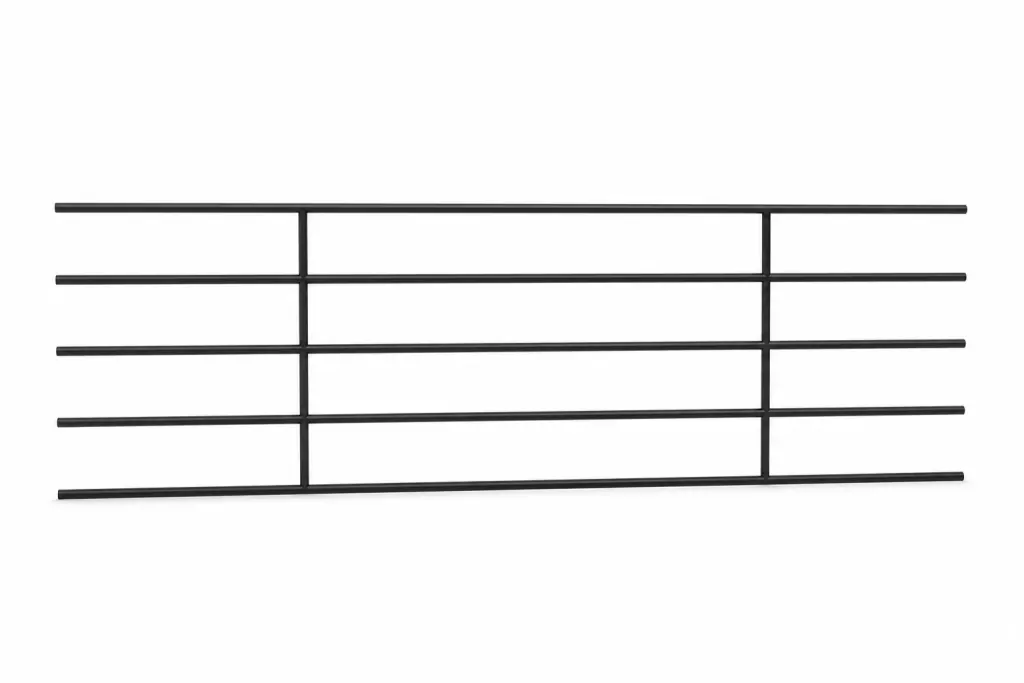
10 ft, 5-rail sections
Ozark hillsides near Harrison, Mountain Home and Eureka Springs, where chert and limestone ledges make slow digging and the grade changes every few steps. A 10 ft section follows the hill more closely than a 20, and five rails keep a horse paddock tight on steep ground.
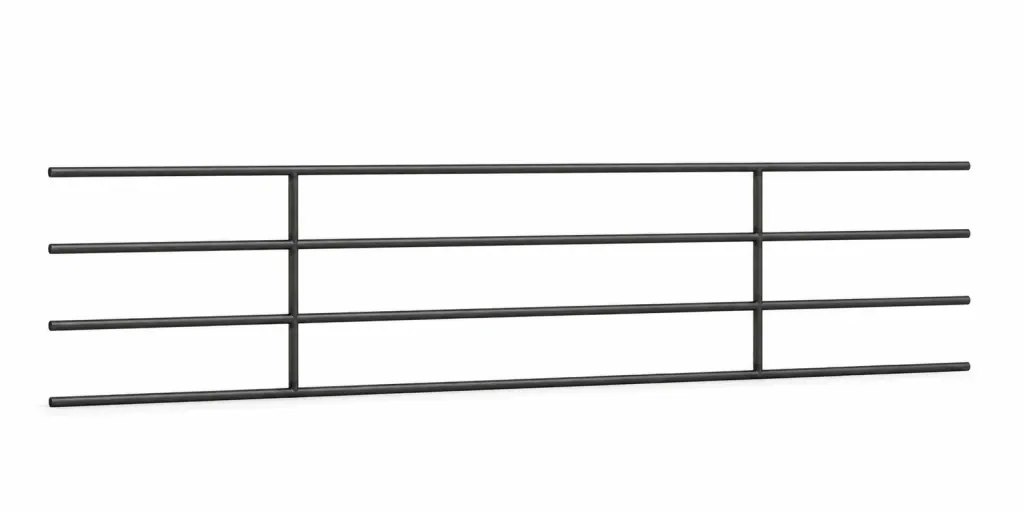
10 ft, 4-rail sections
Short runs around barns, pens and working alleys on cow-calf places in the Ouachitas near Mena and Hot Springs, or in the timberlands near Camden and El Dorado. Four rails suits grown cattle and horses, and the 10 ft length is also offered in powder coat.
Setting continuous fence posts in Ozark rock and Delta gumbo
In the Ozarks of northern Arkansas, from Bentonville and Fayetteville east to Harrison and Mountain Home, the soil is often thin and full of chert, with limestone and dolomite ledges under it. A post hole can be easy for a foot and then stop dead. Farther south in the Boston Mountains it is sandstone, and in the Ouachitas around Mena and Hot Springs it is shale and hard ridges of novaculite. A rock bit or a contractor with a drill gets through, but rocky ground is where the hours go on an Arkansas fence job.
East of Crowley's Ridge, the Delta is flat and the soil is heavy clay that farmers call gumbo or buckshot. It sticks to an auger when wet, cracks wide when dry, and holds water in low fields through the winter. Along the Arkansas River Valley from Fort Smith to Little Rock, bottomland silt digs easily but floods. The south Arkansas timberlands around Camden and El Dorado have sandy loam over clay. Have buried lines marked before you dig, and lean on a fence contractor who knows how deep posts go locally.
Rain, humidity and fast-growing brush along an Arkansas continuous fence
Most of Arkansas gets around 50 inches of rain a year, and parts of the south and west get more. That much water means soft ground through much of winter and spring, post holes that fill before the concrete goes in, and creeks that come up fast in the hills. Keep a permanent line on ground that drains. Where it has to cross a creek or a slough, stop the sections at solid posts above the banks and close the crossing with something you can open or rebuild after high water. Bottomland along the White, the Arkansas and the Ouachita floods in a wet year.
Humid summers do two things to a fence line. Bare steel weathers to a rust patina faster here than on the dry plains, and the 10 ft sections are offered in powder coat if you would rather keep a color. Brush also grows fast: greenbrier, privet and saplings will climb a fence row in a season or two. Leave a strip wide enough to mow along both sides, and keep the line out from under big trees, since ice storms bring limbs down across fences in the hills. Freeze and thaw in the Ozarks can lift a shallow post, so walk the line each spring.
Which continuous fence sections fit Arkansas cattle farms and horse places
Across the Ozarks and the River Valley, many farms run cow-calf herds, and their long boundaries are usually barbed or woven wire. Continuous fence makes the most sense nearer the barn: the alley to the pens, a lane between pastures, a trap where cattle are sorted, the house lot along the road. The 20 ft, 4-rail section covers those runs with grown cattle and puts less steel on each span. Where a line meets an existing wire fence, end both on one solid post, braced for the wire.
Many horse places sit around the growing towns: Northwest Arkansas, Conway, Cabot, Benton and the edges of Little Rock. There the 20 ft, 5-rail section suits frontage and paddock lines, since five rails close the openings for foals and minis and the long sections look clean from the road. The 10 ft lengths handle the short sides, gate runs and hillside pieces. Every section is 14-gauge steel, 4 ft tall, with 1-1/4 in rails and round-tube verticals. Neither rail count keeps goats or sheep in on its own.
Planning an Arkansas continuous fence line on hillsides and bottomland
Walk the line before you measure it. In hill country the length on the ground is longer than the map shows, so run a measuring wheel or a tape along the actual route and mark every corner, gate, creek and break in the slope. A 20 ft section takes a post at each end and one at its open center, which puts posts 10 ft apart. Count one clip per rail at each post, five for 5-rail sections and four for 4-rail, plus a self-tapping screw for each. Posts and clips are separate orders. The clip, 10-gauge steel for 1-1/4 in pipe, fastens to wood or steel posts.
The sections are rigid, so on a hillside the 10 ft lengths follow the ground more closely than 20s, and the gap under the bottom rail changes with the slope. Plan corners and gates before the straight runs. The shop can make elbow sleeves to carry rails around a corner; ask when you order. Steel posts come in 8 ft lengths in 1-5/8 in and 2-3/8 in, and the heavier 2-3/8 in post belongs at corners and gates. For a tractor opening, our 10 ft and 12 ft arena swing gates are 4 ft tall like the sections and come with hang and latch posts.
How continuous fence freight to Arkansas is priced
We deliver continuous fence anywhere in Arkansas, from Bella Vista to Lake Village. Freight is priced from the road miles to your address, as one load, with a $200 minimum. You see the amount before you pay. The free and flat-rate offers on our delivery page are for addresses in Texas, New Mexico and Arizona, so they don't apply in Arkansas, even near I-40 through Fort Smith and Little Rock. Order posts and clips with the sections and they come on the same load.
Unloading is up to you. Plan on forks on a tractor or skid steer, or two people for each 20 ft section, and a clear, level spot longer than the sections. A steep gravel drive in the Ozarks or a soft Delta field road after rain can stop a loaded truck, so pick a meeting place on firm ground near a paved or gravel road and move the sections from there. Stack them on blocks off wet ground, and tell us about tight switchbacks, low lines or narrow gates when you order.
Building an Arkansas continuous fence line yourself
Continuous fence comes as sections plus the posts and clips you order. You or a local fence crew set the posts, usually in concrete, and let it cure. Wet holes are common in winter and spring, so ask your contractor how they handle them, or wait for a dry spell. Pull a string along the posts so the rails run true, then clip the sections on with the bottom rail about 12 in off the ground for a 5 ft fence. That leaves about 3 ft of an 8 ft post in the ground. A fence contractor who works your county can say whether that suits your soil and whether corners need more.
Before the first hole, confirm the property line. Old fence rows in Arkansas often follow a tree line rather than the survey, and a permanent steel fence is worth putting in the right place. Inside city limits, or in the subdivisions around Bentonville, Rogers, Conway and Little Rock, check with the city or county and any HOA about height, setbacks and style. Have the posts set before delivery so the long sections can go straight onto the line.