

Continuous fence project kits for Oklahoma
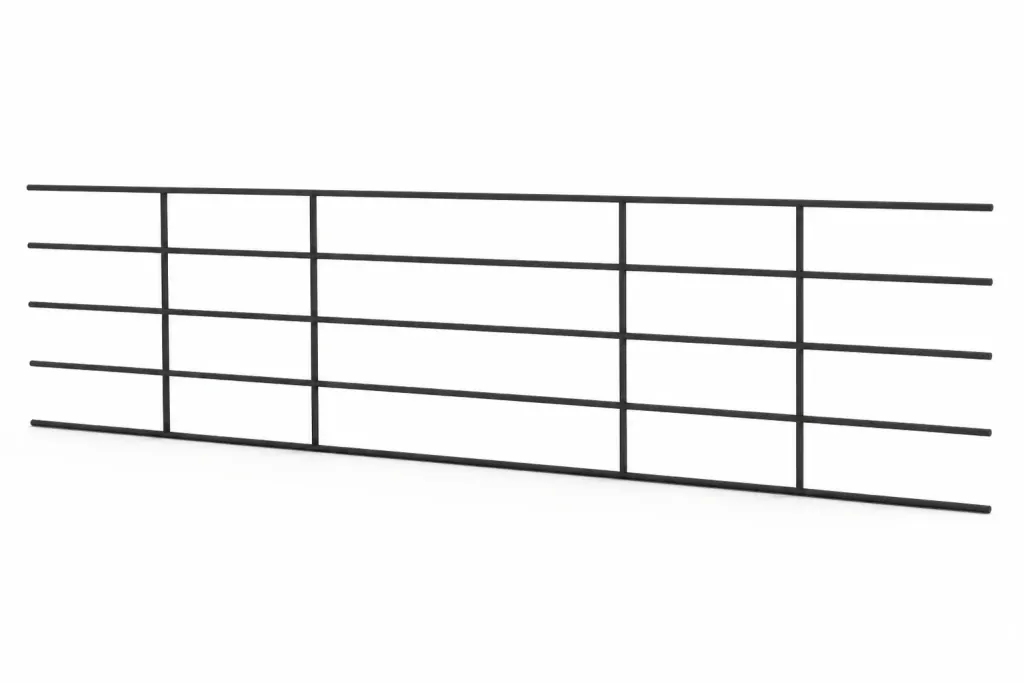
20 ft, 5-rail sections
Road frontage and turnout lines on horse places around Edmond, Norman, Purcell and the Tulsa suburbs, where mares and foals or traffic on a section-line road make the smaller openings worthwhile. Twenty-foot sections cover a long frontage with half the joints of 10 ft ones.
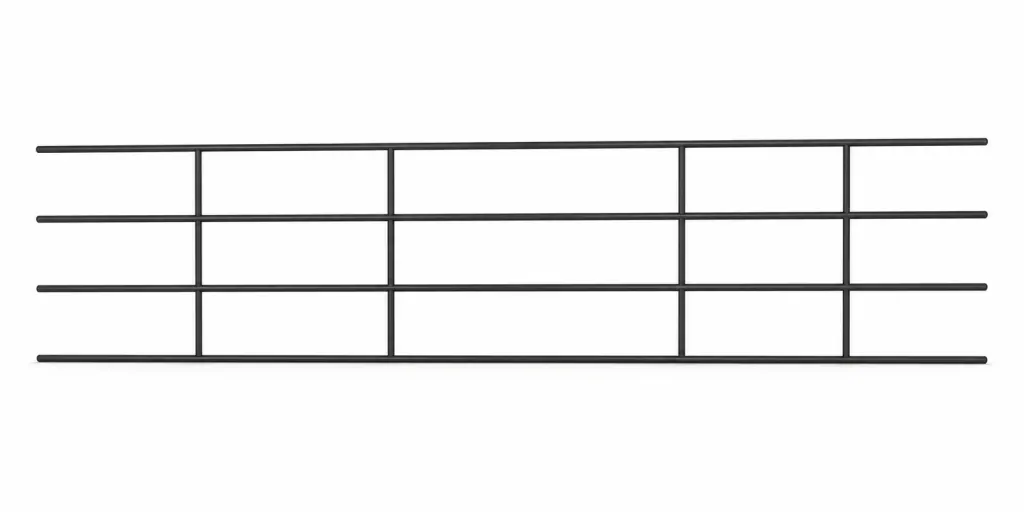
20 ft, 4-rail sections
Straight section-line boundaries on the open wheat and cattle ground of western Oklahoma, from Enid and Woodward out to the Panhandle, where grown cattle or horses run big pastures and the line goes a long way. Four rails puts less steel on each 20 ft span.
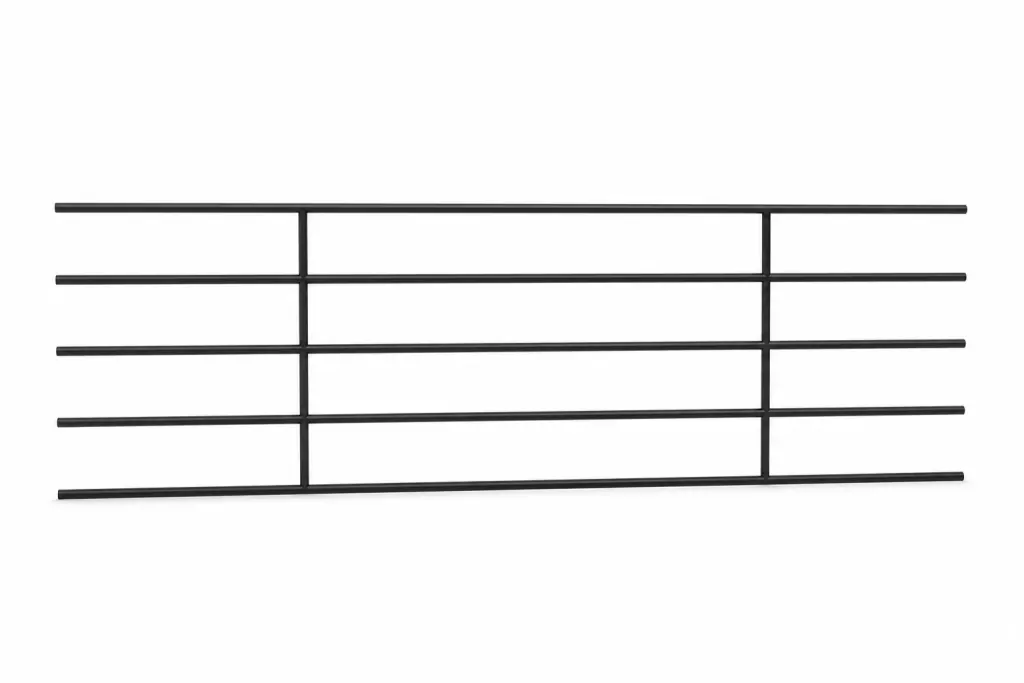
10 ft, 5-rail sections
Hilly, rocky places in the Ozark foothills around Tahlequah and Grove or the Ouachitas near Talihina and Broken Bow, where chert and sandstone push posts off their marks and the grade changes quickly. A 10 ft section follows the ground more closely and keeps five rails for horses.
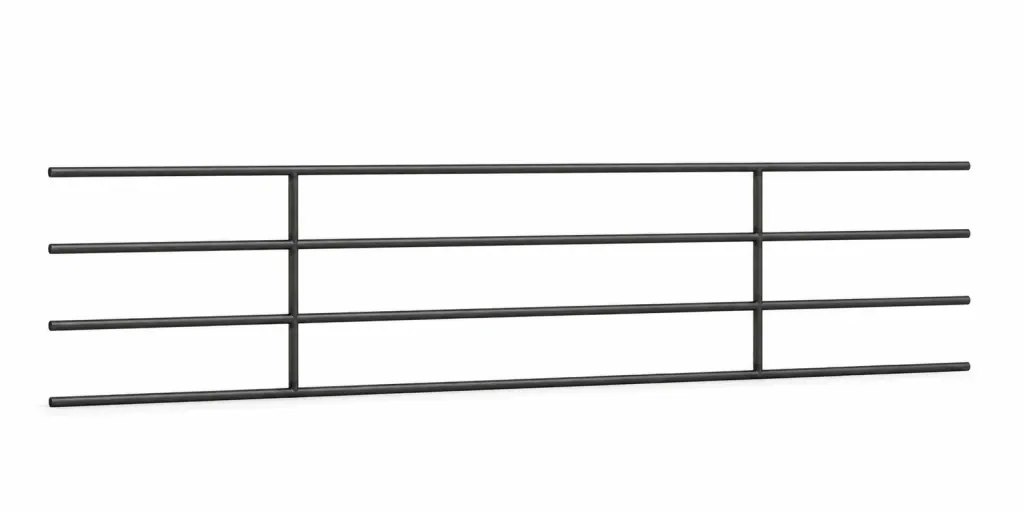
10 ft, 4-rail sections
Short runs around barns, pens and alleys on small central Oklahoma acreages near Shawnee, Ada or Guthrie, and pieces of line worked between post oaks in the Cross Timbers. Four rails suits grown horses and cattle, and the 10 ft sections are also offered in powder coat.
Continuous fence post holes in Oklahoma red beds, Cross Timbers sand and Ozark chert
Through central and western Oklahoma, the red soil sits on red shale and sandstone not far under the surface. A post hole can go easily for a foot or two and then meet soft red rock the auger has to grind through. Much of that clay swells when wet and shrinks in drought, so a shallow post can work loose over a few seasons. The Cross Timbers, the band of post oak and blackjack that runs north from the Red River past Stillwater, is sandier: easy digging, plenty of roots, and posts that rely on concrete to hold in loose ground. Out in the Panhandle, caliche turns up under the topsoil.
Northeast Oklahoma's Ozark Plateau is full of chert, the flinty gravel that wears down auger teeth and makes every hole slow work. The Ouachitas in the southeast bring sandstone and shale on steep ground, the Arbuckles around Sulphur and Davis have limestone near the surface, and the Wichita Mountains near Lawton have granite. Before you mark the line, have buried lines marked so the auger stays clear of them. A fence contractor who works the area knows the soil and how deep posts need to go there.
Ice storms, wet springs and plains wind on an Oklahoma steel fence line
Spring rain sets the fence-building calendar. In most years the heaviest rain comes in May and June, holes fill with water, and soft clay gives a freshly set post little to brace against until the concrete cures. Creek bottoms flood. A line run straight across a creek collects drift, the flood trash of limbs and grass, against its rails, so stop the continuous fence on high ground at each bank and close the crossing with something built to be cleared or rebuilt after high water.
Winter brings ice storms, and in eastern Oklahoma much of the damage to fence comes from trees, when limbs loaded with ice break and fall across the line. Keep the fence out from under big trees where you can. Each section clips to its posts on its own, so a bent one can come off without disturbing its neighbors. Out west, steady wind crosses the plains most of the year; open rails let it through, but tumbleweeds collecting against the fence do not. Bare steel weathers to a rust patina sooner in humid Green Country than out past Woodward.
Matching continuous fence sections to Oklahoma horse farms and cattle pasture
Horse country around Oklahoma City runs from Edmond and Guthrie down through Norman to Purcell, and around Tulsa it spreads into Owasso, Bixby and Claremore. Many of those places are a few acres to a few dozen, with a road out front and turnouts close to the house. The 20 ft, 5-rail section fits the frontage and the turnout lines: its openings are smaller, which suits mares, foals and minis, and it leaves half the joints of 10 ft sections. The 10 ft, 5-rail section takes the short sides, the gate runs and the corner pieces.
Cattle country is most of the rest: the tallgrass of the Osage, wheat pasture in the northwest, cow-calf places across the southeast. The long miles there are mostly wire. Continuous fence earns its keep at the working end of the place, along an alley, a lane to the pens or a trap by the barn, where cattle and people crowd the fence. The 20 ft, 4-rail section suits that work with grown cattle. Every section is 14-gauge steel, 4 ft tall, with 1-1/4 in rails and round-tube verticals. Neither rail count is a goat or sheep fence by itself.
Planning an Oklahoma continuous fence run: post count, corners, creeks and gates
Oklahoma land is laid out on a mile grid, so many lines are long and straight, and a measuring wheel or the county parcel map gives you the length. On 20 ft sections, posts sit at both ends and at the open middle of each section, 10 ft apart, so half a mile of straight line takes 132 sections and 265 posts. Each post takes one clip per rail, five on a 5-rail run and four on a 4-rail run, and each clip takes a self-tapping screw. The clip is 10-gauge steel for 1-1/4 in pipe and fastens to wood or steel posts. Posts and clips are separate orders.
Plan corners and gates first. The shop can make elbow sleeves to carry rails around a corner; mention it with the order. Steel posts come in 8 ft lengths in 1-5/8 in and 2-3/8 in, and the heavier 2-3/8 in post is the better choice at corners and beside gates. Our 10 ft and 12 ft arena swing gates are 4 ft tall like the sections and include their hang and latch posts, which suits a tractor or trailer opening. The sections are rigid, so in the eastern hills use 10 ft lengths where the grade breaks, and mark every slope change on the drawing.
Continuous fence freight anywhere in Oklahoma, priced by distance
We deliver continuous fence across Oklahoma, from Boise City to Broken Bow. Freight is priced from the road miles to your address, as one load, with a $200 minimum. You see the amount before you pay. The free and flat-rate offers on our delivery page apply only to addresses in Texas, New Mexico and Arizona, so an Oklahoma order is priced on distance, even along I-40 or US-287 through the Panhandle. Posts and clips bought with the sections ride on the same load.
The truck comes to your place, and the unloading is yours: a tractor with forks, a skid steer, or two people for every 20 ft section. Red dirt roads turn to grease after a rain and can stop a loaded truck short of the gate, so a gravel drive or the edge of the county road is a safer meeting point. From there, haul the sections out and lay them on blocks along the line where they won't sit in water. Mention narrow gates, a low-water crossing or overhead lines on the way in when you order.
Putting up continuous fence on an Oklahoma place yourself
You or a fence contractor set the posts, usually in concrete, and give it time to cure. Then pull a string down the line and clip the sections on with the bottom rail about 12 in off the ground, which makes a 5 ft fence. At that height an 8 ft post has about 3 ft in the hole. Whether that holds in shrink-swell clay, or whether corners and gate posts need to go deeper, is a question for someone who builds fence in your county. Pick a dry stretch of weather to dig, but not so dry that the clay has set like brick.
Before digging, know where your property line runs. Along a section-line road, ask the county where the road right-of-way ends so the new fence doesn't land in it. Inside city limits, or in subdivisions around Edmond, Broken Arrow or Norman, check with the city and any HOA about height, setbacks and style. Get the posts in before the freight shows up, so the long sections can go straight from the truck to the line.