

Cattle corral kits for Louisiana
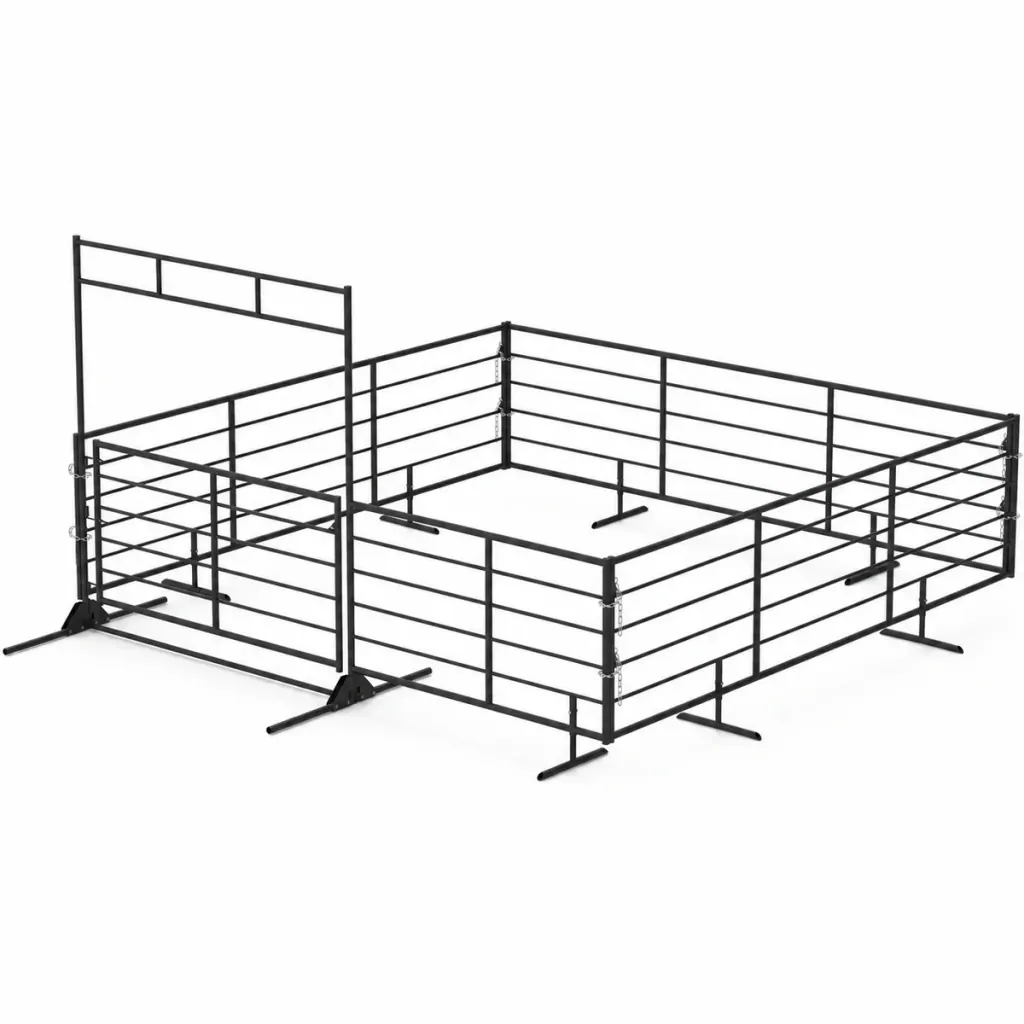
One 20×20 ft cattle pen
One 20 x 20 ft pen for a north Louisiana hill farm around Ruston or Minden with a few cows on bahia or bermuda. Set the three panels and gate combo on the highest sandy knoll near the barn, and you have a place to catch, doctor and load without waiting for dry weather.
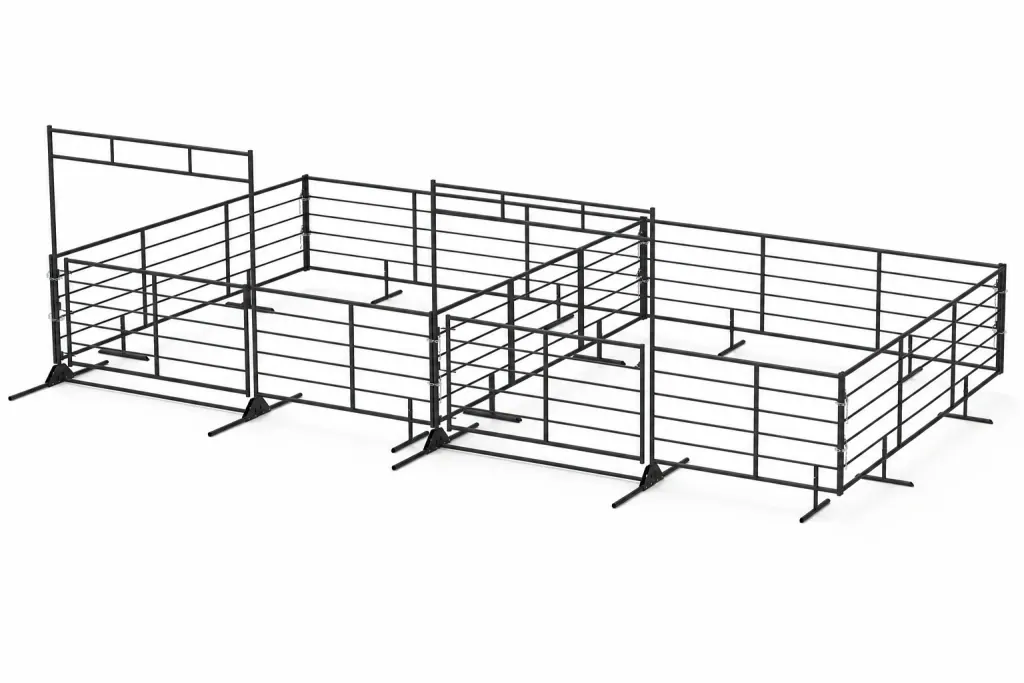
Two side-by-side 20×20 ft pens
Two 20 x 20 ft pens sharing a middle wall, for an Acadiana cow-calf herd, often Brahman-influenced, on flat prairie pasture. Sort calves off the cows at weaning, or hold one group for the trailer while the other waits its turn. Five panels and two gate combos make the pair.
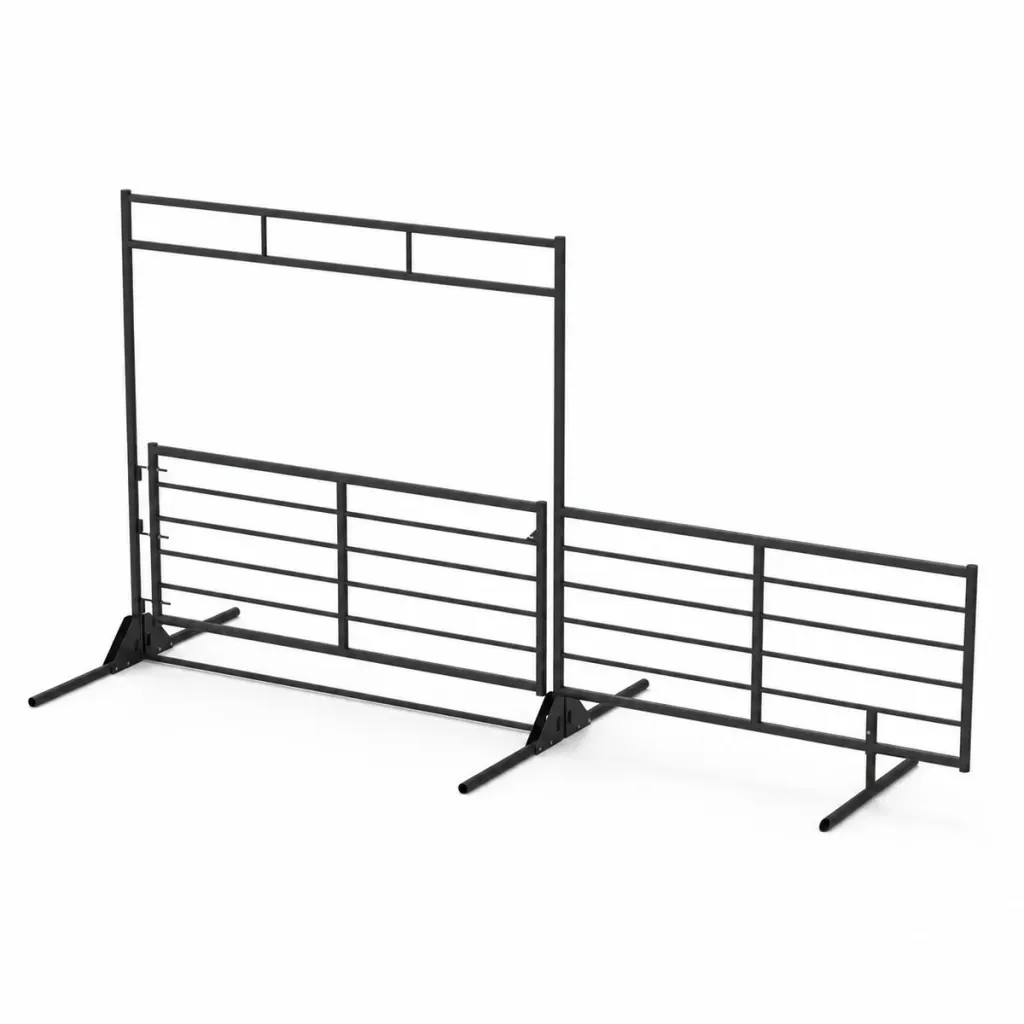
20 ft gate combination
The 20 ft freestanding section with a gate in it. On flat Louisiana ground with no uphill side to favor, add a second one where a shell or gravel pad lets the stock trailer back in without sinking. Measure the clear opening against your trailer before you order.
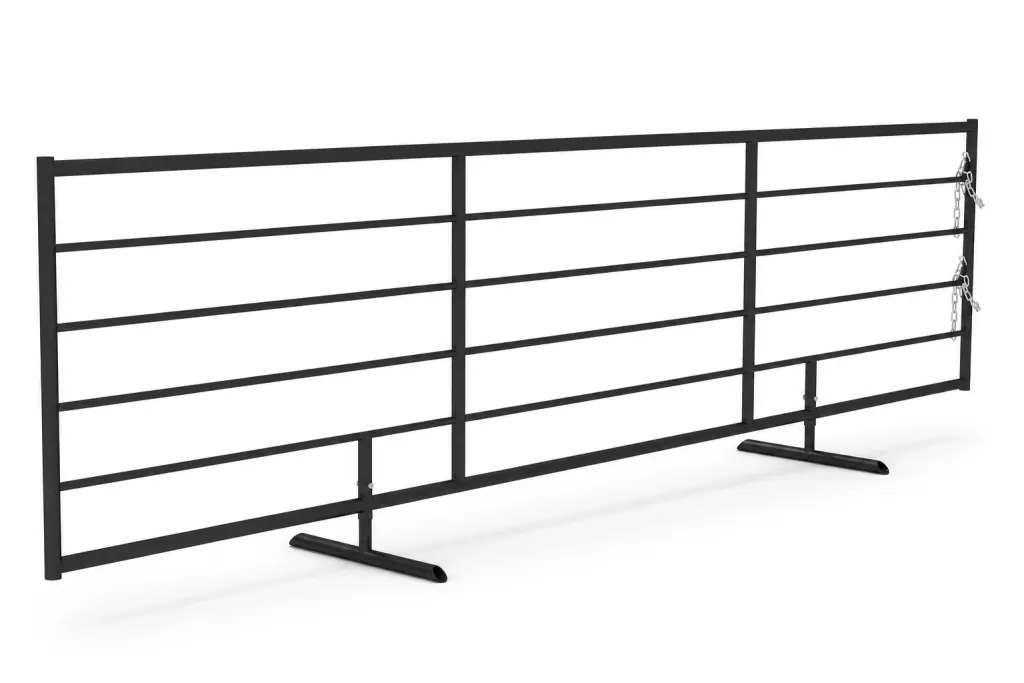
20 ft freestanding panel
Loose 20 ft panels with a six-rail, 2-3/8 in frame, each chained on with its own keeper. Use them to enlarge a pen, block off one end of an open-sided barn, or set a pen against an existing board or wire fence on a Red River or Florida Parishes farm.
Louisiana cattle pens on prairie claypan and Red River clay
Southwest Louisiana, from Lafayette west to Lake Charles, is flat prairie, and much of it has a claypan a short way under the surface. Rain soaks the top few inches and then sits there, which is one reason the same country grows rice. Toward the Gulf the prairie gives way to marsh, broken by chenier ridges, narrow strips of higher ground. Up the Red River, from Shreveport through Natchitoches to Alexandria, the bottomland is reddish clay and silt. In the northeast, the Mississippi River lowlands are heavy clay that cracks when dry and turns slick when wet.
The hill country of north Louisiana, around Ruston and Minden, is rolling ground with sandy loam over red clay, and the Florida Parishes east of the Mississippi have silty hills. Both drain better than the prairie or the bottoms. Across most of the state, though, the trouble is flat ground with nowhere for water to go. Look for the highest spot you have, because even a foot of rise keeps a pen out of standing water. Freestanding panels don't need firm soil to hold a post, only ground that is close to level. Walk the pasture the day after a heavy rain to spot the places that stay wet.
Gulf heat and year-round rain at a Louisiana cattle pen
Rain in Louisiana runs from around 50 inches a year in the northwest to 60 or more near the coast, and it falls in every season. There is no long dry spell to firm up a pen floor. Summer brings afternoon thunderstorms, and winter brings slow, soaking rains while the cattle are on hay. In a wet year a pen floor may never fully dry out. A pad of gravel over geotextile fabric at the gate and around the feeder is the usual fix, and keeping cattle off a soaked floor saves the ground from deep hoof holes.
Summers are long, hot and humid, and the heat index passes 100°F on many afternoons. That is part of why Brahman-influenced cattle are common in the south of the state. Work cattle early, keep them penned only as long as the job takes, and have water where they can reach it; a trough isn't part of a kit. Hurricane season runs from June through November. A small pen is not shelter, so decide before the season where the cattle should be when a storm comes, with open pasture on high ground usually better than a tight pen. Afterward, walk the line, stand any panel that moved back on its feet and check every chain.
Holding pen kits for Acadiana cow-calf herds and north Louisiana hill farms
Louisiana cattle are mostly in cow-calf herds, and the herds look different from one region to the next. On the southwest prairie and through Acadiana, many cattle carry some Brahman blood and graze bahia, bermuda or native grass, with some herds on marsh pasture near the coast. In the north, herds tend to be smaller and run on cleared hill ground between stands of pine. Either way, one 20 x 20 ft pen covers the regular jobs: catching a cow for the vet, holding a bull you just bought, or loading calves for the sale barn. The single kit is three 20 ft panels and a gate combo, about 400 sq ft inside.
The paired kit adds a second pen. It is five panels and two gate combos, set up so the two pens share a middle wall, and the pair needs a space about 20 by 40 ft. At weaning, calves go on one side and cows on the other. The rest of the year, the second pen can hold a sick animal, a few culls or a group waiting for the trailer. Loose panels and gate combos let you grow either kit later. These are holding pens. Restraining cattle for shots or pregnancy checks takes a chute from another supplier.
Placing gates and a hay feeder in a wet Louisiana pen
On flat ground there is no uphill side, so put the gate combo where the ground is highest and firmest, even if the difference is only a few inches. Cattle come in more easily along a fence, so a pen in a pasture corner, with the pasture fence leading to its gate, is easier to gather into than one standing alone. Add a second gate combo facing a shell or gravel pad, where a stock trailer can back up without cutting ruts in the gateway the cattle use. The 20 ft figure is the length of the whole section, so check the actual opening against your trailer and tractor.
A 4 x 8 ft big-bale feeder is sold separately. In a pen used through the winter, set it on a raised pad of packed fill or gravel near a side, where a tractor can drop bales in from outside, and move it now and then. Every added panel brings 20 ft of side: two extra panels make a 20 x 40 ft pen and four make it 40 x 40. If a chute and alley from another maker will join the pen, leave one gate side open for it and send us photos, since its fittings may not match our chain-and-keeper connection.
Louisiana freight for cattle pens, priced by distance
We deliver cattle pens and panels anywhere in Louisiana, from Shreveport down to Cameron Parish. Our free and flat-rate freight offers cover only parts of Texas, New Mexico and Arizona, so a Louisiana order is priced on distance. Freight is priced from the road miles to your address, as one load, with a $200 minimum. You see the amount before you pay. Pens, extra panels and gate combos on one order arrive together.
Plan the last mile. Many south Louisiana farms sit on shell or dirt roads with soft shoulders and narrow bridges over coulees and canals, and after a rain a pasture won't carry a loaded truck. Meet the truck on pavement or a firm shell pad, and move the panels to the site from there. The driver doesn't unload. Have a tractor with forks, a skid steer or two people for each panel, and be there when it arrives. Check the load before the driver leaves, and tell us about tight turns, low lines or weight-limited bridges when you order.
Standing freestanding cattle panels on soft Louisiana ground
Nothing gets dug or poured. Fit the feet, stand each 20 ft panel up and chain it to the next with its welded chain and keeper, and set the gate combo in line the same way. No clamps are needed. In low country where the water table sits close to the surface, a post hole can fill with water as you dig it, so a pen that stands on top of the ground skips that problem.
Soft ground has its own catch: feet can settle into wet clay over time. A strip of packed fill or gravel under the panel line helps keep them level. Set every foot flat, then walk the line after the first few heavy rains and reset any foot that has sunk. The panels are 14-gauge steel with a 2-3/8 in frame and six rails. The standard bare finish weathers to a rust patina, and it gets there faster in humid, salty air near the coast. Because nothing is buried, you can unchain the pen and move it if the spot holds water. If you'd rather not set it up yourself, ask about installation with your quote.