

Cattle corral kits for New Mexico
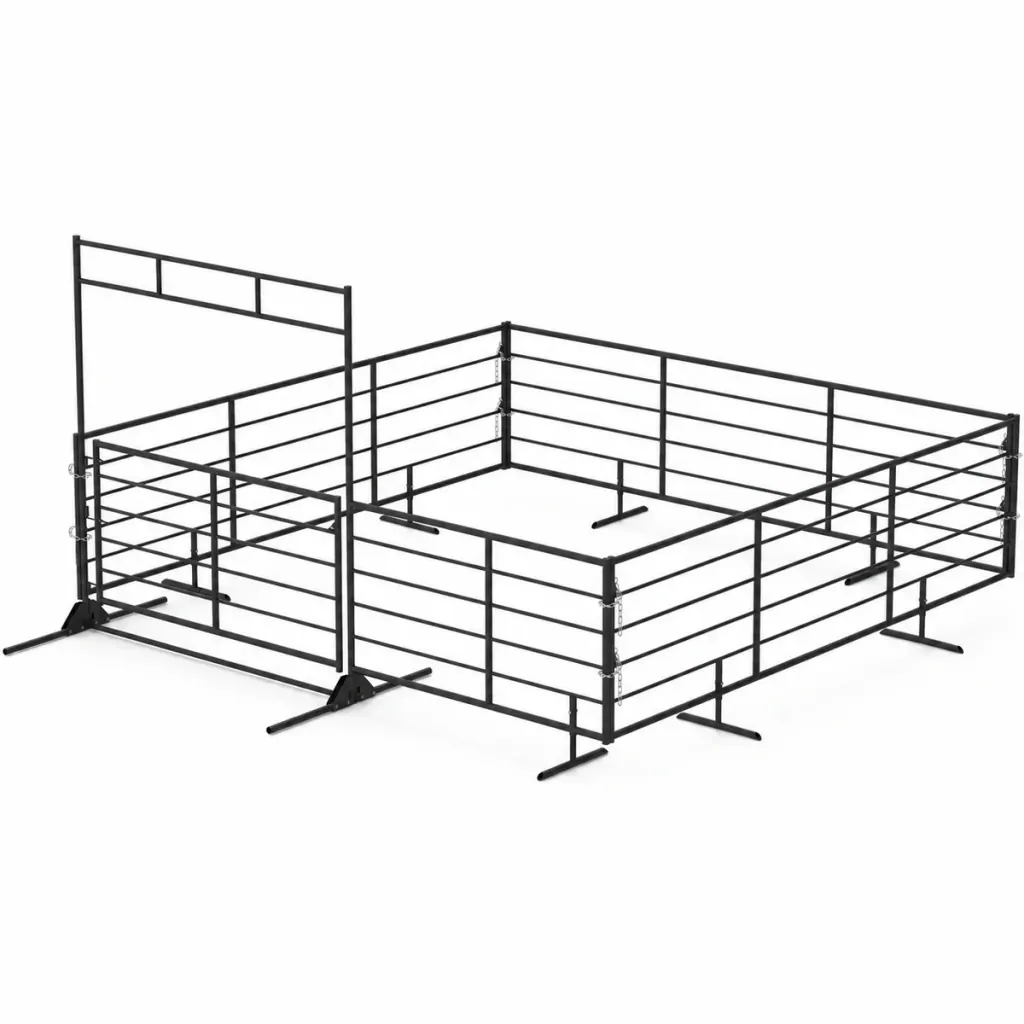
One 20×20 ft cattle pen
One 20 x 20 ft pen, three panels and a gate combo, set up at a windmill or water lot far from headquarters. Cattle come in to drink on their own, so a pen there makes it easier to catch a few pairs or a bull than driving them miles to the main corral.
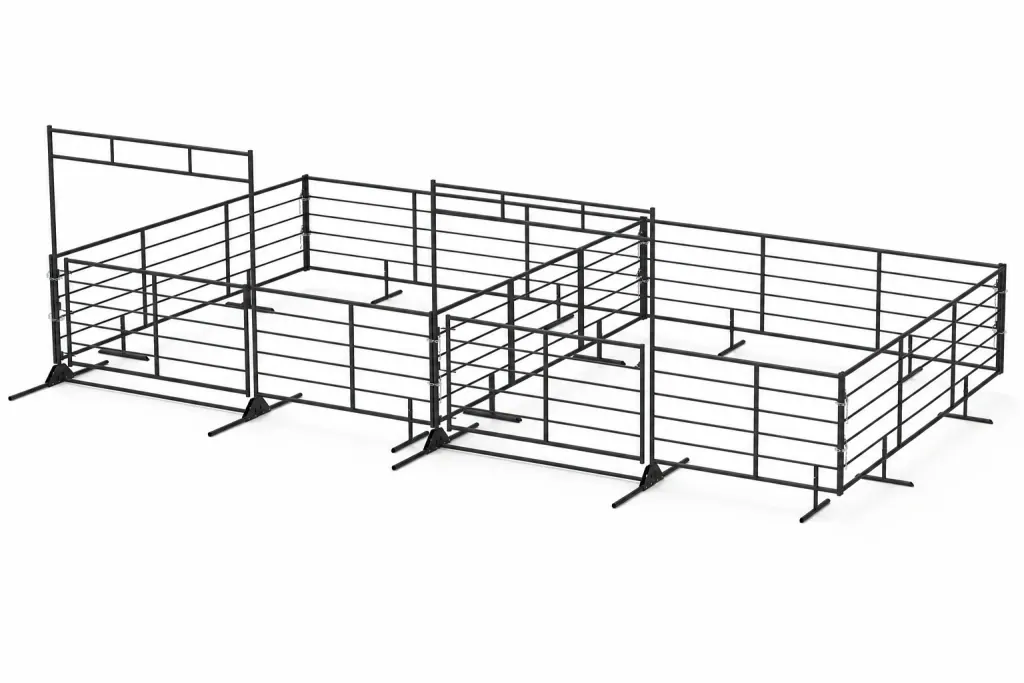
Two side-by-side 20×20 ft pens
Two side-by-side pens for fall weaning and shipping on an eastern plains or northeast cow-calf ranch. Calves go on one side and cows on the other while you sort, and each pen has its own gate combo, so you can load from one without opening the other.
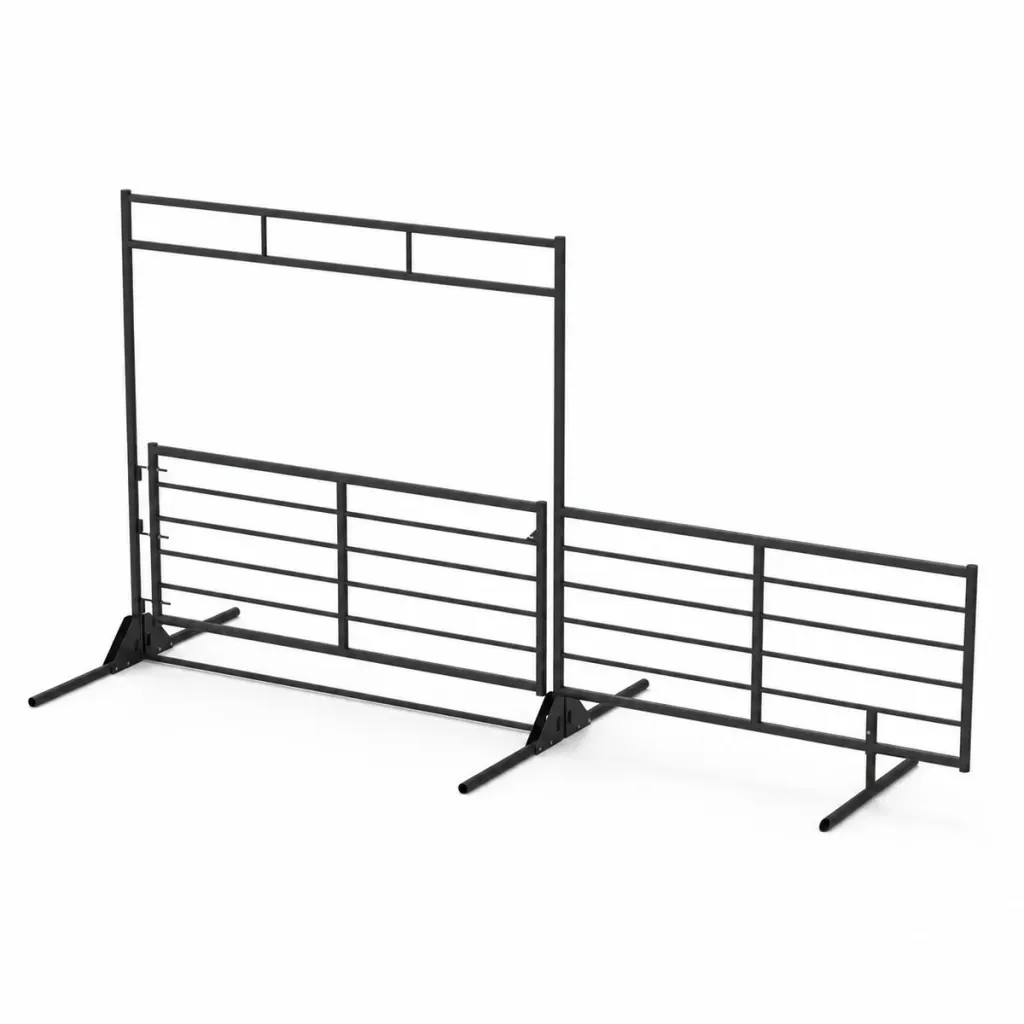
20 ft gate combination
The 20 ft section with a gate in it, on detachable feet. Add one to a New Mexico pen where the stock trailer comes in from a different side than the cattle, such as a two-track on one corner and the pasture on the other. Check the clear opening against the trailer first.
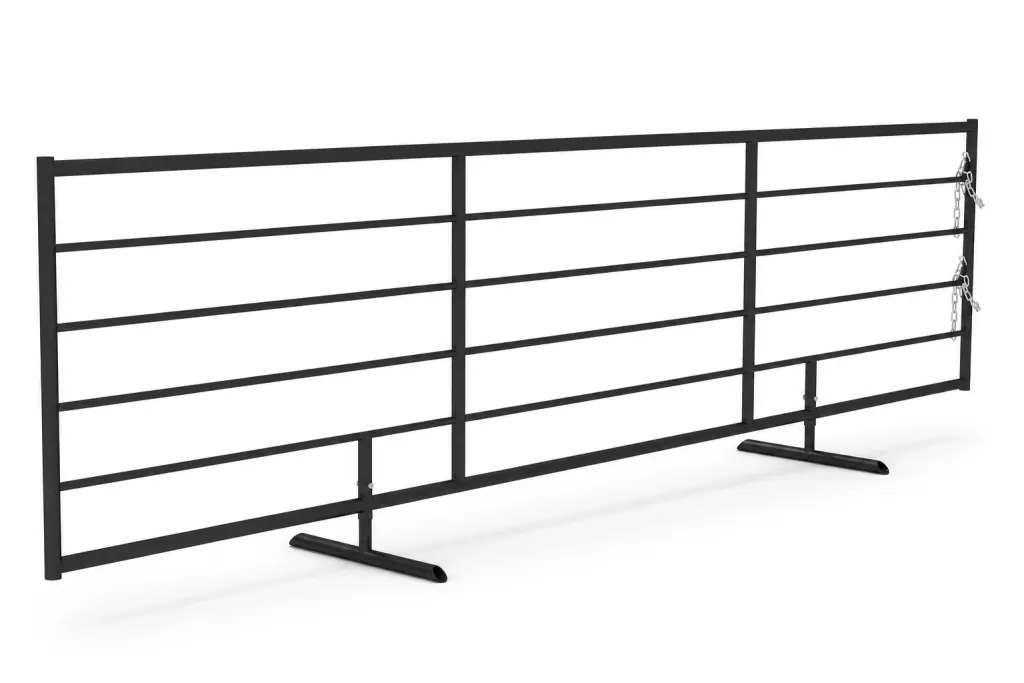
20 ft freestanding panel
Loose 20 ft panels with a 2-3/8 in frame and six rails. Use them to stretch a pen, run a panel from a pen corner to an old pipe corral, or close off part of a barn lot in the Rio Grande valley without digging through hardpan.
Keeping a cattle pen on caliche and out of the arroyo
Much of southern and eastern New Mexico has caliche, a layer of soil cemented with lime that can sit a few inches under the surface or a few feet down. An auger stops on it and a shovel barely scratches it. On the eastern plains along the Texas line, sandy loams lie over that caliche. Sand drains fast but cuts up under hooves where cattle turn at a gate. In the Rio Grande and Pecos valleys the bottomland is silt and clay that packs hard when dry and goes slick after a storm. The northeast and the mountain country add rock and slope.
Freestanding panels suit that ground because nothing has to go into it. The feet sit on the surface, so what you need is a spot that's close to level and above any wash. Stay out of arroyos and the flats at their mouths: a wash that is dry in June can run bank-full after one July storm. On sand, a few loads of gravel or road base at the gate keep the opening from turning into a pit. A local dirt contractor can tell you what's under your pasture, and neighbors who have built nearby know where the water runs.
Monsoon storms and spring wind at a New Mexico cattle pen
Most of New Mexico is dry. Many places get less than 15 inches of rain a year, and a good share of it falls in the summer monsoon, from about July into September. Those storms build in the afternoon and drop a lot of water fast. A pen on hard caliche or packed valley clay sheds it into the low corner, so look at where water ran after the last big storm before you pick the spot. Spring is the windy season. From March into May, wind on the plains carries dust and tumbleweeds, and they pile up against anything with rails.
Heat matters in the south. Summer highs around Las Cruces and Carlsbad often pass 100°F, and cattle held in a bare pen without water get stressed quickly, so work them early and turn them out. At elevation it's the opposite: winters around Raton, Clayton and Chama bring snow and hard freezes, and a trough can freeze over by morning. A pen is no shelter from any of it, so give cattle somewhere else to go in a hard storm. After a big wind or a storm, walk the line, clear tumbleweeds off the panels and check that each one is still on its feet and chained.
Holding pens for range cow-calf work and fall shipping
New Mexico cattle mostly run on big pasture, often a mix of deeded land and grazing leases, and the herd can be miles from headquarters. That is where a freestanding pen earns its keep. A 20 x 20 ft pen at a water lot lets you catch cattle where they come in to drink instead of driving them across the ranch. Some ranchers build the pen around the trough so cattle get used to walking in, then shut the gate on gathering day. The single kit is three 20 ft panels and a gate combo, about 400 sq ft inside.
The paired kit, five panels and two gate combos, gives two pens that share a middle wall, roughly 20 by 40 ft overall. That fits fall work, with calves on one side, cows on the other and a gate to load from. A buyer in Roswell called us about an awkward lot and worked out the panel count over the phone, which is a sensible way to start: tell us the shape you need and we'll count panels and gate combos with you. These are holding pens. A chute, alley or tub for working cattle comes from another supplier.
Gate and feeder placement for a New Mexico holding pen
Put the gate where the cattle naturally come from. At a water lot that's usually the side facing the pasture, and at headquarters it's the lane or the trap. A second gate combo facing a hard, level spot gives the stock trailer its own side, so you can load without turning cattle back through the gate they came in. The 20 ft name is the length of the whole section, so check the actual opening against your trailer and pickup.
Each extra panel adds 20 ft of side. Two more turn a single pen into 20 x 40 ft, and four more make it 40 x 40 ft. If you plan to bring in a portable chute or tie into an old pipe corral, leave room off one gate and send us photos and the post sizes, because our panels connect by chain and keeper rather than by welding or clamps. A 4 x 8 ft big-bale feeder is sold separately. In winter, set it on the highest, firmest ground in the pen so the area around it doesn't freeze into deep ruts.
Getting cattle panels delivered to a New Mexico ranch
We deliver cattle pens and panels anywhere in New Mexico. Large orders delivered near I-10 or I-40, the interstates through Las Cruces, Deming, Albuquerque, Gallup and Tucumcari, ship free, and smaller orders near those two highways ship at a flat rate. The delivery page gives the order size and the exact areas. Orders farther out, such as around Roswell or Raton, are priced on distance. Freight is priced from the road miles to your address, as one load, with a $200 minimum. You see the amount before you pay.
The truck needs a road it can drive loaded. Plenty of New Mexico ranches sit at the end of miles of dirt or two-track, and a freight truck carrying 20 ft panels may not make the last stretch, especially after a monsoon storm. Meet it at the highway, the county road or headquarters, and haul the panels out to the pasture yourself. The feet come off, so the panels stack flat on a flatbed. The driver doesn't unload: bring a tractor with forks, a skid steer or enough hands, be there when the truck arrives, and look the load over before the driver leaves.
Putting up freestanding cattle panels on New Mexico range with no digging
Setup is the same anywhere. Fit the detachable feet, stand each 20 ft panel up and chain it to the next with its welded chain and keeper, and set the gate combo the same way. There's no welding, cutting or post setting. That counts on caliche, where one post hole can take an hour with a digging bar, and at a remote water lot with no power for tools.
Level the spot first. On a slope, cut and fill until the feet sit flat, since a panel that rocks on a high spot can shift when cattle lean on it. Each panel is 14-gauge steel with a 2-3/8 in frame and six rails. The bare finish weathers slowly in dry air to a dull rust, like the oil-field pipe on many southeastern New Mexico ranches. When the grass is used up around one water, unchain the pen and move it to the next. If you'd like us to set it up, ask about installation with your quote.