

Cattle corral kits for Oklahoma
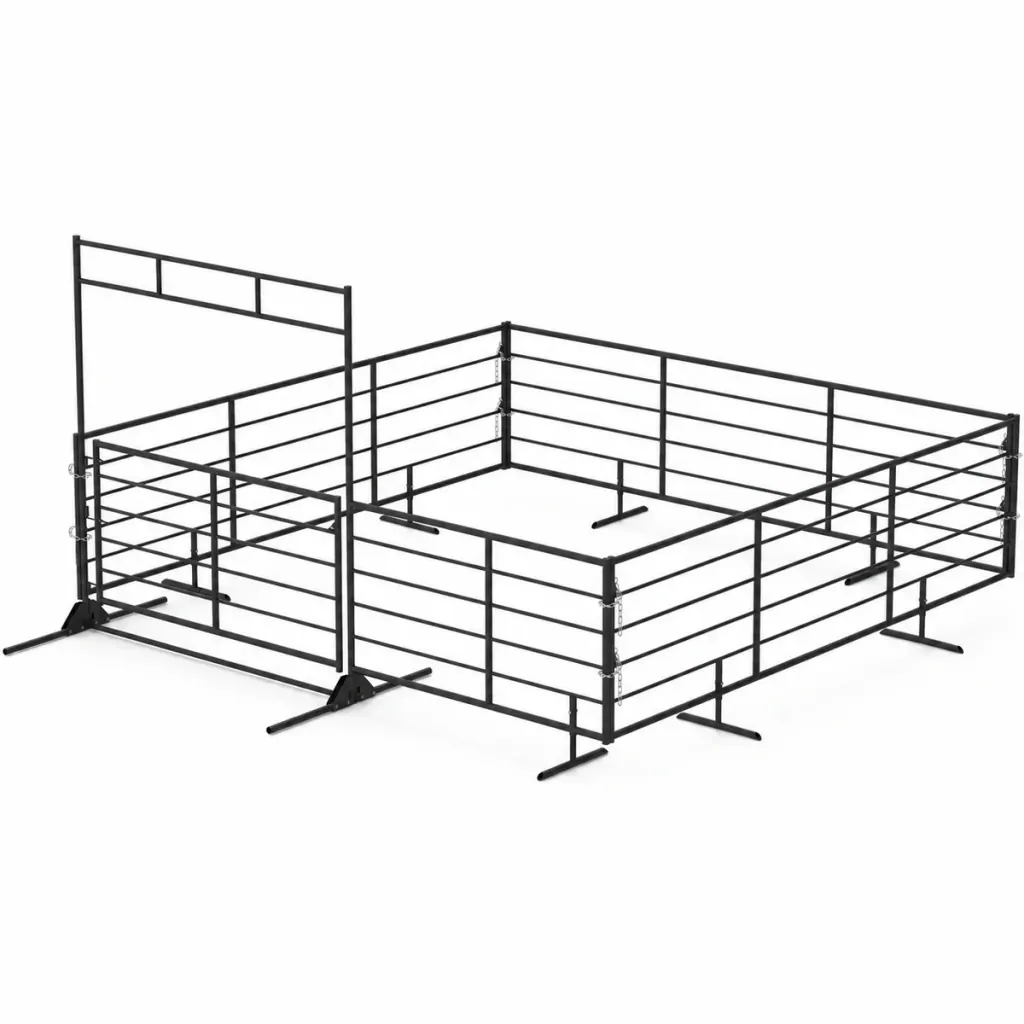
One 20×20 ft cattle pen
A 20 x 20 ft receiving pen for a northwest Oklahoma stocker operation, where newly bought calves get hay, water and a close look before they go out on wheat. Three panels and a gate combo set up at a field edge in the fall and come down when the cattle come off in spring.
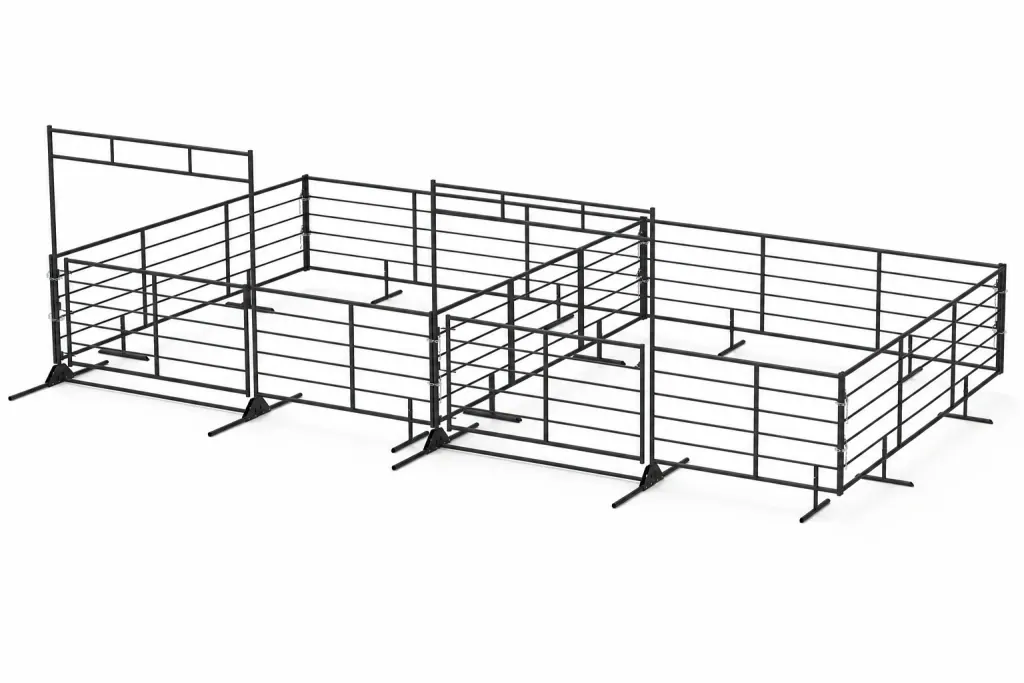
Two side-by-side 20×20 ft pens
Two pens with a shared wall for an eastern Oklahoma cow-calf herd on fescue and bermuda. Pull calves into one side at weaning while the cows stay in the other, or keep a bought bull apart from the herd for a few weeks before turnout. Five panels and two gate combos.
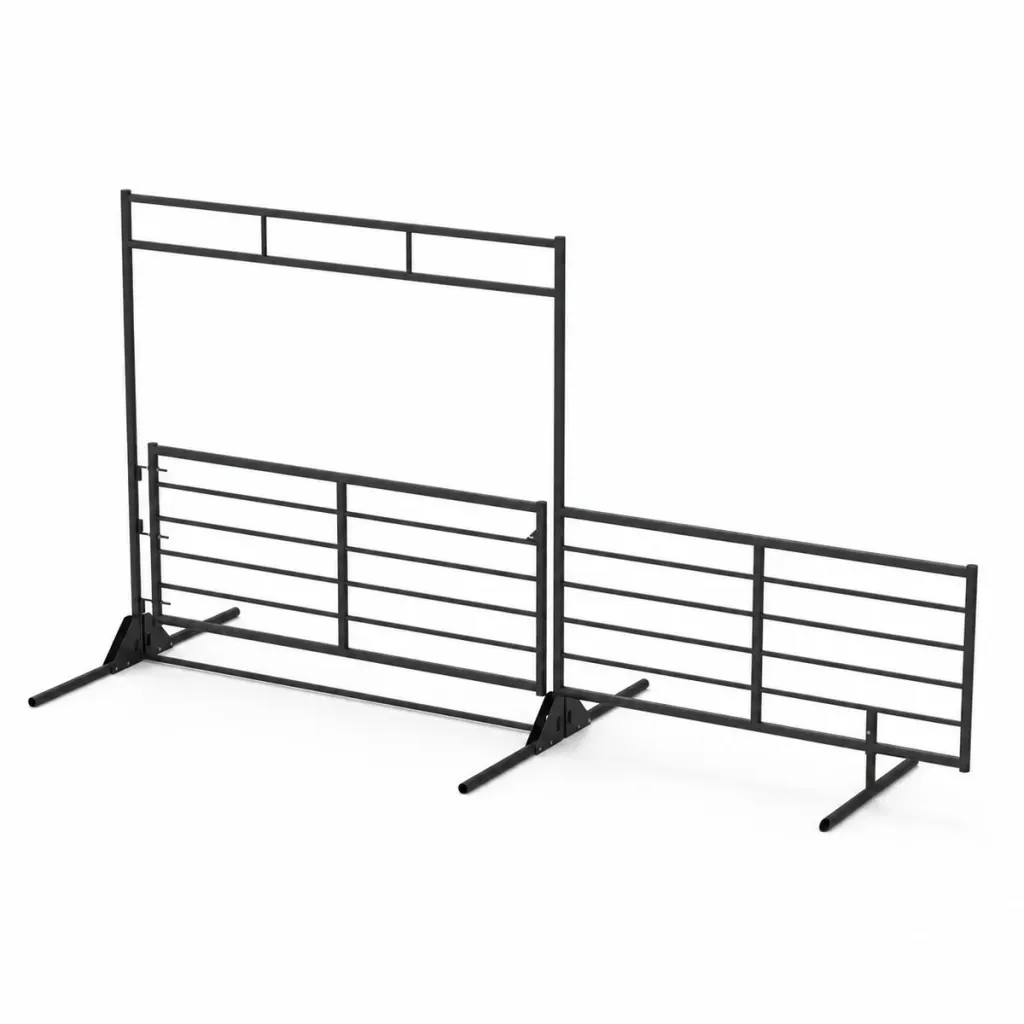
20 ft gate combination
The 20 ft section with a gate in it. Add one so an Oklahoma pen opens both to the pasture and to a gravel spot where the stock trailer backs in, which keeps the trailer off ground the cattle have churned up in a wet spring. Check the clear opening against your trailer.
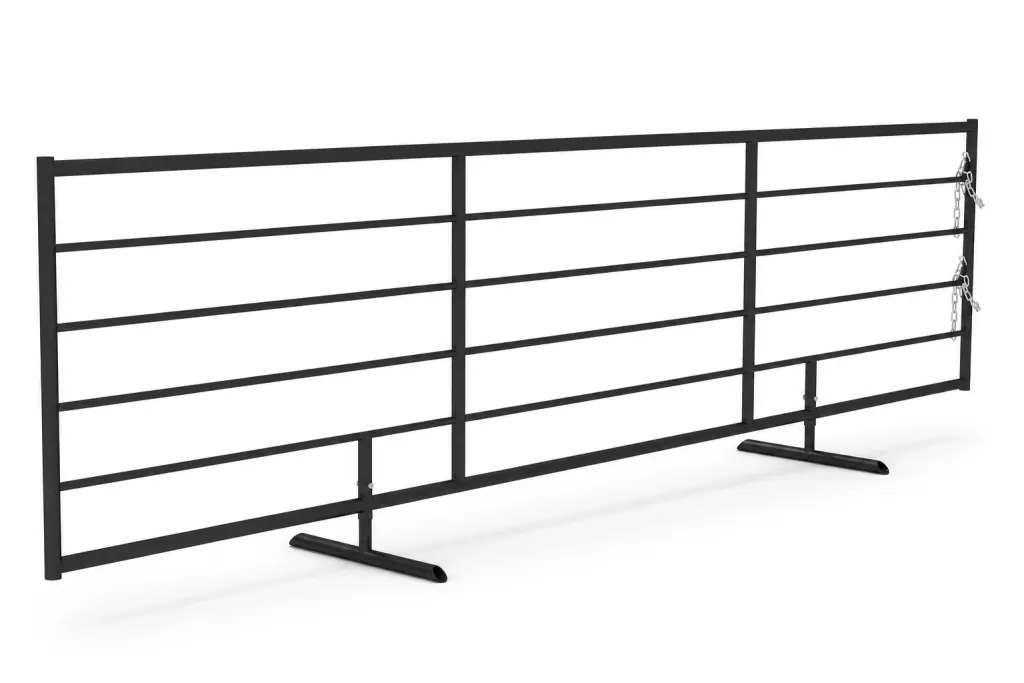
20 ft freestanding panel
Single 20 ft panels on detachable feet, each with its own chain and keeper. Use them to lengthen a pen on Panhandle wheat ground, run a wing from the pen gate out along an existing wire fence, or close the open side of a pole barn to catch cattle in.
Siting a cattle pen from Oklahoma wheat country to the eastern hills
Oklahoma ground changes a lot between the wheat country and the Arkansas line. In the northwest and the Panhandle, pens often go on old cropland or the edge of a wheat field. That deep loam is easy to level, but where cattle stand around hay in a wet winter it turns to soup, and there are sandy stretches near the rivers. The Osage country north and west of Tulsa is tallgrass prairie on shallow, rocky soil over sandstone and limestone, firm underfoot but quick to hit rock. Across the middle of the state, the Cross Timbers mix sandy, post oak hills with tighter soils in the draws.
In the southeast, the Kiamichi and Ouachita country is steep and stony, and the Ozark edge in the northeast is full of chert. Flat spots are scarce there, and the house and barn usually took the best one. Freestanding panels on feet don't care what's underneath, as long as the spot is close to level and sheds water. Pick a high corner near the road, keep the gate off the low side, and plan for gravel where cattle and trailer tires meet. Walk the spot after a hard rain before you commit, and look for where the water stands.
Winter hay mud and summer heat in an Oklahoma cattle pen
Winter is when Oklahoma cattle get fed hay, and hay feeding is what turns a pen to mud. Freeze-and-thaw cycles break up the surface, and every warm spell after an ice storm softens it again. A pen used for feeding through January and February needs a firmer floor than one used a few days a year for sorting. Gravel over geotextile fabric at the gate and around the feeder is the usual fix. Keep cattle off a soupy pen floor when you can, because hoof holes left in wet ground set hard and stay rough for months.
Summers bring heat and humidity in the east and hot wind in the west, with afternoons in the mid to upper 90s through July and August. Gather and sort early, keep cattle in the pen only as long as the job takes, and have water where they can reach it; a trough isn't part of the kit. Spring storms are part of life in Oklahoma, and a pen gives cattle no shelter from them. After hail, high wind or an ice storm, walk the pen, set any panel that moved back on its feet and check each chain.
Stocker receiving pens and cow-calf sorting pens in Oklahoma
Stocker cattle are a big part of Oklahoma's cattle business. Calves bought in the fall graze winter wheat across the western half of the state and come off in spring, and the Osage pastures carry yearlings through spring and early summer. Calves change hands at sale barns across the state every week, and they often come home tired, stressed and mixed from several sources. Newly bought calves need a place to settle for a few days with hay and water, where you can watch for sick ones before they scatter across a wheat field. One 20 x 20 ft pen, three panels and a gate combo, makes that receiving pen.
In the eastern half, most herds are cow-calf, often on fescue or bermuda pasture with hay in winter. The paired kit suits that work: five panels and two gate combos make two pens with a shared middle wall, around 20 by 40 ft in all. Calves go on one side at weaning, a new bull sits apart for a few weeks, or cull cows wait for the sale. Loose panels and gate combos fill in from there. These are holding pens. Holding an animal still for shots or a vet check takes a chute from another supplier.
Laying out an Oklahoma corral around the bale feeder and trailer
Set the gate combo on the side the cattle come from: the wheat field, the lane or the pasture gate. Cattle walk into a pen more readily along a fence than across open ground, so a pen in a field corner, with the field fence leading toward its gate, is easier to gather into than one in the middle of a field. Put a second gate combo toward a gravel pad or the county road, so a stock trailer can back up without crossing the soft ground the cattle have worked.
The 20 ft size is the whole section, so measure the real opening against your trailer and tractor. A 4 x 8 ft big-bale feeder is sold separately. In a pen used all winter, set it where a tractor with a spear can drop bales in from outside, and move it now and then so one spot doesn't take all the traffic. To enlarge a pen, add panels in pairs: two make a 20 x 40 ft pen and four a 40 x 40. If a chute from another maker will tie in at one gate, send its make and a photo, because its fittings may not match our chain-and-keeper connection.
How cattle panel freight to Oklahoma is priced
We deliver cattle pens and panels anywhere in Oklahoma, from Boise City to Broken Bow. Our free and flat-rate freight offers apply only in parts of Texas, New Mexico and Arizona, so an Oklahoma order is priced on distance. Freight is priced from the road miles to your address, as one load, with a $200 minimum. You see the amount before you pay. Pens, extra panels and gate combos on one order travel together.
With the feet off, the 20 ft panels stack flat, but the load is still long. The driver brings it to your place and doesn't unload. Have a tractor with forks, a skid steer or two people for every panel, and be there when it arrives. In a wet spring a loaded truck can bog down on a red dirt road or in a pasture gateway, so meet it on gravel or blacktop and move the panels from there. Look the load over before the driver leaves, and tell us about low lines, narrow gates or a tight turn off the highway when you order.
Chaining an Oklahoma cattle pen together on its feet
Nothing gets dug or poured. Put the feet on each panel, stand it up and chain it to the next with the chain and keeper welded to it; the gate combo goes in the same way. There are no clamps to keep track of. On Osage rock or the stony ground of the southeast, skipping post holes saves the hardest day of the job, and on leased wheat pasture it means the pen leaves no posts behind when the lease or the season ends.
Level and firm the spot before the truck comes, then set panels with every foot flat and walk the line for any that rock. The panels are 14-gauge steel with a 2-3/8 in frame and six rails. Fresh yearlings that haven't been handled much test a fence more than settled cows, so check the chains and keepers often in the first weeks. The standard bare finish weathers to the same brown patina as the oil-field pipe fences across western Oklahoma. If you'd rather not set the pens up yourself, ask about installation with your quote.