

Cattle corral kits for Arkansas
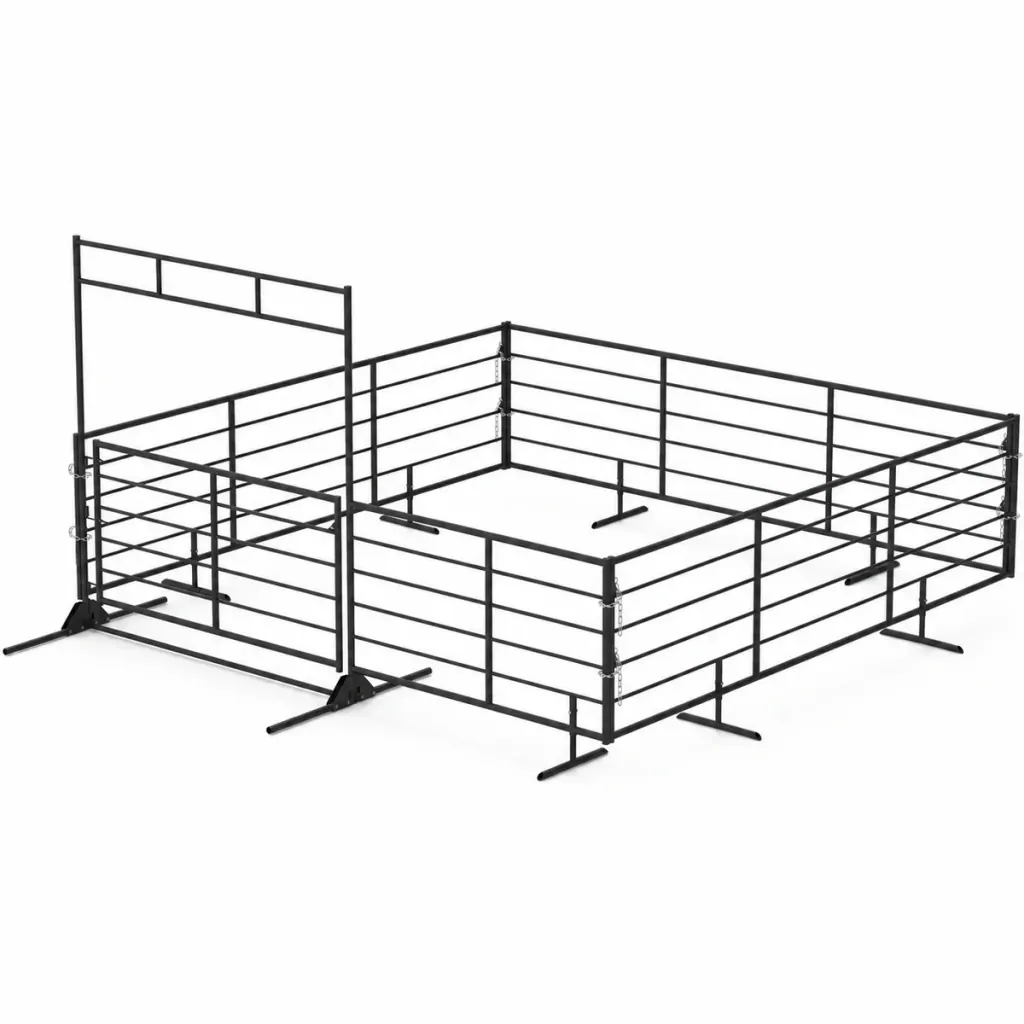
One 20×20 ft cattle pen
One 20 x 20 ft pen for a few cows kept on Ozark fescue by someone who also works a town job. Three panels and a gate combo give a place to catch a cow for the vet on a Saturday, or to pen calves the night before they ride to the sale barn.
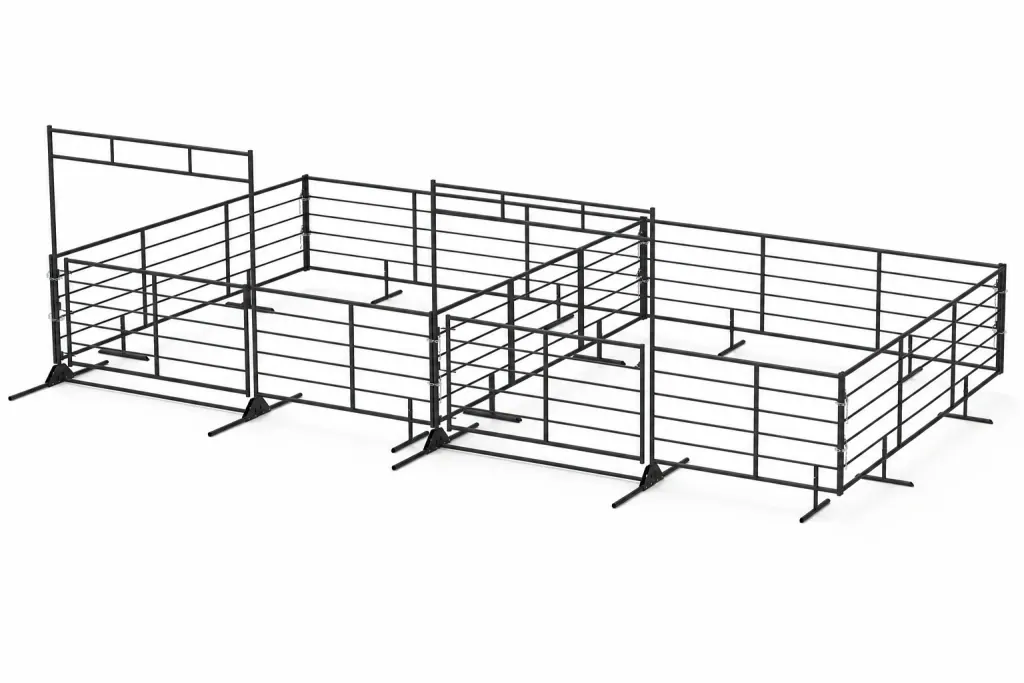
Two side-by-side 20×20 ft pens
Two pens side by side with one shared wall, for a River Valley or Ouachita foothill herd that weans its own calves. Calves stay on one side while the cows bawl on the other, and each pen keeps its own gate combo for loading. Five panels and two gate combos in all.
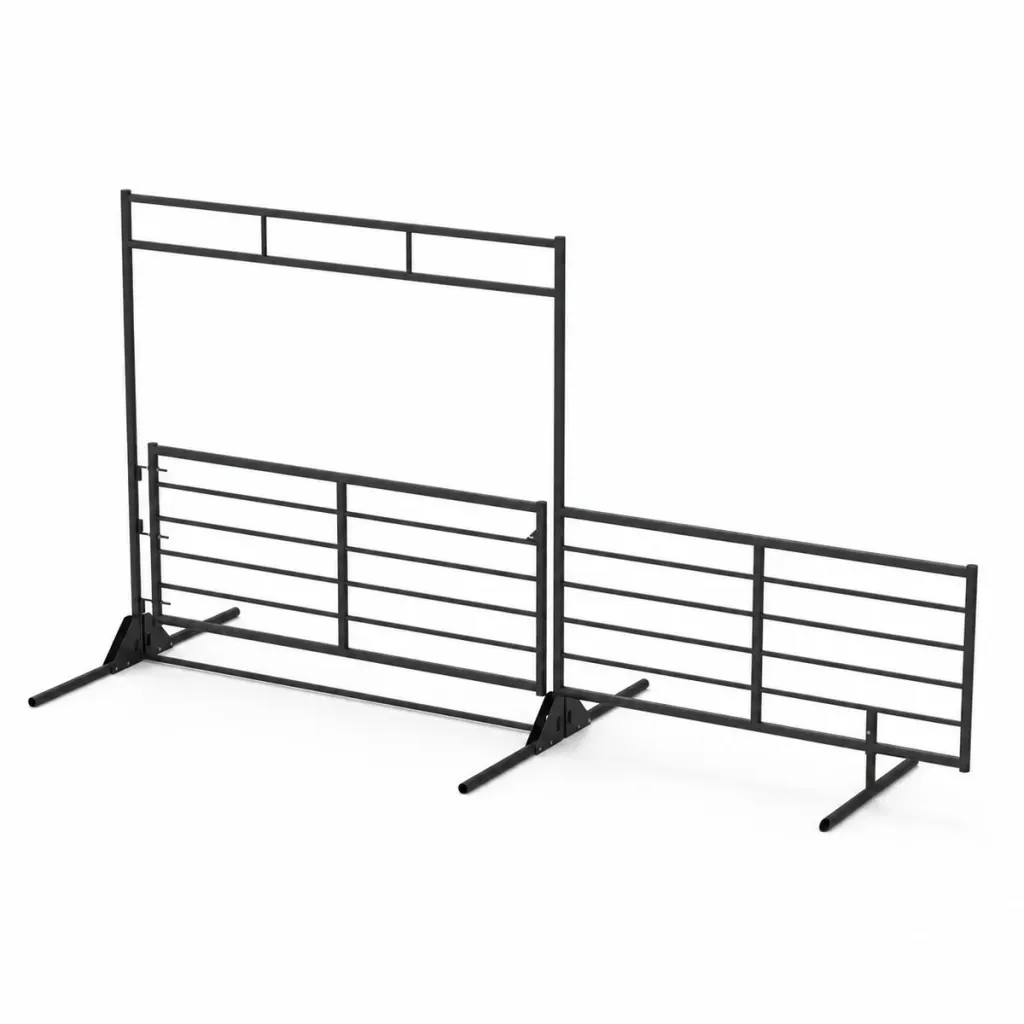
20 ft gate combination
A 20 ft freestanding section with a swing gate built in. On a sloping Arkansas pasture, set it on the uphill side of the pen, where the gateway drains and stays firmer, or add a second one facing the drive for the trailer. Measure the clear opening against your trailer first.
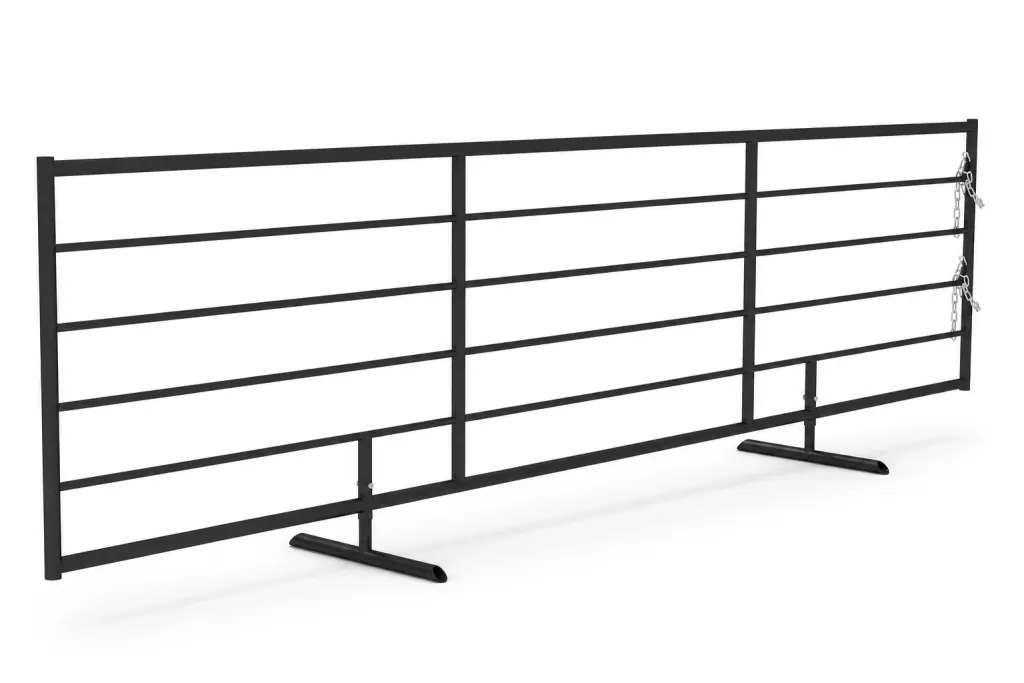
20 ft freestanding panel
Single 20 ft cattle panels on detachable feet, each with a welded chain and keeper. Use them to grow a pen, close the open end of a hay shed for winter feeding, or run a short wing out to a woven-wire fence on a south Arkansas or Crowley's Ridge farm.
Arkansas cattle pens on Ozark chert and river-bottom ground
North and northwest Arkansas is Ozark country. The soil is thin and full of chert over limestone, and many farms are a patchwork of ridgetop pasture and wooded hollows. South of the Boston Mountains, the Arkansas River Valley runs from Fort Smith past Russellville to Little Rock. Its bottomland is deeper and makes better pasture, but it sits low and parts of it flood. Farther southwest, the Ouachita Mountains are steep, with shale and sandstone close to the surface and only small pockets of flat ground.
East of Crowley's Ridge, the Delta is flat, heavy clay that holds water for days, and most of it grows row crops rather than grass. South Arkansas timber country has silty and sandy loams over clay that stay soft through a wet winter. A freestanding pen doesn't need any of that ground to hold a post. It needs a spot that is close to level, a little higher than the ground around it and out of any draw that carries runoff. On a hill farm that often means a bench on the slope or a ridgetop near the barn. Walk the spot after a hard rain before you commit to it; water standing there then will be standing in the pen all winter.
Arkansas mud season and humid summers in a cattle pen
Arkansas is a wet state. Yearly rain runs from the mid-40s in inches across the northwest to more than 50 in the south and the Ouachitas, and the wettest stretch usually runs from late fall into spring. That is also when cattle are on hay. Rain plus hooves plus a hay ring is how a pen turns to mud, and it starts at the gate and around the feeder. A pen used only for a few hours at a time stays in far better shape than one where cattle are fed all winter, so decide which kind you are building before you pick the spot.
Summers are hot and sticky, with many afternoons in the 90s and nights that don't cool off much. Work cattle early, keep them penned only as long as the job takes, and have water they can reach; a trough isn't part of a kit. Winter brings the odd ice storm, and limbs loaded with ice come down, so keep the pen out from under big trees. Spring storms and tornadoes happen here too, and a pen gives cattle no shelter, so don't leave them shut in it when severe weather is forecast. After a storm, walk the line, stand any panel that moved back on its feet and check each chain.
Cattle pen kits for part-time and small-herd Arkansas farms
Most Arkansas cattle are in cow-calf herds, and many of those herds are small, kept by people who also hold another job. In the northwest, much of the pasture is fescue and bermuda, often fertilized with litter from the poultry houses. On a farm like that, the jobs that need a pen come a few times a year: catching a cow for the vet, holding a new bull for a few weeks, or loading calves for the sale barn. One 20 x 20 ft pen covers those. It is three panels and a gate combo, about 400 sq ft inside, and it fits on the kind of small, level bench most hill farms have.
The paired kit is five panels and two gate combos, set up as two pens that share a middle wall, about 20 by 40 ft in all. It earns its keep at weaning, with calves on one side and cows on the other. The second pen can also hold a cow that needs watching or a few culls waiting for the trailer. You can start with one pen and grow it later: a single kit plus two panels and one more gate combo makes the same paired layout. These are holding pens. A squeeze chute or head catch for working cattle comes from another supplier.
Where the gates and a hay feeder go in an Arkansas corral
On sloping ground, put the gate combo on the uphill side of the pen if the layout allows. Water runs downhill through a pen, and the low side takes the mud. Cattle come in more easily along a fence than across open pasture, so set the pen where a pasture fence leads toward its gate. A second gate combo facing the drive lets a stock trailer back up on gravel instead of in the gateway the cattle use. The 20 ft name is the length of the whole section, so check the real opening against your trailer and tractor.
A 4 x 8 ft big-bale feeder is sold separately. Set it on the highest part of the pen, close enough to a side that a tractor can drop a bale in from outside, and shift it a few feet now and then so the ground around it can recover. Each added panel gives 20 ft more side: two extra panels make a 20 x 40 ft pen, and four make 40 x 40. If you plan to add a squeeze chute and alley from another maker, leave one gate side clear for it and send us photos, because its fittings may not match our chain-and-keeper connection.
Freight for cattle pens and panels to an Arkansas farm
We deliver cattle pens and panels anywhere in Arkansas, from Bentonville to Lake Village. The free and flat-rate freight offers on our delivery page apply only in parts of Texas, New Mexico and Arizona, so an Arkansas order is priced on distance. Freight is priced from the road miles to your address, as one load, with a $200 minimum. You see the amount before you pay. A pen with extra panels and gate combos on the same order rides on the same truck.
Getting there is the hard part on some Arkansas farms. Ozark county roads are narrow and winding, many drives are steep gravel, and low-water crossings close after heavy rain. A truck carrying 20 ft panels may not make a steep or tight drive, so tell us about it when you order, and plan to meet the truck at the paved road or a wide, level spot if you need to. The driver doesn't unload. Have a tractor with forks, a skid steer or two people for each panel, be there when it arrives, and look the load over before the driver leaves.
Setting up cattle panels on Arkansas hill ground with no post holes
There are no posts to set and no concrete to pour. Fit the detachable feet, stand each 20 ft panel up and chain it to the next with the chain and keeper welded to it, then set the gate combo in the line the same way. No clamps are needed. In Ozark chert or Ouachita shale, a post-hole digger hits rock in the first few inches, so leaving posts out of the job saves the worst of it.
Hill ground needs a pad. Before the truck comes, cut the high side and pack the fill until the spot is close to level, then set every foot flat. Don't prop a foot on rocks or blocks, since a panel that rocks can shift when cattle lean on it. Every panel is 14-gauge steel with a 2-3/8 in frame and six rails. Because nothing is buried, you can unchain the pen and move it if the spot stays wet, or take it along when you leave a rented pasture. If you'd rather have it set up for you, ask about installation with your quote.